




There was a time Nigerian presidential election was a two-horse race between the Peoples Democratic Party (PDP) and the All Progressives Congress (APC). It is not anymore, as at least two other heavyweights have joined the race and their supporters are vowing to change the status quo at the polls. Meet the men (in no particular order) who want to fix Nigeria’s mess.
ALHAJI RABI’U MUSA KWANKWASO
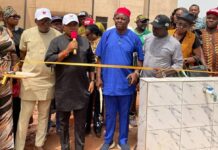
On June 4, 2022, the chairman of the New Nigeria Peoples Party (NNPP), Dr. Boniface Aniebonam declared that the party had chosen its candidate for the 2023 presidential election in the person of the former senator and governor of Kano State, Alhaji Rabiu Musa Kwankwaso. While other parties’ primaries had delegates voting for their preferred candidates, the NNPP said its special convention slated for June 8, 2022, would just be about confirming Kwankwaso as its flag bearer.
Kwankwaso’s political career commenced in 1992 with his involvement with the Social Democratic Party (SDP), where he was with like minds like late Shehu Yar’Adua, Bola Tinubu, Chuba Okadigbo, Anthony Anenih, Magaji Abdullahi, Babagana Kingibe, amongst others. He was then elected to represent Madobi Federal Constituency (Kano) in the House of Representatives. This was where he cut his teeth in national politics. When the 1995 National Constitutional Conference came around, he was one of the delegates from Kano. Later, when late General Sani Abacha set the democratic process in motion, Kwankwaso joined forces with the Democratic Party of Nigeria (DPN). By 1998, with democracy becoming ever surer, he pitched his tent with the Peoples Democratic Movement (PDM). The romance did not last. He moved to the PDP after he realised his chances were higher with the new megaparty. He was right. By 1999, he had grown in popularity and metamorphosed into a political strategist. He plotted his way to the governorship seat – one of the men he beat to get there, Umar Ganduje, is now the current governor of Kano State. He ruled Kano State from 1999 to 2003. Despite his popularity and desire for continuity, he made a lot of political enemies and could not make it back to office for a second term. Although he dusted Ganduje four years earlier, he took a beating of his own this time. The man who dealt him such a huge blow was no other than Ibrahim Shekarau.
Kwankwaso was eight years out in the cold. At this time, he was one of the main allies of the then-president, Olusegun Obasanjo. He was placated for his loss at the guber with the position of minister of defence. The appointment raised few eyebrows, seeing he had no military background. It did not matter. He was minister between 2003 and 2007 until he felt it was time to take back Kano. He did just that in 2011.
Kwankwaso was seen as high-handed during his first tenure, so it was right to think he had been humbled by his stint in the cold. He was…for three years. Until he decided to ruffle the waters in his final year in office by having a go at the then Emir of Kano, Ado Bayero. By the time Bayero died, there was a lot of clamour for his successor made all the more complicated by Kwankwaso’s manipulation. Although, in the end, the former CBN governor, Lamido Sanusi emerged as Emir, many are yet to forgiven Kawankwaso for such disarray.
Done with his second term, Kwankwaso set his sight towards the presidency this time, with the APC. He had the then restless, desperate Buhari, serially trounced Atiku Abubakar, Rochas Okorocha and starry-eyed, late Sma NdaIsaiah to contend with. By the time the party primaries had concluded in Lagos, he was second-favourite, garnering 974 to Buhari’s 3430, Atiku’s 954, Rochas’ 400 and Nda-Isaiah’s 10.
STRONG POINT: Political strategy and acceptance in huge swaths of the north.
WEAKNESS: A propensity for political highhandedness and not trusted by all of the north.
HIS MISSION: Not much has been heard from Kwankwaso about how he hopes to fix Nigeria. But, given the recent utterances of his party’s chairman, Aniebonam, Kwankwaso’s strong hand, patriotism and tilt for human capacity development are all Nigeria needs at this time. “When we get a strong leader, all agitations will die a natural death. If Kwankwaso emerges president, some of these problems will be resolved”, he said.
ATIKU ABUBAKAR (WAZIRI ADAMAWA)
Former vice-president Atiku Abubakar, GCON, was privileged to have been one of the first to walk the corridors of power when the sun of democracy first arose on Nigeria in 1999. Since he and his principal, Chief Olusegun Obasanjo, GCON, left Aso Rock in 2007, he has longed to go back to tidy up some unfinished business. The Turaki of Adamawa, as he is fondly called, has given his best – or so it seems – but always fell short at the last hurdle. Just like some of the other contestants, Atiku has seen most of it and done most of it. Although he had gathered a huge following at the grassroots level in Adamawa, in 1993, he sought to be the Social Democratic Party (SDP)’s flag bearer for the presidential polls. He was floored by late MKO Abiola and Babagana Kingibe. In 1998, he went back to his base and was elected governor waiting to be sworn in. Before his was sworn in, he was courted by then-president elect, Obasanjo, to become his running mate. Having seen out 8 years with Obasanjo, with a lot of acrimony between them in their last years together, he joined the Action Congress of Nigeria (ACN) in 2007, where he emerged flag bearer at the polls. Been sold as a bad choice by Obasanjo, he came third at the polls, behind Umar Yar’ Adua and Muhammdu Buhari.
In 2011, he returned to the PDP, confident of taking it all. He lost to a freshly-favoured incumbent president, Goodluck Jonathan. He jumped ship to the APC in 2014 but lost the primaries to Buhari, who went on to become president in 2015. By 2019, he was back with the PDP. Clear coasts guaranteed his emergence and he rode his luck until the polls, where he lost to the incumbent president, Buhari. He has since been with the party and, in 2022, he threw his hat into the ring for the party’s sole ticket. Things were looking tricky, with the emergence of Peter Obi, Nyesom Wike and others. In the end, he emerged as the party’s flag bearer and will seek out his fortunes on February 25, 2023, when the presidential poll is held.
Atiku has been touted as one of the brains behind the successful economic moves by the Obasanjo administration and the acceptance it enjoyed from the private sector. While Obasanjo has never publicly admitted this, it is clear to see from his personal affairs that he is a seasoned businessman and an astute administrator. Atiku is globally celebrated. According to Wikipedia, in 2011, while celebrating the 50th anniversary of the US Peace Corps, the National Peace Corps Association (NPCA) honoured Abubakar with the Harris Wofford Global Citizen Award. At the presentation of the award, the National Peace Corps Association described Abubakar as one individual who contributed to the development of higher education on the continent of Africa. “No private businessman in Africa has worked harder for democracy or contributed more to the progress of higher education than Atiku Abubakar,” the NPCA said. This was after, in 2012, when Abubakar donated $750,000 to the National Peace Corps Association in the United States, “to fund a new initiative featuring global leaders who will discuss Peace Corps’s impact.” It was the largest ever individual donation in the association’s history
STRONG POINTS: Core capitalist, federalist, entrepreneur, human capital developer, loves/believes in the south
WEAKNESS: Accusations of corruption
HIS MISSION: The PDP presidential flag bearer recently rolled out a fivepoint agenda reflecting his plan for the restoration of Nigeria’s fractured unity, as well as rebuilding the nation’s battered economy. The policy document released ahead of the 2023 general elections also envisioned tackling the current lingering insecurity to guarantee the safety and security of lives and properties, build a dynamic economy for prosperity and restructure the polity to foster unity and stability, as well as provide qualitative education.
PETER OBI (THE ROCK)
Peter Obi, CON, was quite unknown before he ventured to become the governor of Anambra State. It is safe to say the shenanigans of the Uba brothers and Chris Ngige gave Obi the dramatic entry he did not plan. To say Obi has brought his business-mindedness and astute financial management to administration in politics is stating the obvious. While this has made politicians who love the ‘share the money’ approach to stay away from him, even as he aspires to be president, it has enamoured him to the polity. In 2003, an unknown Peter Obi was fresh breath in Anambra when the state needed to be set free from the shackles of the Uba brothers. He got the ticket of the All Progressives’ Grand Alliance (APGA) and went up against Dr. Chris Ngige of the PDP. INEC declared Ngige winner. Unsatisfied, Obi went to court and, for almost three years the drama dragged on. Finally, the courts granted Obi victory and, on March 17, 2006, he was sworn into office. Just as quickly, 7 months after, he was impeached. He handed over to his deputy, Dame Virginia Etiaba, while the court decided his fate. While the former governor still insists the lawmakers were trying to strong-arm him to bow to them in vain, some members of the house then still insist that he committed impeachable offences. Obi challenged his impeachment. It lasted 3 months before he was reinstated on February 9, 2007. By May 2007, more drama was ushered in, as Obi lost to one of the Uba brothers, Andy. He went to court to contend that his mandate, clinched in 2003, only began in March 2006, after Ngige’s victory was voided. In June 2007, the court upheld his contention and ordered that a fresh guber poll will be conducted in March 2010. Obi set about his governing business. By the time the polls drew around the corner in March 2010, Obi had garnered enough popularity and won hearts in Anambra to earn a second term. He floored all comers, the most popular being former CBN governor, Chukwuma Charles Soludo.
His second term ran out in 2014 and he was appointed president of the Nigeria Security & Exchange Commission (SEC). Sometime between when he left office and the 2019 elections, Obi joined the PDP, where, in a move to woo the southeast, Atiku picked him as his running mate. They were defeated by the incumbent, Buhari and Osinbajo. At this time, Nigerians had fallen in love with Obi’s dissection of the waste brought about by poor governance, the nation’s poor economy, insecurity, job provision, social security and his plan to tackle these issues head-on. He gained huge followership on social media and young Nigerians could relate to his enthusiasm and realistic analysis. In March 2022 he declared his interest to join the fray for the presidential ticket on the platform of the PDP. Two months later, he sent in a letter of resignation from the PDP and withdrawal from its primaries. He cited a plot by certain persons in the party to humiliate him at the primaries. On June 31, 2022, the Labour Party announced via its Twitter handle that its delegates had voted Peter Obi as the party’s presidential flag bearer at the 2023 polls.
HIS STRONG POINTS: Core capitalist, realistic economist, human capacity development, practical leadership skills, acceptance by Nigeria’s younger demography, sound knowledge of Nigeria’s challenges and how to solve them, dedicated to curbing monetary and transactional politics, etc.
WEAKNESS: Poor support from southeastern leaders and no much support in the core north.
HIS MISSION: During a meeting with over 181 community leaders and monarchs recently in Awka, Obi said: “After a careful study of the country, I noticed that we’re too divided and I promise to lead a united and secure Nigeria to be able to attract foreign investments. “The Nigeria I will lead will create jobs, boost our economy and improve education. If I have the opportunity, I will turn around the country for the better,” he said. Continuing, the former governor added: “I will move Nigeria from a consuming nation to a producing nation. As a Nigerian, I want all parts of the country to be secured. I’m not aspiring for a political position, but to serve the country”
BOLA AHMED TINUBU (THE JAGABAN)
Former Lagos State governor and Senator of the Federal Republic, Asiwaju Bola Ahmed Tinubu – also ‘BAT’, ‘the Merchant of Bourdillon’ and, most recently, ‘City Boy’ by his teeming fans, has had quite the dramatic and bumpy ride to joining the presidential race. On June 8, 2022, he was declared the winner of the All Progressives Congress (APC) presidential primary poll and will be the party’s standard-bearer come 2023. Who would have thought? More poignant is the fact that, leading up to the primary, a lot was said about his health, his capitalistic tendencies and his stranglehold over Lagos and southwestern politics. When push came to shove, he made mincemeat of 23 other opponents – including the current vice-president, Yemi Osinbajo and the several ministers in the President Muhammadu Buhari’s cabinet – to claim the flag.
The Man Tinubu is a man made for controversies – his business, his claim of being a ‘Lagos Boy’, his education, his ability to command uncommon loyalty etc. – first cut his teeth in the political scene when he contested for and won election as a senator of the Federal Republic of Nigeria, representing the Lagos West constituency. Thanks to the dictatorial Gen. Ibrahim Babangida, the June 12, 1993 election was annulled and the political career of Tinubu and others who were elected came to an abrupt halt. He went on to become an activist, joining the prodemocracy agitations of the National Democratic Coalition (NADECO). He and many other members of the group went into exile after the November 17, 1993 coup d’etat led by then defence minister, Sani Abacha. Describing his exile journey, Tinubu had in an interview said; “I disguised with a huge turban and babanriga and escaped into Benin Republic on a motorbike. My old Hausa friend gave the clothes to me. In fact, when I appeared to Kudirat Abiola, she didn’t know that I was the one! I gave her some information and some briefing. I left at 1 a.m. While in Benin Republic, I was still coming to Badagry to ferry people, organise and coordinate the struggle with others on ground. We put a group together, ferrying NADECO people across. It was a very challenging time. I can’t forget people like Segun Maiyegun and other young guys in the struggle. I would come from Benin to hold meetings with them and sneak back.” Coming back from exile in 1998, he soon gained the limelight and became the governor of Lagos state in May 1999. He was governor for eight years and was instrumental for improving the commerce and economy of the state and, in the process, cultivated a cult following which still looms large in the region and the state.
HIS STRONG POINTS: Means well for Nigeria’s economy, has a global connection, a huge northern following and could muster the nation back to where she ought to be.
HIS WEAKNESS: His failing health, many controversies never addressed and perceived inability to call the shots if elected.
HIS MISSION: Tinubu had quite a lot to say at the convention, shortly before his emergence. He even took time to slate the PDP for its ‘careless governance’. Generally, he promised to tackle insecurity and build the economy believing that when these two problems are tackled the others will disappear.
