
The current landscape of Nigeria is somewhere between a violent crime scene and the ruin of an imperfect edifice. It is like ‘the day after’ a great holocaust, an atomic upheaval or some other manmade disaster. Those who left here seven years ago can no longer easily recognize familiar places. The highways are dangerous just as familiar neighborhoods have become treacherous. A society that produces orphans, widows and suicides faster than the birth rate deserves a rethink instead of a celebration. What, in real terms, is the current campaign season all about?
It is hard to sow hope in a landscape of carnage, of utter devastation. Seven and half years of the Buhari administration has created easily the most decadent years of Nigeria’s history. Nearly every aspect of national life has been devastated by a sad combination of incompetence, tacit corruption, disastrous governance and distant insensitivity. There is a raging argument among scholars as to how a whole national edifice could be destroyed in less than a decade. Those with a historical mindset readily point to the examples of parallel disasters in recent history: Somalia, former Yugoslavia, Rwanda, Lebanon etc.
From the general tone of the ongoing campaigns, even the most casual observer can detect the near hopelessness. Where will the new men begin? Which is the priority? A backdrop of perilous national drift has shaped the campaign season and possibly deprived it of a redeeming hope. It is not one campaign that is raging. There are in fact many campaigns going on simultaneously. Suddenly woken up to the emptiness of its own legacy, a lame duck Buhari administration is converting the remaining vestiges of federal power into an opportunity for a legacy campaign. Devoid of any redeeming landmark achievements except a mound of debts and a sea of deaths, the beleaguered president and his rabble are clutching to free and fair elections as a worthy legacy worth bequeathing to a nation that has since drawn its conclusions. In this context, it is a credible election legacy if the opposition overwhelms the incumbent and emerges victorious. That would be a legacy of a fair minded and objective incumbent rather than the routing of an incumbent in disorderly retreat. A ruin is after all also a form of architecture!
Afraid of deserting its own faulty tower, Mr. Buhari cannot but campaign for his lack luster party and its infinitely controversial presidential candidate. Last week in Jos, it was a miserable outgoing of president Buhari that sat through the opening campaign of his party. There, in full view of a world in utter consternation, his party’s flag bearer repeatedly called his party the ‘PDP’ while endlessly invoking the Buhari spirit in repeated recitations of the President’s name as a curative mantra! Buhari! Buhari!! Buhari!!! What a tragic reversal and blatant linguistic subversion of political intention.
In other areas, the campaign season has donned a typically Nigerian garb. A parade of carefully selected renowned Court Jesters have been picked as spokespersons of the major presidential contenders. In the process, the agenda of the candidates have been deliberately drained of issues or any semblance of seriousness. This same collective of political entertainers have in recent times so frequently moved between the two main parties that most times they tend to forget whose servant they now are. Mr. Dino Melaye of the Atiku campaign spent so much time singing the praise of the opposition APC that he needed a prompter to nudge him into reality from an obvious state of habitual delirium. But the damage had been done by the time he realized his mistake. In all this, most perceptive citizens are now asking: when will the campaigns really begin?
In all this, comedy has replaced substance. Name -calling has replaced serious engagement. Trivia has replaced substance while motor park grade personal abuse is being bandiedas campaign rhetoric. A free trading in fake news and the blatant mangling of facts in the social media has created a new market for scandals and manufactured half-truths to score political points. In the process, the public is left in the quagmire of a carnage of known origins. Political actors are afraid to name the source of the carnage for fear of reprisals by an unforgiving incumbent.
The Nigerian carnage is total. Some say insecurity is the key to a return to normalcy; only the living can afford to hope. Others counter that it is the absence of economic wellbeing that is generating violent insecurity. The desperately poor have blood in their eyes and anger in their hearts. They want to kill to live, knowing that the certainty of their own slow death is guaranteed. The presidential candidates are finding it hard to navigate around the carnage, to place the blame where it lies and to pick their priorities to move the campaign forward.
Mr. Atiku Abubakar thinks the economy is the gathering point of all our woes. He wants to recreate the Obasanjo agenda of primary growth sectors and drastic debt reduction. May Nigerians recall that Mr. Obasanjo with Atiku as his deputy created growth sectors in banking and finance, the stock market, the telecommunications industry, oil and gas and a bit of power generation. Next in Atiku’s priority list is the structure of our federation. He thinks that the easiest and best way to re-engineer national unity is to create a federation of economically competing units in a fiscal federation where states congregate mostly on the issues of collective security. No one is sure that a secure and economically contented populace will be so bothered about the structure and forms of governance. But there is a distant refrain that our federation is too unitary and the states are too dependent on centrally collected rents and royalties to become centers of productivity and wealth creation.
For Mr. Tinubu, a manifesto of tinkering odds and ends is more of a repairers toolbox than an agenda of national renewal and redemption. Worse still, his 81 page manifesto is overwhelmed by an open commitment to carry on with elements of the Buhari legacy. But there is hardly any legacy; only a bleeding carnage of death, criminality, devastation and misrule. How does anyone carry such a burden and add the ones of his own creation? Political expediency may dictate no less but a commitment to deepen this carnage requires more of sympathy than understanding and endorsement.
Mr. Peter Obi is headed in direct opposition to a moving train. Seeking to replace politics as usual with a nameless street movement is huge enough. But the carnage still needs to be confronted and the crime scene rid of gangsters. Mr. Obi has a trader’s economic blueprint any time in the breast pocket of his now familiar black outfit. His handy tool of economic management is the trader ‘s pocket calculator. His formula for economic success is simple: if the numbers do not add up, something requires fixing. The way to fix the economy is to total up the sums and find what is missing. Closing the shop to chase after thieves is not a good idea. Government should keep the ship open but send some people after the thieves.
Mr. Obi wants to drain the Abuja swamp by starving it of excess pork, fat and slush money. He wants to chase back the bandits and terrorists to wherever they came from. He also wants to change governance in Nigeria from a network of organized crime to a structure that works FOR the people. All these and more sound like direct affronts to Nigeria’s ancient power structure. That assemblage of hegemonists, oligarchs, entrenched ageing generals, multi- nationals, militarists and traditional rulers is not about to sit idly by as Mr. Obi and his street mobs dismantle their stranglehold on Nigeria
In spite of the occasional flashes of high ideals and honest intentions, all the leading presidential candidates seem afflicted by the bug of incoherence and confusion that is haunting this campaign season. Maybe, they are overwhelmed by the extent of the Buhari inspired carnage. As a result, candidates have occasionally relapsed into ethnic and sectional expressions. In Kaduna earlier in the month, Mr. Atiku found himself urging northern Hausa Fulanis to avoid voting for Southern Igbo and Yoruba candidates. Mr. Tinubu has stated that although Peter Obi lives in Lagos, as president he will send him back to Anambra State, a regrettable violation of the right of Nigerians to live and thrive wherever they choose in the federation. Mr. Obi has himself urged his major rivals to go into retirement on grounds of age and age related infirmities. No one is certain how these candidates can sustain credible campaigns for another four months in view of the weaknesses that are already obvious.
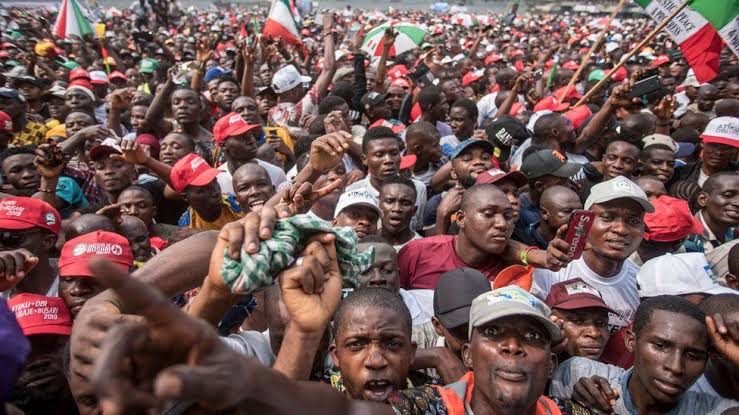
In the frenzy for presidential high grounds, campaigns at the lower levels of governance have received less attention and media. All roads seem to lead to Aso Rock, the grand venue of the national bazaar. Our political imagination seems to have forgotten that in real terms , Nigerians live and work in the states. We are all citizens of Nigeria but our needs are met first by the 36 states and the FCT.
The challenge of this campaign season is both simple and complex. The simple part is to design and implement credible campaigns with clear messages that do not insult the public mind. The hard part is for politicians to navigate their way through the Buhari carnage and re-imagine Nigeria. Neither if these seem to be happening. That is why it has become difficult to predict the outcome of a election that seems too far to call.
