

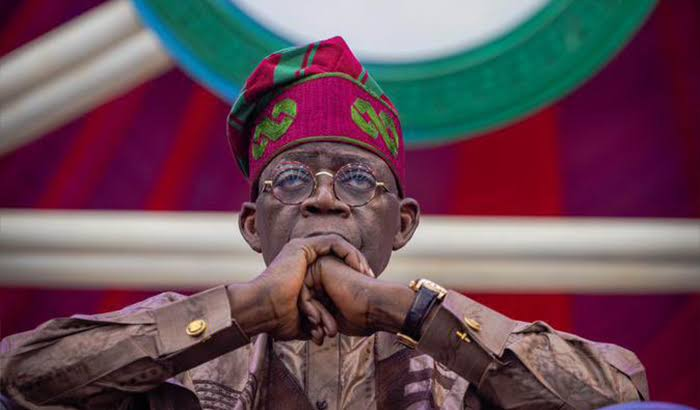
President Bola Tinubu on Wednesday restated his firm directive for the immediate withdrawal of police officers assigned to VIPs, ordering their redeployment to core policing duties, even as he tasked Vice President Kashim Shettima to lead a critical livestock reform initiative.
Presiding over the Federal Executive Council meeting at the State House, Abuja, the President expressed frustration with the slow compliance to his initial order, which was issued nearly three weeks prior amid a spike in kidnappings across the country.
“I honestly believe in what I said…It should be effected. If you have any problem because of the nature of your assignment, contact the IGP and get my clearance,” a resolute Tinubu stated.
The President framed the urgent measure as a necessity to combat escalating insecurity, particularly abductions. “We are facing challenges of kidnapping. We need all the forces we have on the ground, fully utilised,” he insisted.
He directed the Minister of Interior, Dr. Olubunmi Tunji-Ojo, to collaborate with the Inspector-General of Police (IGP) and the National Security and Civil Defence Corps (NSCDC) to promptly provide replacements for the withdrawn police escorts, ensuring “you don’t leave people exposed.” He further ordered the National Security Adviser (NSA), Nuhu Ribadu, to arm forest guards to seriously tackle rural banditry.
In a separate but equally critical directive, President Tinubu mandated Vice President Shettima to utilize the National Economic Council (NEC) to spearhead the reform of the livestock sector. The aim is to curb violent farmer-herder conflicts by formalizing the grazing economy.
He specifically asked the Vice President to identify and rehabilitate existing grazing reserves into organized ranches and livestock settlements. “We must eliminate the possibility of conflicts and turn the Livestock reform into economically viable development,” Tinubu directed, stressing that the states should use their constitutional ownership of land to “convert to a Livestock village, let us stop this conflict area and turn it into economic opportunities and prosperity.”
