





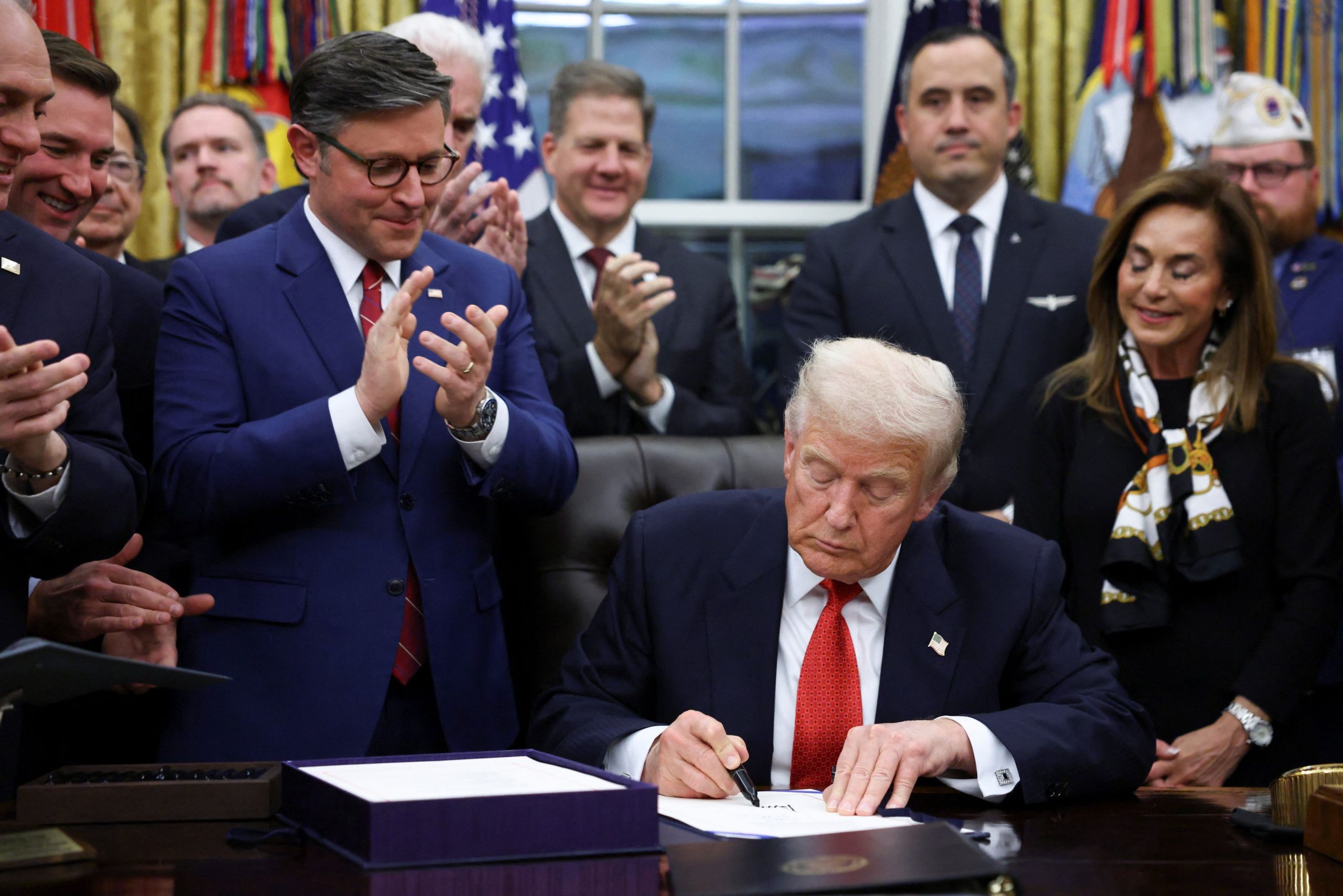
US President Donald Trump on Thursday issued an executive order reclassifying marijuana from a highly restricted Schedule I drug to the less stringent Schedule III category, a move aimed at facilitating medical research but drawing sharp criticism from fellow Republicans.
The decision places cannabis alongside substances like codeine-combined Tylenol and anabolic steroids, which are viewed as having moderate to low risks of dependence, unlike its prior grouping with heroin and LSD as drugs with no medical value and high abuse potential.
Trump, speaking from the Oval Office, highlighted the order’s potential benefits: “This reclassification order will make it far easier to conduct marijuana-related medical research, allowing us to study benefits, potential dangers, and future treatments.”
“It’s going to have a tremendously positive impact,” he added.
The president had earlier indicated his openness to the change during a Monday announcement, saying: “We are considering that. A lot of people want to see it, [the reclassification], because it leads to tremendous amounts of research that can’t be done unless you reclassify. So we are looking at that very strongly.”
However, the action has faced pushback from GOP figures, including a letter led by Representative Pete Sessions of Texas and House Freedom Caucus Chairman Andy Harris of Maryland, imploring Trump to maintain marijuana’s Schedule I status.
In the correspondence, the lawmakers argued: “We write to urge you to oppose rescheduling marijuana, a harmful drug that is worsening our nation’s addiction crisis. Reclassifying marijuana as a Schedule III drug will send the wrong message to America’s children, enable drug cartels, and make our roads more dangerous.”
The reclassification is anticipated to simplify the buying and selling of marijuana while opening doors for expanded studies on its effects.
This development contrasts with the Trump administration’s aggressive stance against illegal narcotics, which includes labeling groups like the Tren de Aragua and Sinaloa cartels as foreign terrorist organizations and executing over 20 maritime strikes in Latin America since September to intercept drug shipments.
