



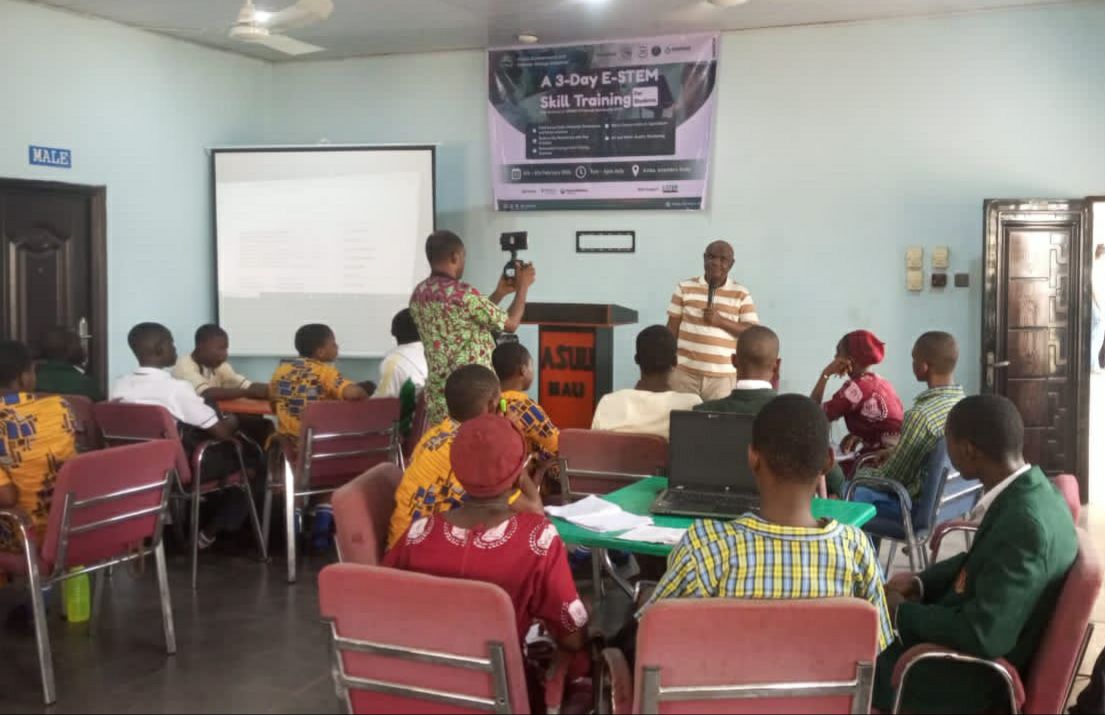
The Green Environment and Climate Change Initiative (GRENCHI) is conducting a three-day E-STEM training programme for secondary school students in environmental conservation skills to build their capacity to contribute to climate action and sustainability.
The students were trained in field-based data collection and analysis, biodiversity monitoring and mapping, water conservation in agriculture, air and water quality monitoring, and renewable energy systems, with emphasis on solar technology.
Angel Network News (ANN) reports that
the training funded by North American Association for Environmental Education, (NAAEE) as well as Pratt & Whitney, enjoys the support of other local partners, including Green Technologies, the Departments of Crop Science and Horticulture, and Forestry and Wildlife at Nnamdi Azikiwe University (UNIZIK).
Others are: the Sahelian Institute of Bamboo Research and Entrepreneurship Development (SIBRED) and the National Environmental Standards and Regulations Enforcement Agency (NESREA).
In his speech, GRENCHI’s Programme Lead, Dr. Oluropo Apalowo, said the organization through the intervention seeks to close the gap between theory and practice in environmental education.
The Programme Lead noted that many environmental interventions focus largely on classroom instruction, which he identified as a gap in knowledge acquisition.
Apalowo said the programme would empower students to apply environmental knowledge they have garnered to real-life situations rather than retaining it as abstract concepts.
“For instance, water conservation formed a key component of the training. Students are learning techniques such as mulching, use of drought-resistant seeds and hydroponics, which can significantly reduce water usage while improving agricultural productivity.
“The training is structured to ensure sustainability through knowledge transfer. Participants are expected to replicate what they learnt in their schools and communities, even in their balconies and small compounds.
“After the training, they will return to their schools, to implement environmental projects based on the training and are expected to present the outcomes in July during a competitive exhibition, which GRENCHI plans to integrate into its annual boot camp.”
Apalowo also explained the choice of secondary school students. “They are at their formative stage where values and behavioural patterns are shaped. Peer influence among young people can help spread positive environmental practices.
One of the facilitators, and Director, SIBRED, Dr. John Ogbodo, described environmental protection as a collective responsibility. “The earlier we expose the children to conservation education the better.
“This training was aimed at equipping students to act as environmental ambassadors within their schools, families and communities.
“Just around 1 hour we step out of this venue to see things around the ASUU Secretariat premises, students identified and documented about 30 species of flora and fauna – birds, insects, soil organisms and plants.”
He explained that the exercise introduced students to biodiversity mapping and scientific documentation using surveys, drawings and digital tools, as well as standard reporting methods involving scientific, English and indigenous names of species.
“This approach ensures that local environmental observations can contribute to broader conservation knowledge and action.
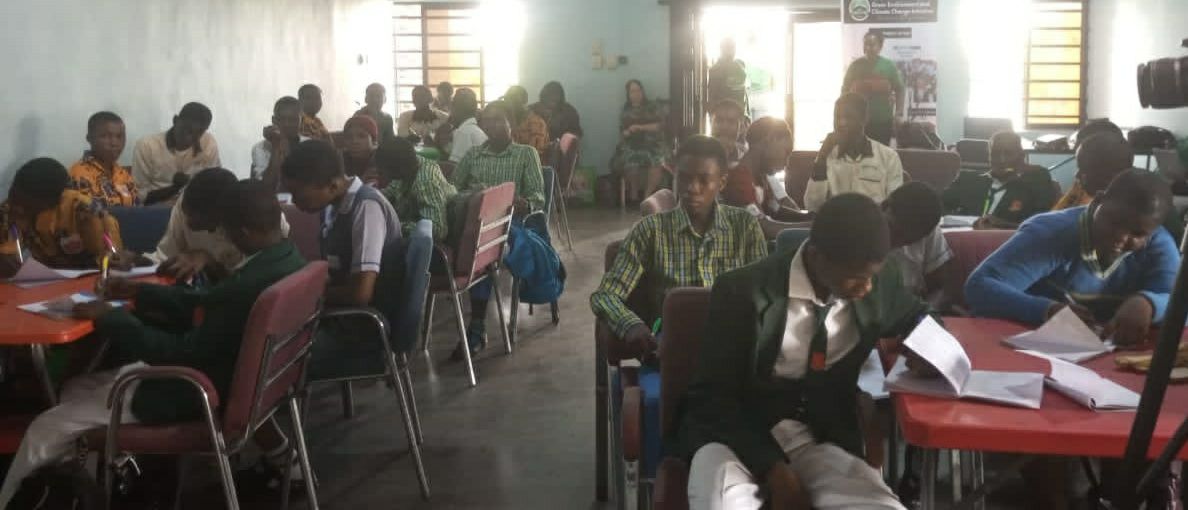

Some of the students described the training as impactful, having improved their understanding of environmental conservation.
They pledged their readiness to apply the skills garnered in their schools and communities.
