





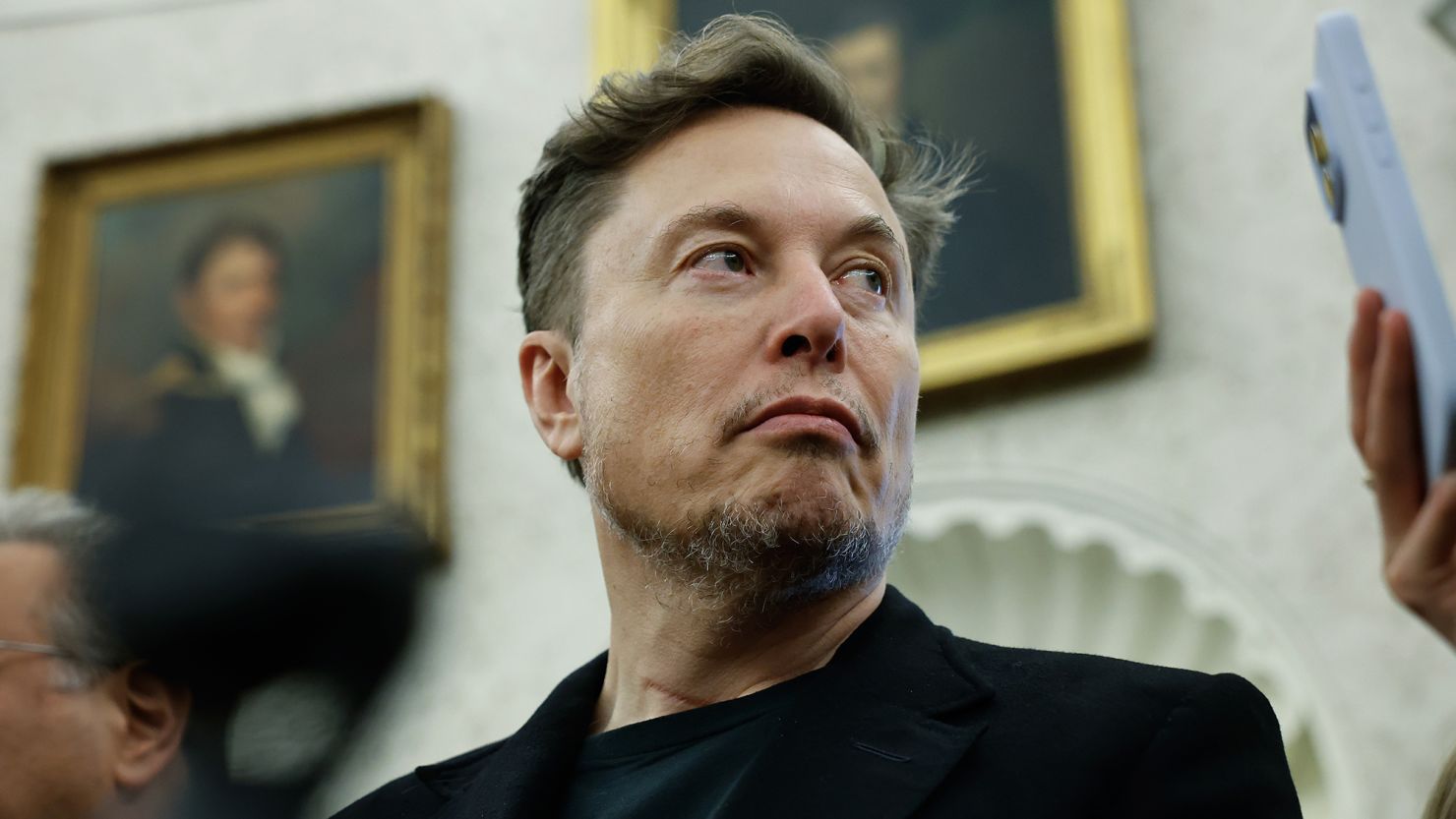
Tech billionaire Elon Musk warned Friday that the United States is on an irreversible path to financial ruin unless breakthroughs in artificial intelligence and robotics dramatically boost productivity to tackle the exploding national debt.
In a stark assessment shared on social media, Musk declared the country’s fiscal trajectory “totally screwed,” with interest payments on the $38.56 trillion debt already surpassing the annual military budget of over $1 trillion.ab6329 “We are 1,000% going to go bankrupt as a country and fail as a country, without AI and robots,” Musk wrote, insisting that “nothing else will solve the national debt.”bbe468
The Tesla and SpaceX chief’s comments come amid escalating concerns over federal overspending, with the government already racking up a $602 billion deficit in the early months of fiscal year 2026, as expenditures outpace revenues by a wide margin.9ca3b2 Projections from the Committee for a Responsible Federal Budget paint an even grimmer picture, forecasting interest costs to balloon to $1.5 trillion by 2032 and $1.8 trillion by 2035.
Musk, who has repeatedly sounded alarms on the issue, argued that only exponential technological advances can generate the economic growth needed to avert collapse. He has previously cautioned that unchecked debt trends could render the US dollar “worth nothing.”
Echoing Musk’s urgency, hedge fund titan Ray Dalio of Bridgewater Associates has described the situation as a potential “debt death spiral,” where the government borrows ever more just to service interest — leading to currency devaluation. Yet Dalio offered a sliver of reassurance, predicting no outright default as the Federal Reserve could intervene by printing money to buy bonds.ed79a6 “There won’t be a default — the central bank will come in and we’ll print the money and buy it,” Dalio said.
Musk’s intervention highlights growing unease among business leaders over Washington’s fiscal policies, even as the White House defends its spending as essential for economic recovery and infrastructure. Critics, however, warn that without structural reforms, the debt burden risks stifling innovation and growth at a time when global competition in AI demands aggressive investment.
The national debt has more than doubled since 2017, fueled by pandemic-era stimulus, tax cuts and ongoing deficits. Economists debate the tipping point, but Musk’s hyperbolic framing — likening the debt pile-up to “crazy” accumulation — underscores the high stakes for policymakers.
Angel Network News sought comment from the Treasury Department but received no immediate response.
