
Nigeria has formally thrown its weight behind a broad package of institutional reforms proposed for the African Union (AU), placing particular emphasis on strengthening peace and security governance, democratic institutions and continental cooperation.
The country also aligned with proposed restructurings aimed at boosting domestic and regional resource mobilisation for affordable development financing and the adoption of a continental framework on reducing inequality built on credible data, social protection, productive jobs and inclusive industrial policies, among others.
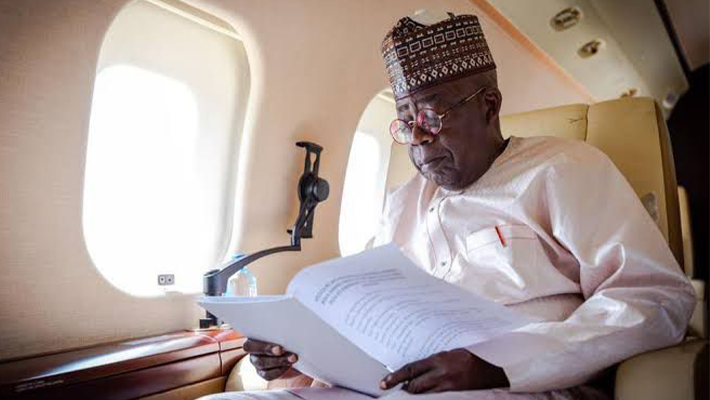
The position of President Bola Tinubu, who was represented by Vice President Kashim Shettima at the closed session of the 39th Ordinary Session of the Assembly of Heads of State and Government held in Addis Ababa, Ethiopia, followed presentation of the report on the thematic agenda items of the African union, comprising peace and security; integration and sustainable development, and Africa’s voice, among other areas.
On combating transnational organised crimes and boosting the continent’s blue economy, Tinubu commended the Peace and Security Council for endorsing the combined maritime task force for the Gulf of Guinea as a standby force capable of providing rapid and coordinated maritime security responses across the region.
He pledged Nigeria’s commitment to implementation of its part of the agreement in the establishment of the force as well as the strengthening of the African Union Standby Force.
Vice President Shettima in a statement signed by his spokesman, Stanley Nkwocha, quoted the President as saying: “The proliferation of small arms and light weapons remain the greatest causes of armed conflict and violent extremism in our region. This is why our union must refocus its attention on curbing these trends.
“As the host of the headquarters of this taskforce, Nigeria will provide the necessary infrastructure including office facilities, ships, helicopters as well as temporary staff to ensure that the force remains effective. We remain committed to the full implementation of our own part of the agreement.”
While noting Nigeria’s stand on the review of the criteria for membership of the Peace and Security Council, President Tinubu said the nation associates “with the innovative proposal for the inclusion of a clause in relation to criteria for membership of the Peace and Security Council.
“As envisaged in Article 5 of the protocol establishing the Peace and Security Council, we also support the inclusion of modalities for cooperation between the African Union and its regional economic commissions and regional mechanism.
“It is our view that this is necessary to ensure predictability and effectiveness in our peace and security governance. We also agree on the imperative to strengthen coordination between the peace and the security council and the C-10 committee (Committee of 10 Heads of State and Government on the Reform of the United Nations Security Council), particularly at the ambassadorial level.”
On democracy, the President announced Nigeria’s support for reforms proposed to strengthen democratic institutions in Africa, even as he commended “AU’s efforts to address unconstitutional change of government and wish to underscore the imperative for good governance.”
He announced Nigeria’s endorsement of the AU’s decision to lift the suspension of the participation of Gabon and Guinea in the union’s activities.
“Nigeria welcomes Gabon and Guinea back to our union after the completion of their political transitions. We call on other countries with protracted political transitions to follow the approach to return to the fold,” Tinubu declared.
On critical minerals and the industrial value chain, he reiterated Nigeria’s position that “Africa’s mineral resources are strategic assets that should drive industrialization and structural transformation.” He emphasised the need for coordinated continental approaches to ensure that mineral extraction supported local processing, manufacturing and technology development.
