


The chairman of Nigeria’s Independent National Electoral Commission said Thursday that the deployment of the armed forces during elections must remain exceptional and not become routine practice.
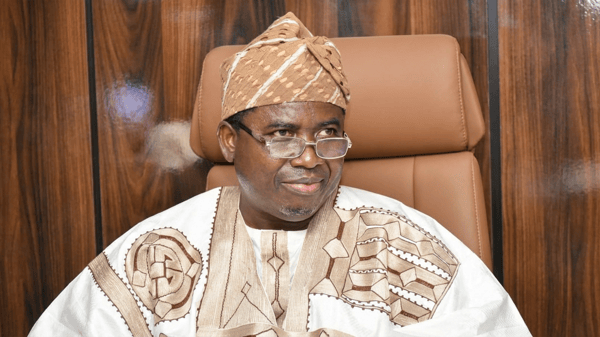
Professor Joash Amupitan, represented by the commission’s director of legal services, Al-Hassan Umar, delivered a keynote address at a seminar in Abuja. He stressed that military involvement should occur only when security conditions demand support for civil authorities and must strictly follow the constitution and applicable laws.
“The role of the Armed Forces is exceptional rather than routine,” Amupitan said. “Their deployment arises only where prevailing security conditions require military support in aid of the civil authorities.”
He reaffirmed the constitutional division of responsibilities, noting that INEC is mandated to organise and supervise elections while the Nigeria Police Force remains the lead agency for election security under the Inter-Agency Consultative Committee on Election Security.
The armed forces, he added, play “a supportive rather than supervisory role, protective rather than political, and one firmly anchored in constitutional responsibility.” Possible tasks include securing strategic national assets, protecting critical infrastructure, supporting the movement of sensitive electoral materials when necessary, and assisting civil authorities in extraordinary situations.
Amupitan urged military personnel to maintain absolute political neutrality. “The Armed Forces serve the Nigerian State and the Constitution—not any political party, candidate or individual,” he said. Every interaction with citizens during elections should reflect “courtesy, discipline, restraint and professionalism.”
Looking ahead to the 2027 general elections, the INEC chairman warned that security challenges now extend beyond conventional violence to include insurgency, banditry, kidnapping, organised political violence, cyber interference, misinformation and the misuse of emerging technologies. He said the commission is working with other agencies to strengthen risk assessment, operational coordination and intelligence-driven responses.
“Our collective objective is straightforward: to identify and neutralise security threats before they disrupt the electoral process, while ensuring that every eligible Nigerian can exercise the constitutional right to vote freely, safely and without intimidation,” he said.
Representing the Chief of Defence Staff, Rear Admiral Abolade Ogunleye said the armed forces had consistently provided aid to civil authorities when called upon, citing their professional conduct during recent off-cycle and by-elections in several states. He emphasised the need for strict neutrality, professionalism and respect for human rights standards as political activities intensify ahead of 2027.
