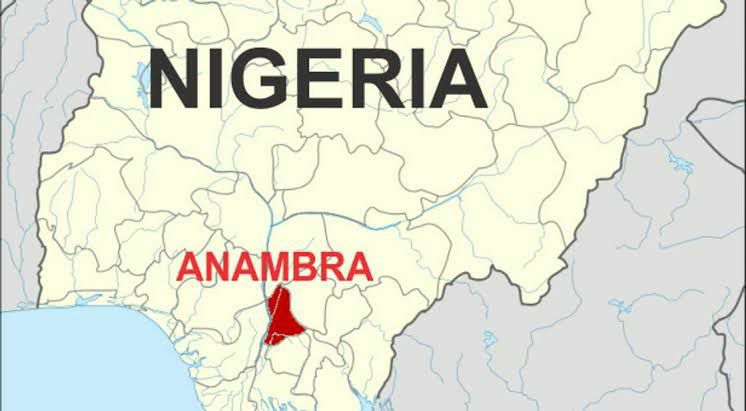





The Anambra State Independent Electoral Commission (ANSIEC) says it remains committed to conducting the local government elections as scheduled on August 29, 2026.
Despite a legal challenge instituted by 56 serving councillors in Anambra State, the commission maintained that the mere filing of a lawsuit does not automatically halt an electoral process, insisting that it is continuing preparations for what it described as a free, fair and transparent election.
The Chairman of ANSIEC, Mrs Genevieve Osakwe, who spoke with journalists via phone in Awka, said the commission was at its offices working to conclude arrangements for the conduct of the election.
According to Osakwe, the commission has not received any directive requiring it to suspend the electoral process.
“As you can see, we are in our offices working ahead of the conduct of the election. It is not automatic that when a suit is filed in court, the electoral process will stop,” she said.
She urged political parties in the state to continue preparing for the election, stressing that ANSIEC remained focused on delivering a credible electoral process.
Osakwe further assured political parties and their candidates that the election would be conducted in accordance with the Electoral Act 2022 and relevant Anambra State electoral laws.
Angel Network News (ANN) reports that
the commission had fixed August 29, 2026, for the local government elections, following the conduct of party primaries for the nomination of candidates between December 18 and February 16.
However, the planned election has become the subject of a legal dispute, with 56 serving councillors, acting on behalf of themselves and others, as well as local government mayors, challenging the legality of the proposed polls.
The plaintiffs are contending that their tenure of office has not expired and that they are entitled to remain in office for four years from the date of their swearing-in.
The dispute stems largely from legislation enacted by the Anambra State House of Assembly prescribing a two-year tenure for elected local government chairmen, deputy chairmen and councillors.
The plaintiffs have challenged the validity of that provision, arguing that a two-year tenure is inconsistent with the constitutional guarantee of a democratically elected local government system.
In Suit No. A/261/2026, the plaintiffs joined the Attorney-General of Anambra State, the Anambra State House of Assembly and ANSIEC as the first, second and third defendants respectively.
Among the declarations being sought by the plaintiffs are determination that the statutory system of local government guaranteed under Section 7(1) of the 1999 Constitution, as amended, envisages a secure, stable and reasonable tenure capable of facilitating effective grassroots governance, and does not permit what they describe as the arbitrary truncation of an elected council’s tenure by state authorities.
They are also asking the court to declare that Section 110(A) of the Anambra State Electoral (Amendment No. 3) Law, 2024, which limits the tenure of democratically elected local government chairmen, deputy chairmen and ward councillors to two years, is inconsistent with Section 7(1) of the Constitution and is therefore unconstitutional, null and void.
The plaintiffs are further seeking an order striking down, invalidating and expunging Section 110(4) of the Anambra State Electoral (Amendment No. 3) Law, 2024, from the statute books on the grounds that it is inconsistent with the Constitution Federal Republic of Nigeria.
They are also asking the court to declare that democratically elected local government officials are entitled to a four-year tenure in line with the tenure enjoyed by elected officials at the federal and state levels.
In addition, the councillors are seeking a perpetual injunction restraining the defendants, their agents, privies or anyone acting on their behalf from dissolving, terminating or otherwise interfering with the tenure of the elected local councils at the expiration of two years.
They are also asking the court to restrain ANSIEC from taking further steps, publishing timetables or conducting elections aimed at replacing the plaintiffs and other serving elected local government officials until the completion of what they contend is their four-year constitutional tenure.
The legal challenge therefore raises a broader constitutional and political question over the autonomy, tenure and democratic legitimacy of local government administration in Anambra State.
While the state electoral commission maintains that the election timetable remains intact, the outcome of the court proceedings could have significant implications for the planned transition at the local government level.