



Aggrieved residents of Akanator section of Abacha community in Idemili North Local Government Area of Anambra State have appealed to Governor Chukwuma Soludo to intervene in the town union leadership dispute and cancel the October 31, 2026 President-General election.
The protesters alleged that the election violated an existing power-sharing arrangement between Akanator and Umudisi sections of the community, as well as provisions of the town union constitution.
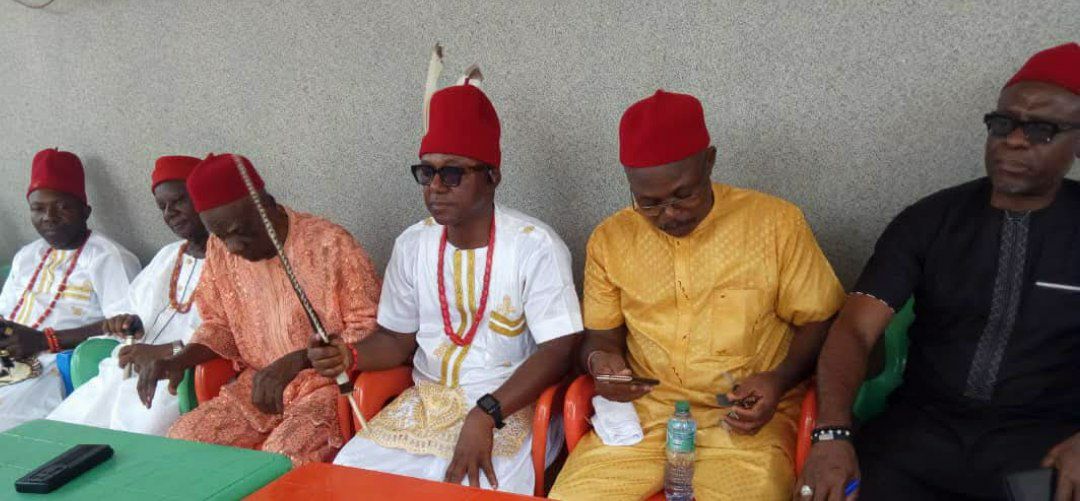
The community’s leadership crisis took a fresh turn when the protesters stormed the Anambra State Government House, Light House, Awka, alleging domination and a breach of trust by the Umudisi section.
Speaking during a press briefing, the Cabinet Secretary of the Igwe-in-Council, Chief Uchenna Ubah, explained that following the dethronement of the community’s former traditional ruler by the immediate past administration, stakeholders from the two sections reached an agreement in 2021 to maintain a balance in community leadership.
According to him, the agreement provided that Umudisi, comprising three villages, would retain the traditional stool and produce a successor to the dethroned monarch, while Akanator, which has four villages, would retain the position of President-General to promote peace, fairness and stability.
He stressed that their protest was not against the traditional ruler but specifically concerned the office of the President-General.
Also speaking, a stakeholder, Chief Jonas Okafor, said the people had submitted a petition to the state government challenging the election. He appealed to Governor Soludo to reverse the outcome, arguing that one-sided leadership would deny other sections a sense of belonging.
.
A former President-General of the community, Chief Emeka Ekelo, said the people of Akanator felt betrayed, describing the matter as a moral obligation rather than merely a constitutional issue.
He disclosed that members of Akanator boycotted the election, while some individuals from Umudisi who reportedly supported the power-sharing arrangement were allegedly prevented from participating in what was supposed to be a delegate election.
Similarly, an elder in the community, Chief Nelson Olife, questioned the fairness of allowing one section comprising three villages to occupy the positions of traditional ruler, Onowu and President-General, while the remaining four villages had no representation in the major leadership positions.
However, the traditional ruler, Igwe Godwin Nwabunwanne Odiegwu, dismissed claims of an agreement restricting the President-General’s position to Akanator, insisting that he neither saw nor signed any such agreement.
He maintained that community leadership was a constitutional matter and that the October 31 election was conducted in accordance with the provisions of the community’s constitution.
The monarch further stated that people from both Akanator and Umudisi were elected into various positions, urging residents to shun divisive tendencies and embrace peace and unity for the development of the community.
Backing the monarch’s position, the Traditional Prime Minister, Chief Paul Omofia, argued that the traditional ruler’s and Onowu’s positions were not political offices and should not be equated with that of the President-General, which has a defined tenure and electoral process under Article 20 of the community’s constitution.
He added that the rotation of leadership between Akanator and Umudisi had existed for decades and should not be compromised.
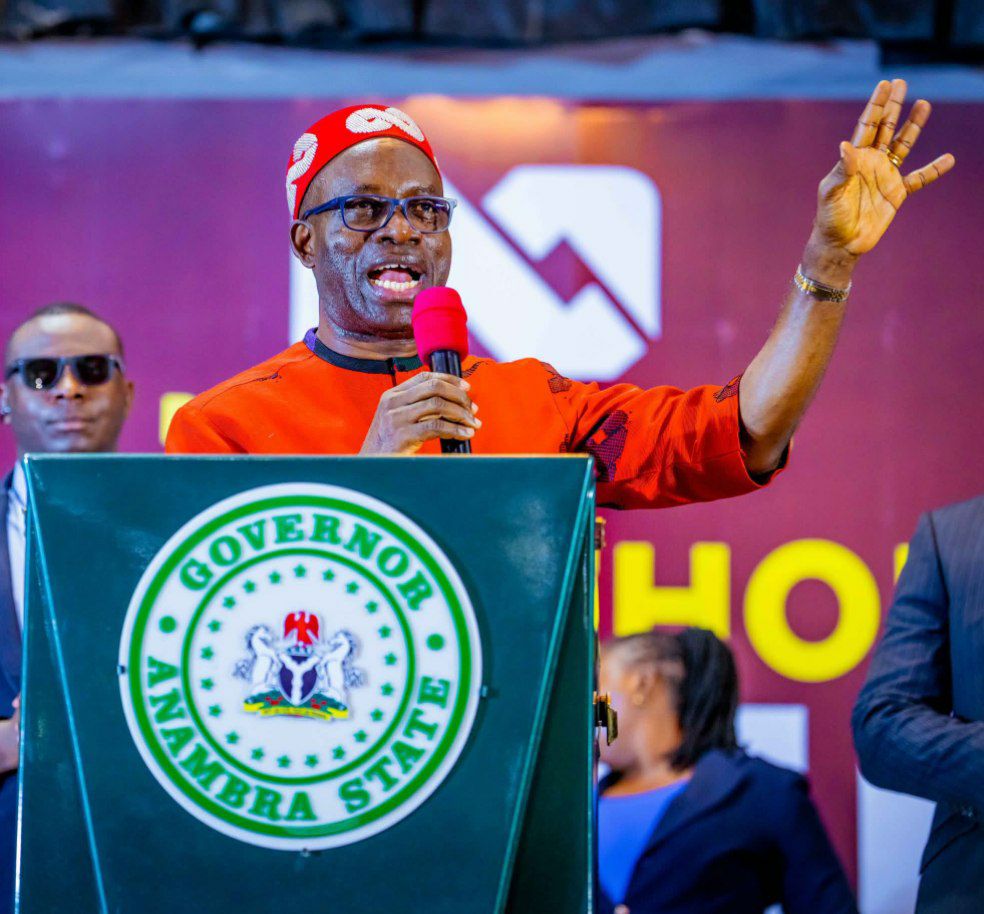
Addressing the protesters on behalf of the governor, the Deputy Chief of Staff, Dr Okechi Egbuna, assured them that no section of Anambra State would be allowed to dominate another under the Soludo administration.
He described the Abacha leadership dispute as a serious matter, assuring the protesters that the state government was already looking into their complaints.
Although he promised to convey their grievances to Governor Soludo, Egbuna advised them to also engage the Commissioner for Local Government and Community Affairs, who oversees town union affairs.
In his presentation of the protesters’ grievances, Okafor explained that Abacha community comprises two sections, Akanator and Umudisi, lamenting that despite Akanator having four of the community’s seven villages, the traditional ruler and Onowu both hail from Umudisi.
He alleged that the Umudisi section further produced the President-General through a manipulated election conducted on October 31, 2026.
Okafor recalled that the immediate past administration of Chief Willie Obiano dethroned about 12 traditional rulers, including the then traditional ruler of Abacha, Igwe Godwin Mbakwe.
He explained that Igwe Mbakwe was not reinstated alongside other pardoned monarchs because he had instituted legal action against the state government over his dethronement.
According to him, the traditional kingship rotation arrangement would ordinarily have favoured Akanator in producing a successor to Igwe Mbakwe.
However, he said Akanator stakeholders decided to allow Umudisi to retain the traditional stool after Igwe Mbakwe allegedly accused their section of being responsible for his removal.
He added that stakeholders subsequently agreed that the traditional stool would remain with Umudisi, leading to the emergence of the current monarch, Igwe Odiegwu.
Okafor said it was also resolved at the meeting that since the traditional ruler and Onowu hold their positions for life, the office of President-General would be reserved for Akanator and rotated among its four villages: Umuekpeli/Logba, Umuazu, Ubuma and Umuokpolonwu.
He accused Umudisi of violating the understanding during the October 31 election by producing the President-General from its section.
Some of the placards displayed by the protesters read: “President-General will remain in Akanator for power to balance because Igwe is for life”; “Anambra Govt should not recognise ADU election of 31 October 2026”; and “90 percent of Abacha community boycotted the 31st October town election.”
Others called for fairness in the distribution of leadership positions, insisting that no section should monopolize the major administrative offices in the community.