


A Fellow of the Nigeria Guild of Editors (FNGE), Sir Victor Agusiobo, has challenged journalists to embrace a more consequential form of journalism that goes beyond objectivity, fact-checking and balancing of viewpoints to address the question: “So what?”
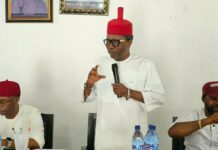
Agusiobo, a seasoned journalist, editor, journalism teacher and media commentator, made the call while speaking as Guest Speaker at the 35th Anniversary celebration of the Nigeria Union of Journalists (NUJ), Anambra State Council, on the theme, “A Responsible Press: Answering the ‘So What?’”
He maintained that even an intelligent primary school pupil appeared to have some understanding of who a responsible journalist is and what a responsible press should be.
Reflecting on the meaning of responsibility, Agusiobo recalled the observation of a reflective thinker who once said that “responsibility is a detachable burden, easily shifted to God, to one’s neighbour, and in the days of astrology, to a star.”
He challenged journalists to consider what truly makes a press responsible, asking whether the responsibility lies with the audience, media owners, government, advertisers or the conscience of practitioners themselves.
“In the days of multiple-choice questions, some would add: all of the above, or none of the above,” he said.
Agusiobo, a former Chairman of the NUJ, Anambra State Council, illustrated the complexity of responsible journalism with experiences from his career.
He recalled that in 1997, during military rule, the National Light, Anambra State newspaper, published a front-page report based on an interview with the then Commissioner for Finance.
According to him, the following morning, the military governor summoned the editors and accused them of poor judgment.
“The editors reminded him: ‘Sir, this came from your Commissioner. We have it on tape. We can play it for you.’
“Before they could, he snapped: ‘Stop that. You people have a way of forcing information out of people,’” he recalled.
Agusiobo said the incident demonstrated that even a governor and his commissioner could have divergent views on what constituted responsible journalism.
He said a similar experience occurred in 2012 under a democratic government when the newspaper published an editorial questioning a 100 per cent fuel price increase announced on New Year’s Day and its implications for families returning home for Christmas.
“We actually thought the editorial was pro-people, patriotic and harmless,” he said.
However, the governor disagreed and subsequently shut down the newspaper for three months and suspended its editor indefinitely.
“That Editor was me. Though the suspension was later lifted, the question remained: who defines responsible journalism? The government, or the people?” he asked.
According to Agusiobo, the traditional journalistic formula of the 5Ws and 1H—what, when, where, who, why and how—was developed to ensure accuracy and objectivity, but may no longer be sufficient to meet the demands of journalism in 2026.
“I, however, make bold to submit to you today that objectivity by formula is no longer enough and may not likely serve the ends of journalism in 2026,” he said.
He acknowledged that journalists are trained to gather information, fact-check, balance stories and follow ethical codes, but argued that responsible journalism must go beyond those processes.
“And yet somewhere a reader scrolls, reads, and says two words that should terrify us and possibly keep us awake: ‘So what?’” he said.
“If responsible journalism cannot answer that, was it ever responsible?”
Agusiobo argued that in a world saturated with thousands of headlines daily, information must have personal relevance to the audience.
“Our duty is not just to inform. It is to inform with purpose. It is not just to be responsible, but to be responsible for something,” he said.
He described “So What” journalism as journalism of consequence and utility, one that answers the question: “What is in this story for me?”
According to him, journalism must interrogate the consequences of institutional failures rather than merely report official pronouncements.
He cited the judiciary, saying journalism should not celebrate legal technicalities when alleged offenders continue to evade justice.
“Journalism will not clap for beautiful legal language, technicalities used in court when the culprit still walks free,” he said.
He warned that when courts repeatedly fail to deliver justice, public confidence in the judiciary could diminish and more citizens may resort to self-help, creating conditions for anarchy.
On the debate over state police, Agusiobo said journalism should go beyond merely reporting political statements in favour of or against its establishment.
He questioned what state police would achieve if the fundamental challenges confronting the existing police system—poor training, inadequate remuneration, poor infrastructure, lack of operational tools and weak intelligence-gathering capacity—remained unresolved.
“It stands to reason that merely miniaturizing deficiency is not an achievement. Copying and pasting dysfunction across 37 states is not progress. And municipalizing criminality does not make it a virtue,” he said.
Agusiobo also challenged journalists to examine the underlying causes of the proliferation of fake pastors and native doctors rather than merely reporting their arrests and arraignments.
“The big picture is not just gullible people patronizing quacks. It is unmet needs meeting exploitative marketing,” he said.
He urged journalists to investigate who provides hope and social support to vulnerable Nigerians when legitimate institutions fail to perform their responsibilities.
“If the legitimate institutions created to do that abandon their role, the void will be filled one way or the other,” he said.
He argued that better education and people-oriented economic policies could reduce the demand for exploitative spiritual and fraudulent health services.
“If a first-line antibiotic costs about 10–15 thousand naira, then be sure that not a few will buy into the claim of the omnibus healing powers of ‘spiritually’ approved blessed water and oil. It’s that simple,” he said.
Agusiobo further cautioned journalists against blindly reproducing official statistics that contradict citizens’ lived experiences.
He noted that when government officials claim that poverty has declined or that the economy has stabilised while citizens and other credible voices report worsening hardship, journalists must interrogate the contradiction rather than simply reproduce the competing claims.
“For us to just repeat them will be churnalism and not journalism,” he said.
Quoting economist John Kenneth Galbraith, Agusiobo said: “You cannot have improvement with unimproved people.”
He also recalled his own 2012 observation that “Economics without sociology is mere metallic science,” while quoting George Oscar Stephenson as saying: “When a nation’s growth rises on paper and her people sink in hunger, that is not progress. That is poverty masquerading as statistics.”
He therefore challenged journalists to ask fundamental questions about the quality of life of Nigerians.
“Is healthcare accessible? Is education working? Can people eat? Can they find shelter?” he asked.
Agusiobo said millions of Nigerians should not be reduced to figures on spreadsheets, bar charts and pie charts, stressing that governance must be humanised and that journalists should make this part of their pursuit of “So What” journalism.
“And why does it matter? It does matter because a government that governs by fake statistics will soon build a tax system that collects only from the dead and from criminals,” he said.
According to him, the central question for “So What” journalism is simple: What changes for the powerless?
He warned journalists against becoming mere stenographers for public officials.
“If we only repeat what officials say, then we are not journalists. To place a tape recorder to the mouth of a lying minister for two hours and transcribe and dump it on an audience that has done nothing to merit such punishment is not journalism in 2026; it is undiluted stenography,” he said.
He urged journalists to cut through the noise in society, describing clarity as a form of public service.
“And let’s be honest: responsible journalism that chases only minutiae is well-mannered irrelevance,” he added.
Agusiobo stressed that democracy could not survive without a free and responsible press, urging journalists to continually improve their knowledge and professional competence.
“No democracy can survive without the press. A journalist has no business being ignorant in 2026. An ignorant journalist is obviously a terminal disease to the society he avows to inform,” he said.
Addressing journalism teachers, he advocated greater emphasis on education and critical thinking among journalists rather than merely increasing the number of journalism practitioners.
“For the teachers of journalism here, if you allow me to choose between having more journalism in our fast-disappearing newsrooms or having more education in the journalism that would answer the ‘So What?’ questions in society, I will definitely choose the latter,” he said.
Encouraging younger Nigerians entering the profession, Agusiobo quoted Charles Philips on the enduring value of journalism, describing the profession as a friend at home, an introduction abroad, a solace in solitude and an ornament in society.
As the Anambra NUJ marked 35 years, Agusiobo commended the founding fathers of the council, the current executive for sustaining unity and journalists who continue to practise the profession despite pressure to remain silent.
“As we mark 35 years of NUJ in Anambra, I appreciate the founding fathers on whose shoulders we stand. I appreciate the current EXCO for keeping this house united. And I appreciate you, my colleagues, for choosing a profession that refuses to be silent, even when silence is demanded.
“And because we stand on those shoulders, the responsibility is ours.”
He said the success of the next 35 years of the NUJ in Anambra should not be measured by the number of press releases rewritten, but by the number of meaningful questions journalists ask and the impact of their journalism on society.
“The test of the next 35 years will not be how many press releases we rewrite. It will be how many ‘So What’ questions we ask.
“If we commit to that, Anambra NUJ will not only be the oldest in character, it will be the most consequential.
“That is the work. And that is the prayer.
“May our pens remain sharp, may our spines remain straight, and may our conscience remain louder than any headline,” he concluded.


