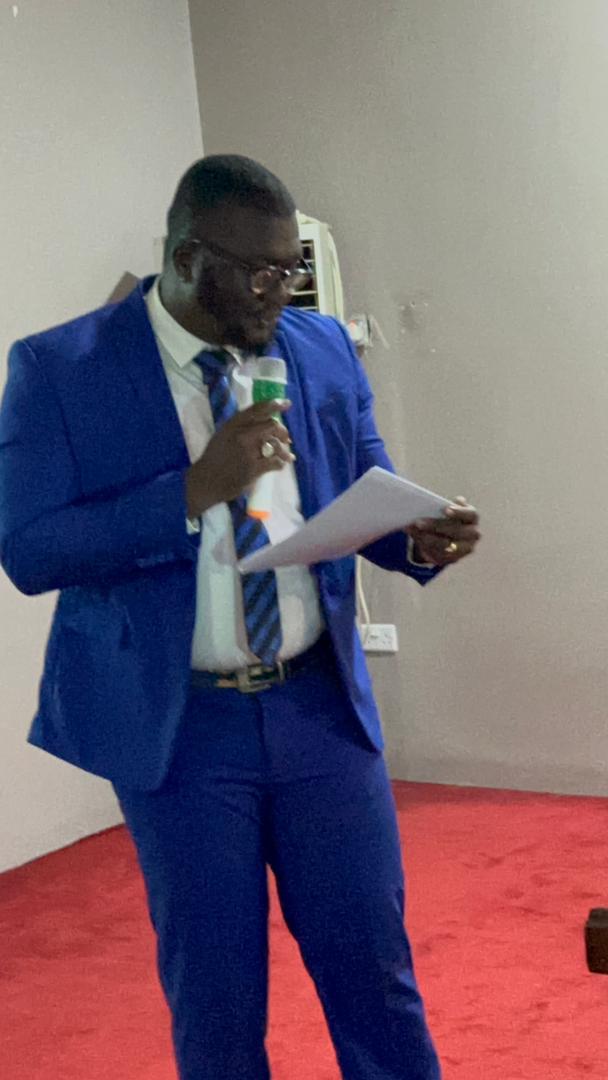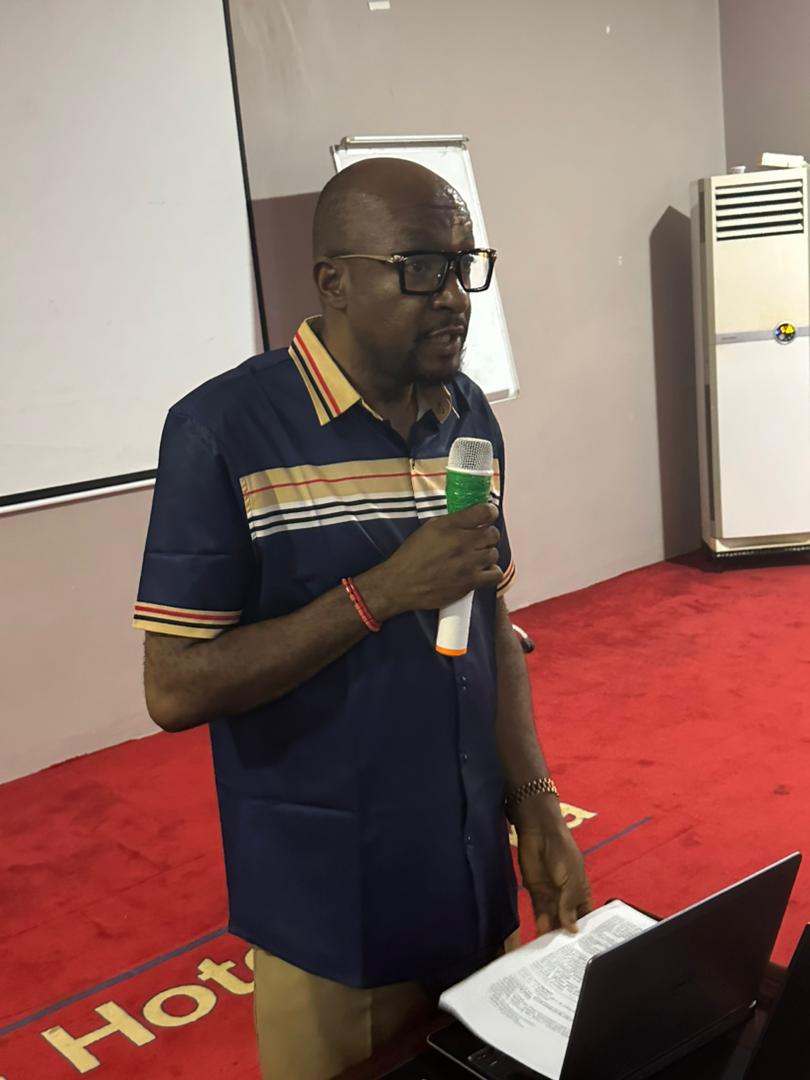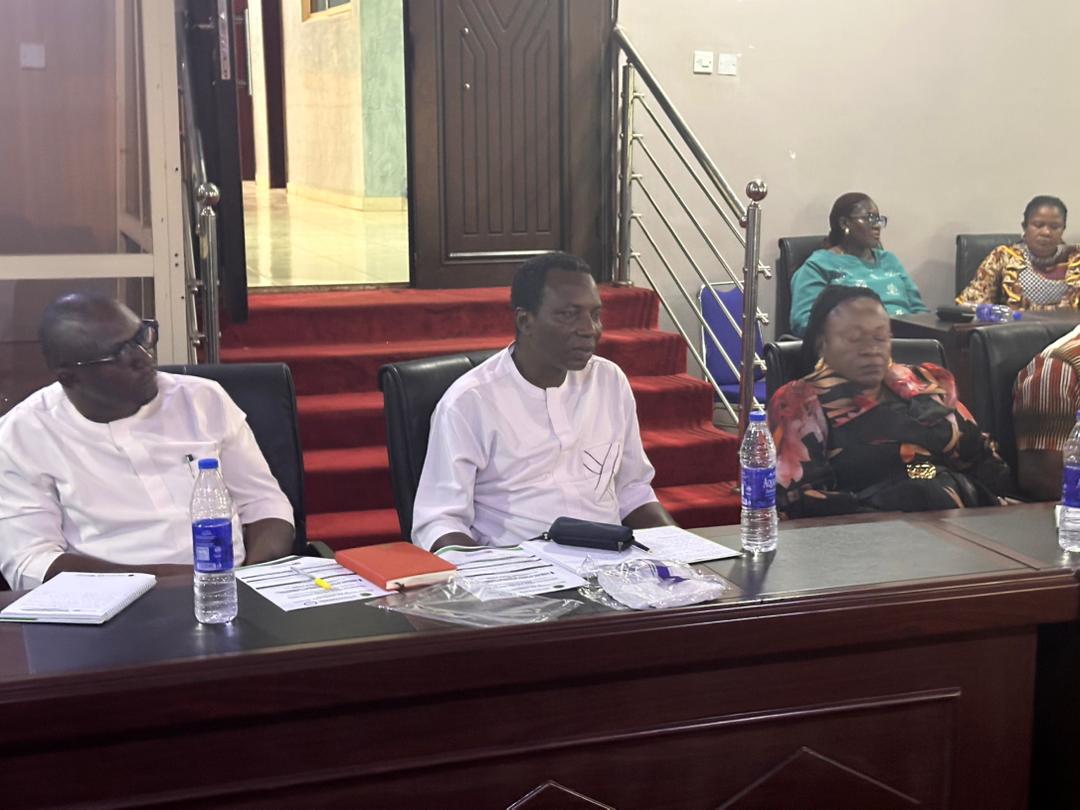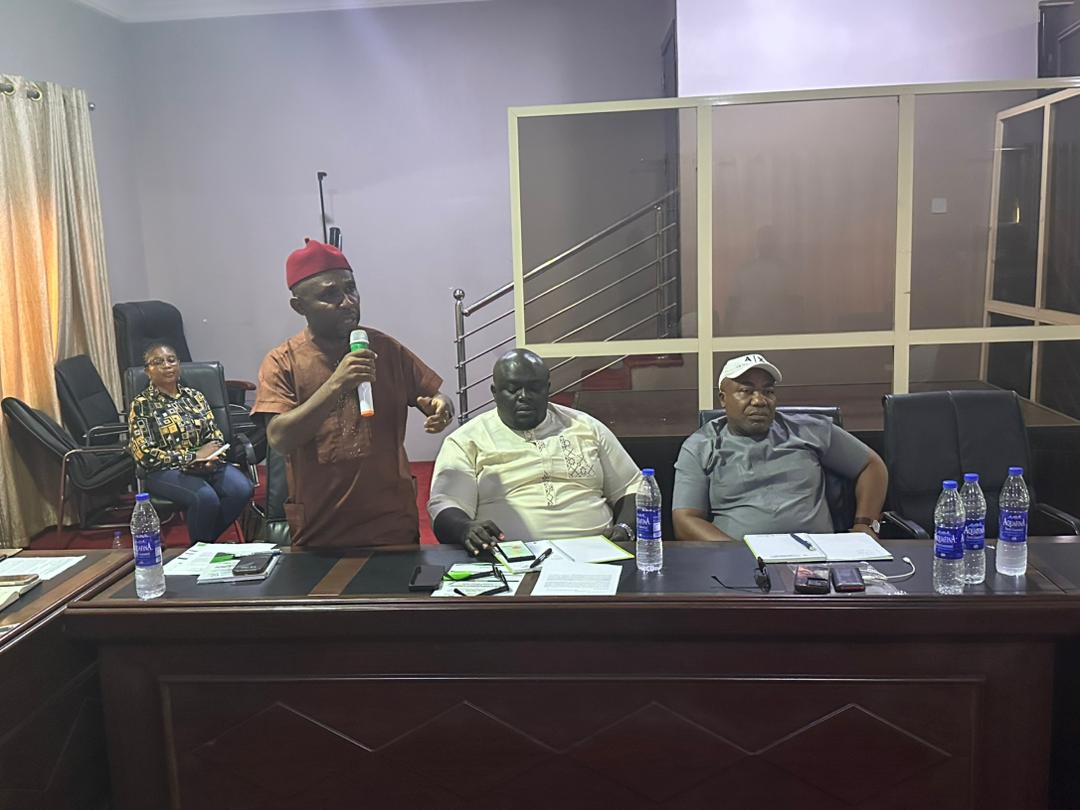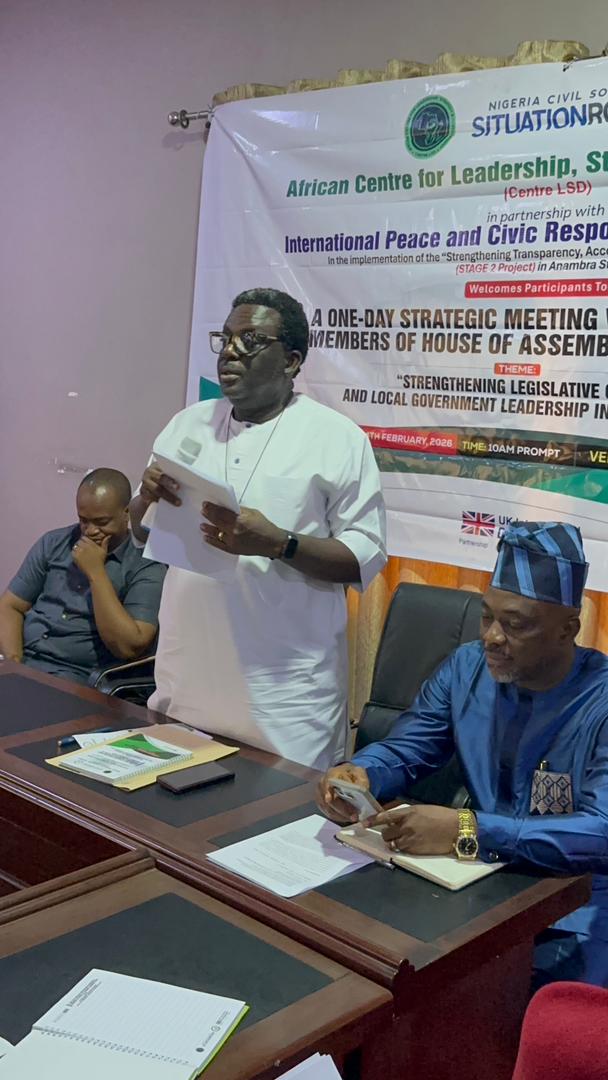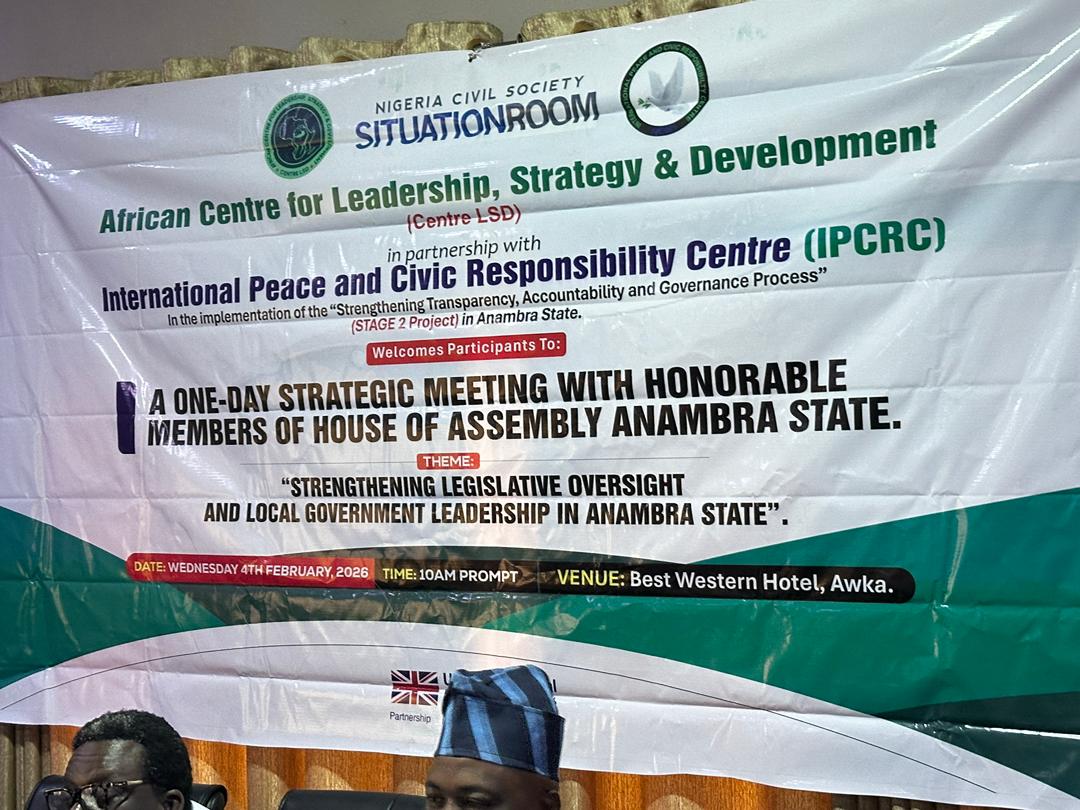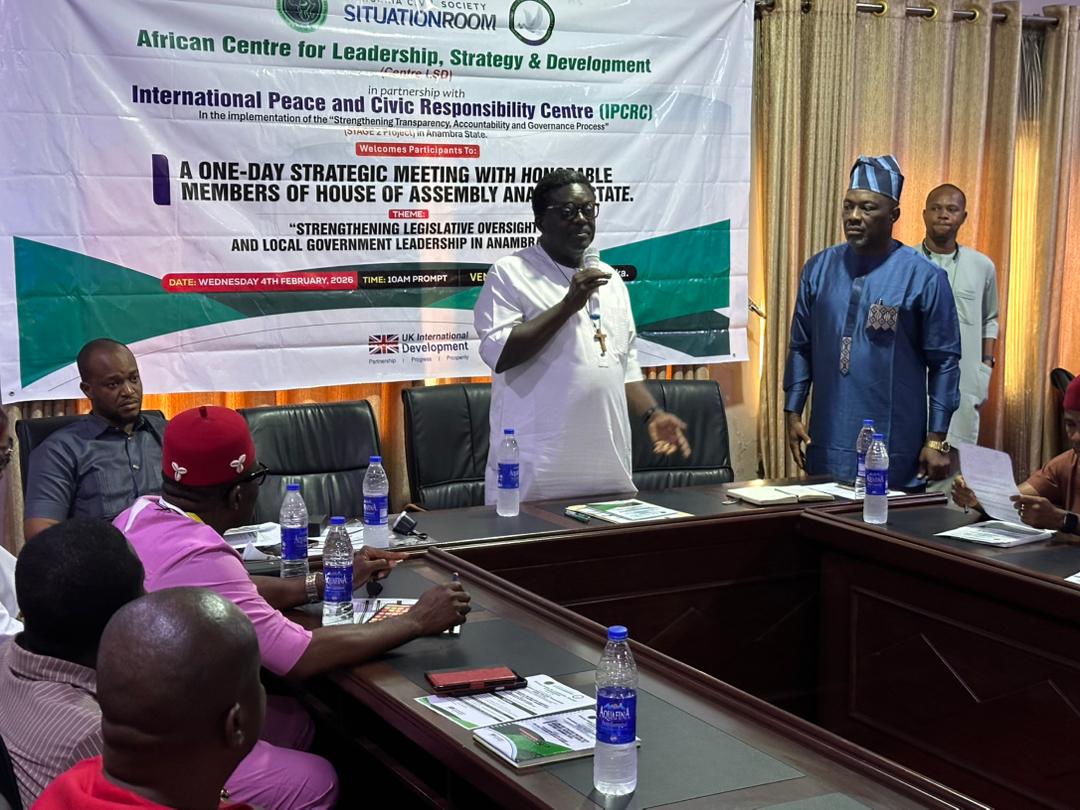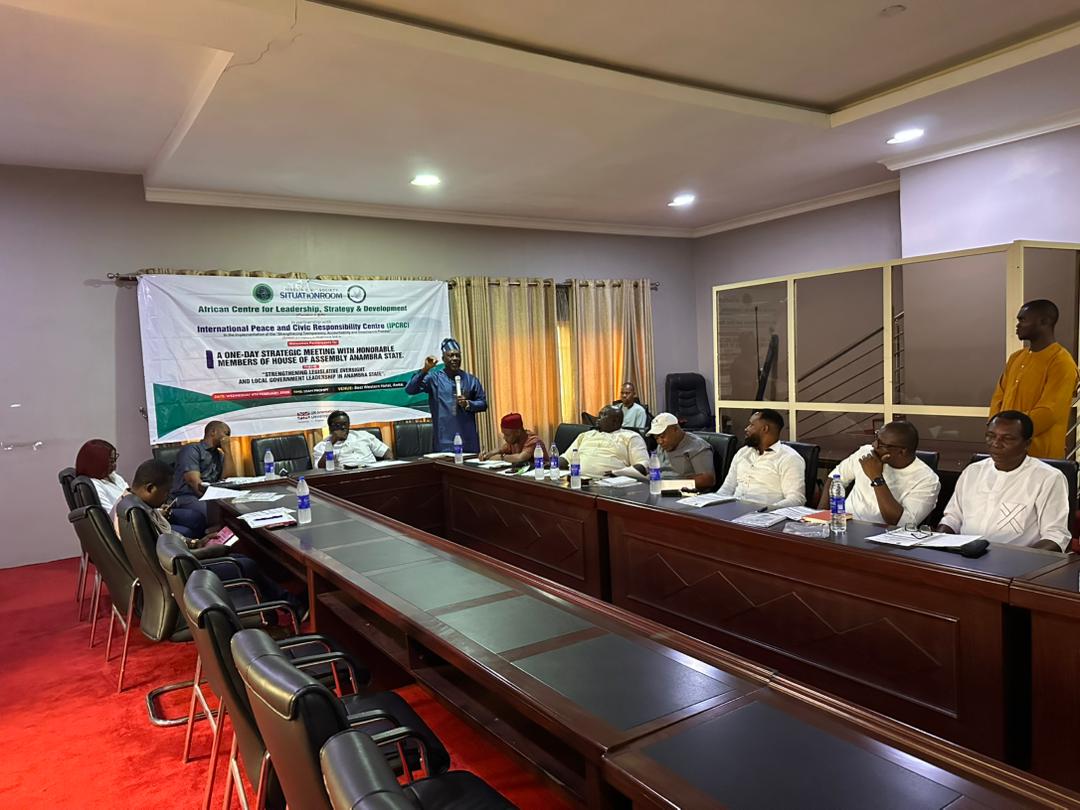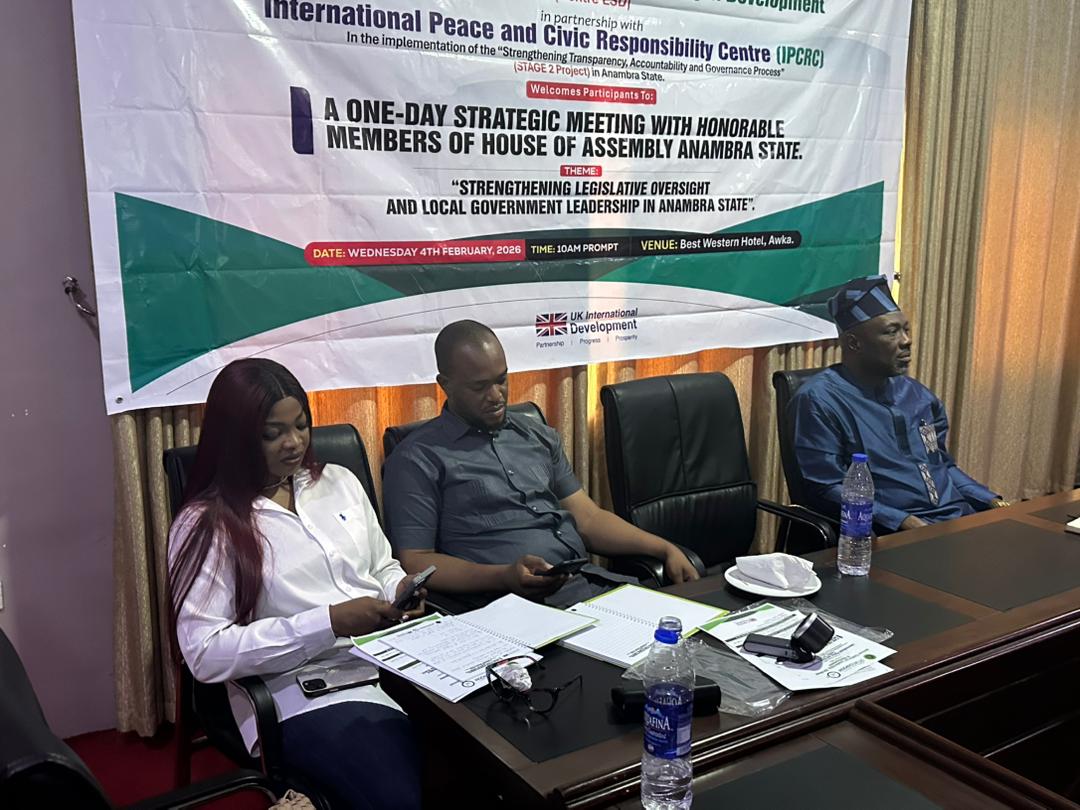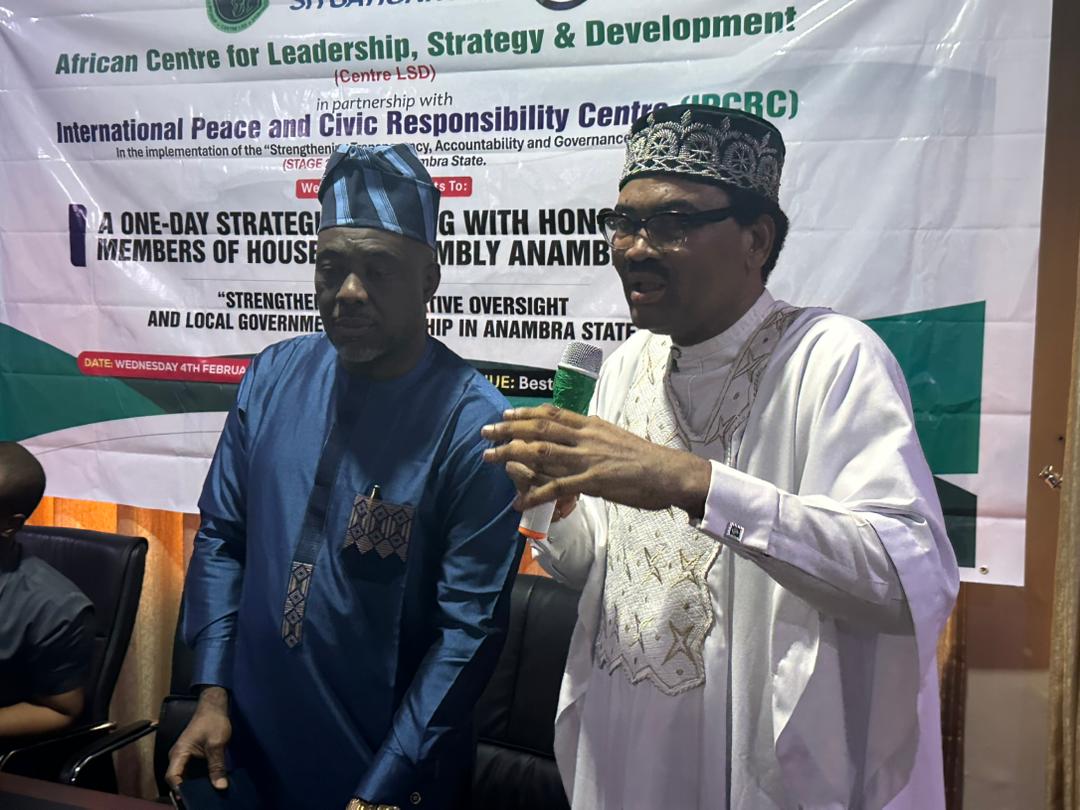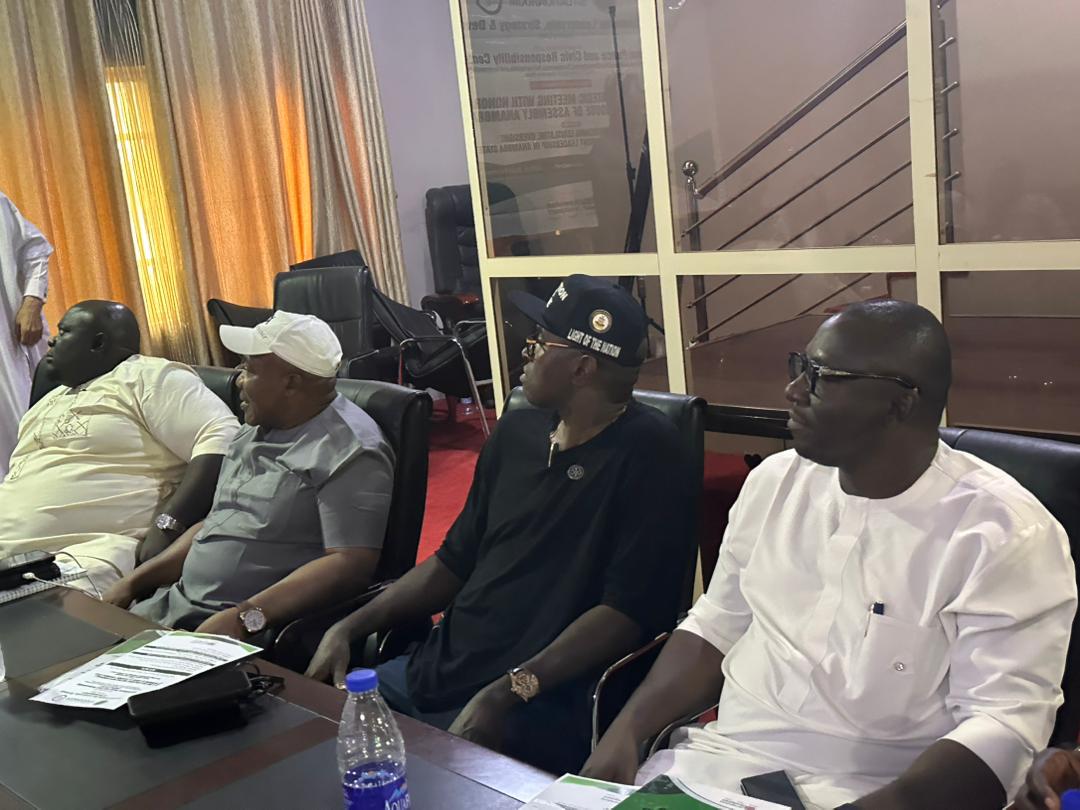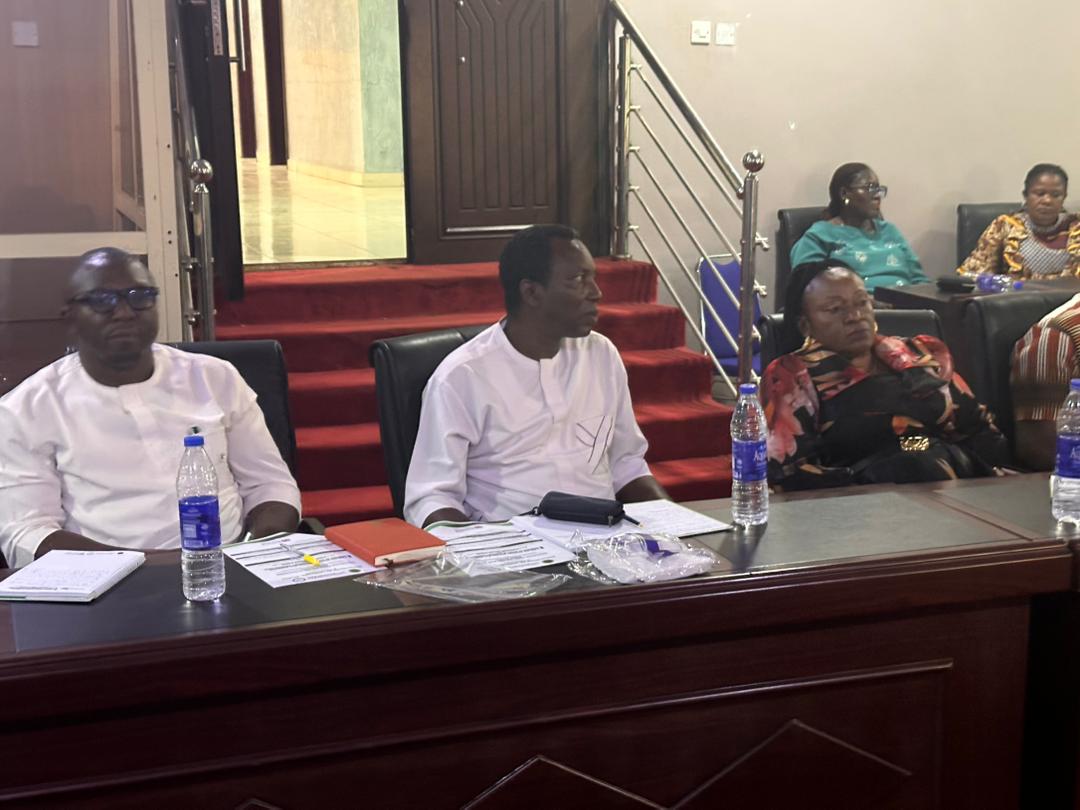




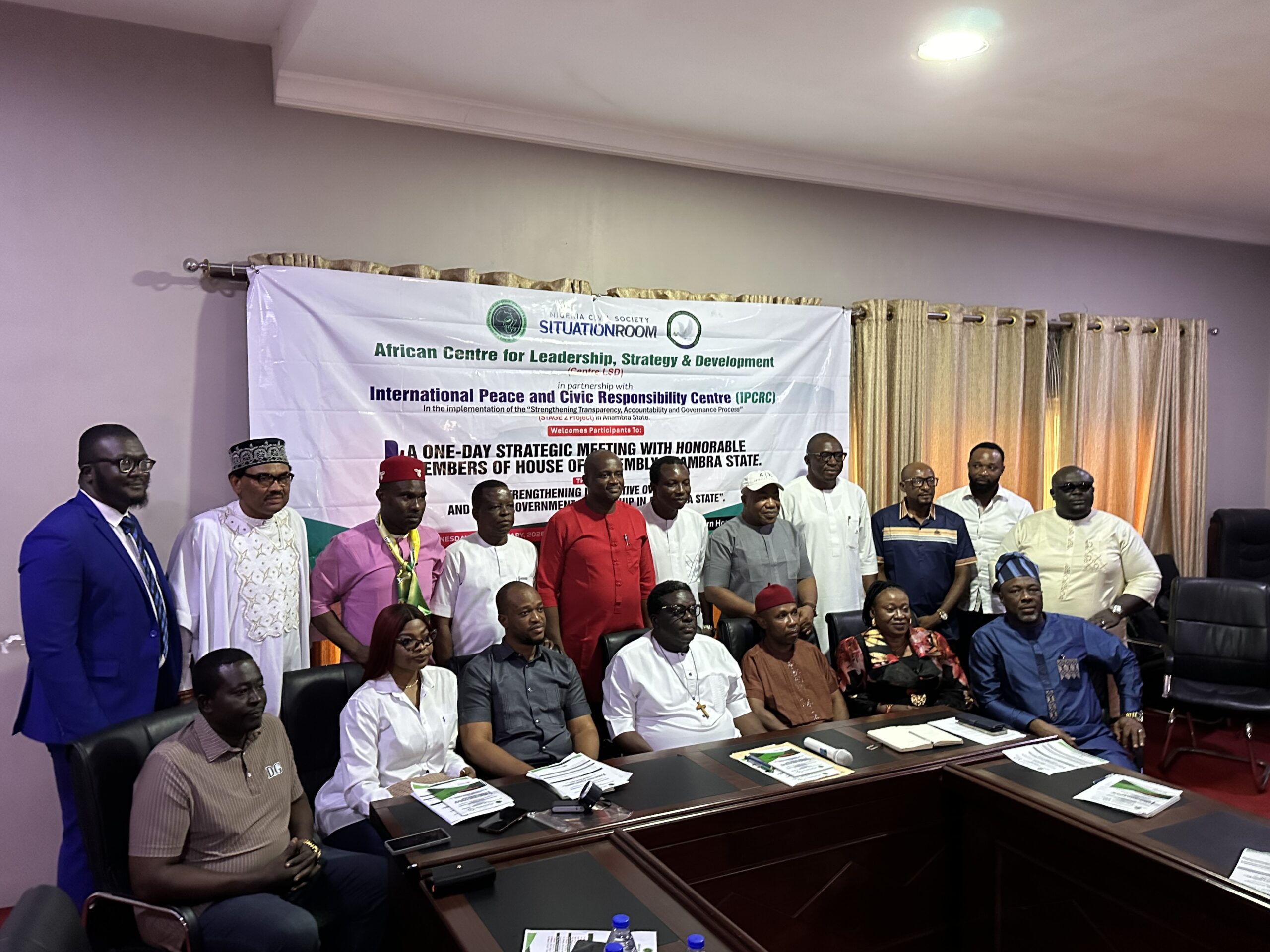
Stakeholders from the Anambra State House of Assembly, civil society organizations, governance experts, media representatives, and development partners convened on February 4, 2026, at the Meloch Best Western Hotel in Awka for a high-level strategic meeting.
Organized by the African Centre for Leadership, Strategy & Development (Centre LSD, also known as ACLSD) in partnership with the International Peace and Civil Responsibility Centre (IPCRC), the one-day event focused on “Strengthening Legislative Oversight and Local Government Leadership in Anambra.”
The gathering aimed to reinforce the legislature’s constitutional role in monitoring local councils, build capacity among officials, promote transparency in grassroots financial management, and foster collaboration between lawmakers, council leaders, and communities.
Participants stressed that stronger oversight and leadership could curb misuse of public funds, improve service delivery in health, education, and infrastructure, and align local governance with Governor Chukwuma Soludo’s state reforms.
Discussions centered on strategies under Sections 128 and 129 of the 1999 Constitution (as amended), including budget monitoring, oversight visits, and committee hearings. Advocacy was strong for training council chairmen and administrators to better serve communities, alongside citizen engagement tools like town hall meetings, community scorecards, and public budget disclosures.
The meeting praised Governor Soludo’s recently signed Anambra State Local Government Administration Law for boosting transparency and accountability but called for practical steps such as capacity-building workshops, quarterly budget and expenditure publications, routine Assembly oversight visits, and joint monitoring frameworks with civil society.
On his part, the Speaker of Anambra State House of Assembly, Hon. Somtoo Udeze lauded the organiser for the initiative. He said that Anambra State House of Assembly passed a bill in 2024 that has helped bolster the efficiency and effectiveness of the local government system.
He reiterated the readiness of Anambra State government and lawmakers to continue to engage in activities that promote transparency and accountability.
Barr. Michael Ozojiofor, Publicity Secretary of the NBA Awka Branch, presented a key paper titled “Effective Oversight of Local Government Administration in Anambra State: Constitutional, Judicial and Legislative Perspectives.”
He highlighted challenges like weak autonomy, executive overreach, fiscal dependency, and poor oversight, despite Section 7’s constitutional recognition.
Ozojiofor referenced the Supreme Court’s July 2024 judgment granting financial autonomy to Nigeria’s 774 local governments, mandating direct Federation Account allocations and barring state interference via joint accounts.
He critiqued Anambra’s law for retaining state control through the State Joint Local Government Account (SJLGA), urging reforms like timely elections with sanctions, automated fund disbursements, independent audits, public finance training, and citizen participation mechanisms.
He argued that true autonomy requires aligning state powers with judicial directives, potentially via constitutional amendments.
In a session on “Making Laws for Peace, Order, and Good Governance,” facilitated by Dr. Chukwuemeka Etodike, lawmakers examined their role in recognizing local autonomy while regulating structure, finance, and functions.
They addressed issues like over-centralization, caretaker committees, and politicization, advocating a shift to accountability-focused legislation.
Recommendations included aligning laws with constitutional standards, mandating public reporting and participation, banning indefinite caretakers, replacing joint accounts with transparent monitoring, professionalizing committees, and leveraging locals for conflict prevention.
The consensus emphasized using legislative power to empower local governments rather than undermine them.
Participants pledged action through enhanced oversight, capacity building, and reforms prioritizing transparency, accountability, and development.