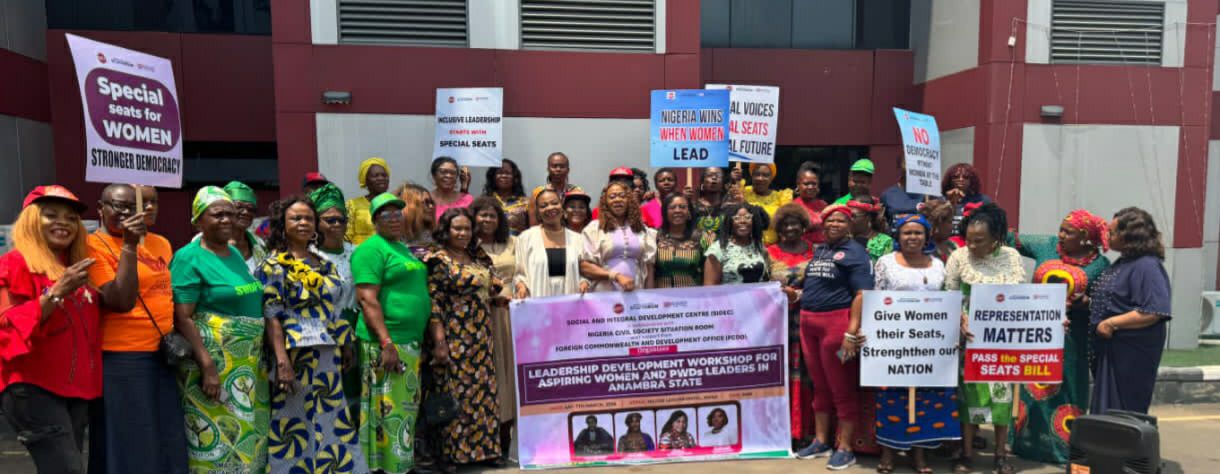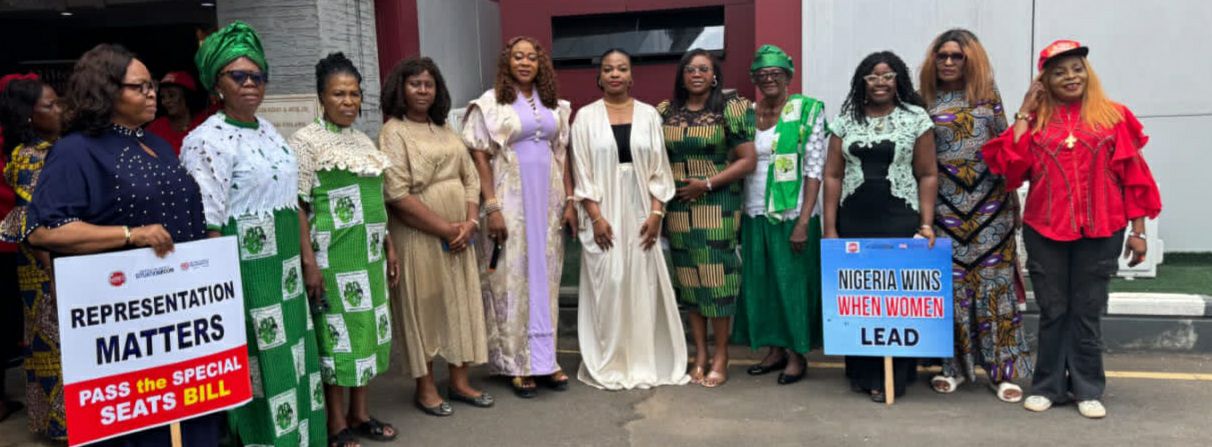




Stakeholders in governance and civil society have renewed calls for the urgent passage of the Special Seats Bill currently before the National Assembly, warning that Nigeria cannot achieve inclusive governance while women remain grossly underrepresented in political offices.
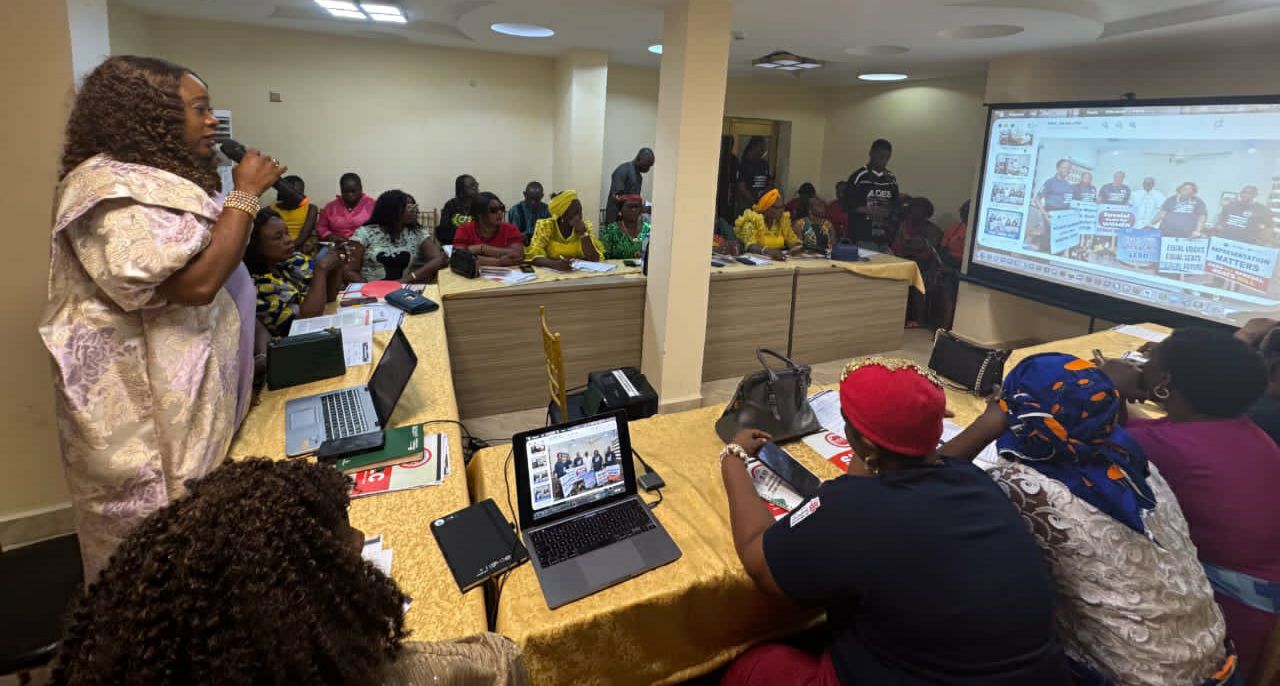
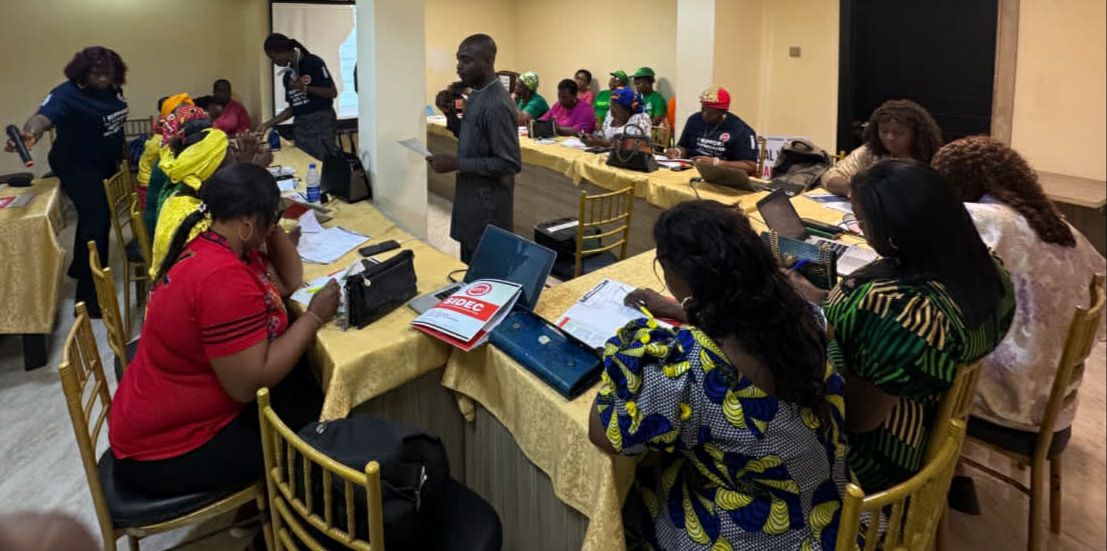
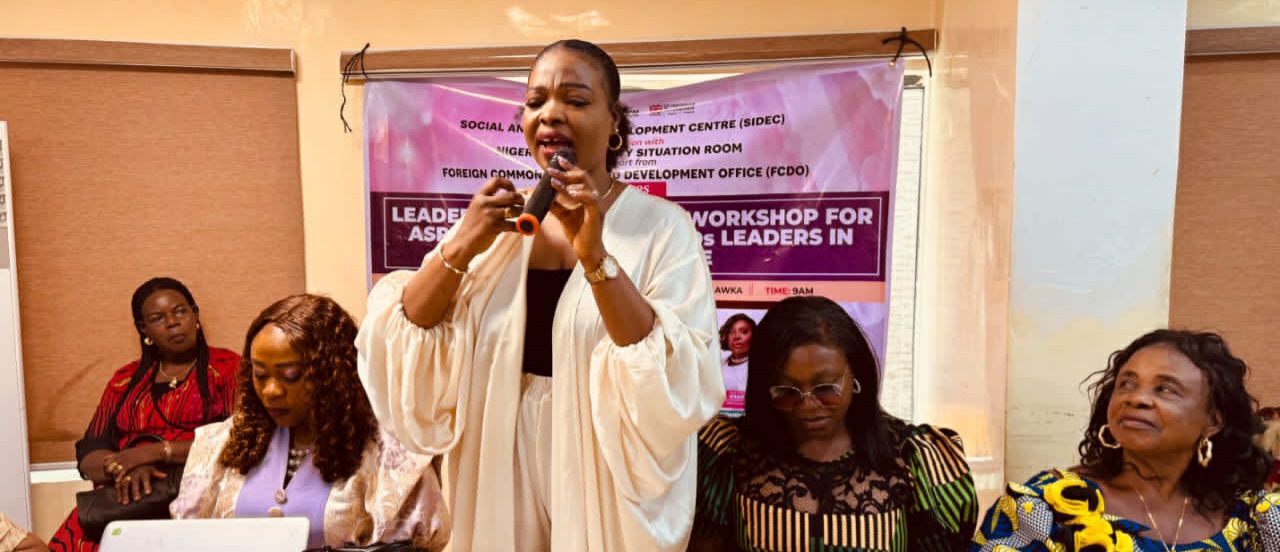
Angel Network News (ANN) reports that the call was made during a one-day leadership development workshop for aspiring women and persons with disabilities (PWDs) in Anambra State organized by the Social and Integral Development Centre (SIDEC) under its Inclusive Mobilization for Participation, Advocacy and Civic Transformation (Project IMPACT).
The initiative, implemented in collaboration with the Nigeria Civil Society Situation Room and supported by the UK Foreign, Commonwealth and Development Office (FCDO), aims to strengthen political participation among women, youth and persons with disabilities across Anambra and Imo states.
Speaking at the event, the African Action Congress (AAC) candidate in the November 8 Anambra governorship election, Chioma Ifemeludike, described the low representation of women in Nigerian politics as alarming.
According to Ifemeludike, women currently occupy less than five percent of seats in the National Assembly, a figure she described as unacceptable for a country seeking democratic progress.
She therefore urged women’s groups, civil society organisations and the media to intensify advocacy for the passage of the Special Seats Bill before the 2027 general elections. “There is a need for sustained advocacy to ensure the bill becomes law. Women must raise their voices through campaigns, protests and strategic engagement with lawmakers,” she said.
Ifemeludike also emphasized that women in Anambra and across Nigeria have the competence and leadership capacity to occupy elective positions at all levels.
Reflecting on her own experience in the governorship race, she said courage, integrity and clear motivation helped her navigate the challenges of contesting alongside prominent male candidates including incumbent Governor Prof. Chukwuma Soludo and businessman Prince Nicholas Ukachukwu.
According to her, more women must be encouraged to challenge the status quo by seeking leadership positions in politics and public service.
Also speaking at the event, the lawmaker representing Onitsha North One Constituency at the Anambra State House of Assembly, Barr. Mimi Ifeoma Azikiwe, called on women to challenge societal norms that limit their political aspirations.
Hon. Azikiwe during her submission said many women are often discouraged from leadership because of cultural expectations that confine them to domestic responsibilities.
“Women need to tell themselves the truth. We are treated as second-class citizens because society was structured to work for men,” she said.
The lawmaker however stressed that women should not allow such stereotypes to limit their ambitions.
“Outside the roles of being wives, daughters and caregivers, we are also individuals with dreams and aspirations. Those roles should not stop women from becoming business leaders, millionaires or powerful politicians.”
Azikiwe further identified structural barriers that hinder women’s participation in politics, including limited access to campaign funding, weak political networks and cultural biases. She urged aspiring female leaders to deliberately build alliances, seek mentorship and develop the confidence needed to compete in leadership spaces.
The lawmaker also stressed the importance of including persons with disabilities in governance, noting that many PWDs possess the capacity to contribute meaningfully to leadership if given the opportunity.
In her remark, the Executive Director of SIDEC, Ugochi Ehiahuruike, said the workshop was part of broader efforts under Project IMPACT to strengthen civic participation among marginalized groups.
Ehiahuruike explained that the project focuses on engaging grassroots communities, particularly markets where a large number of eligible voters—especially women and young people—are found.
“The initiative builds on SIDEC’s inclusive governance work across 158 structured markets in Anambra State, where traders, apprentices and market workers form a significant part of the voting population.
Ehiahuruike added that the leadership workshops are designed to equip women and PWDs with the knowledge and skills needed to participate actively in governance.
She identified conceptual, technical and social skills as essential competencies required for effective leadership.
“In a diverse world, inclusive leadership is necessary. It is about creating an environment where everyone can contribute their views and feel that those views are valued.”
Providing historical perspective, media consultant Ify Unachukwu highlighted the achievements of several Nigerian women who have excelled in public leadership.
She cited pioneers such as Margaret Ekpo, whose activism mobilized women politically and laid the foundation for women’s participation in governance.
She also referenced the late Dora Akunyili, whose leadership at the National Agency for Food and Drug Administration and Control (NAFDAC) led to sweeping reforms that strengthened regulatory enforcement and restored public confidence in Nigeria’s pharmaceutical sector.
Unachukwu further pointed to the achievements of Ngozi Okonjo-Iweala, former Minister of Finance and current Director-General of the World Trade Organization, who played a key role in securing Nigeria’s historic debt relief and promoting fiscal transparency.
Other notable female leaders she mentioned included Virginia Etiaba, Nigeria’s first female governor, and Uche Ekwunife, known for her legislative contributions and constituency development initiatives.
Despite these success stories, Unachukwu noted that cultural barriers, the high cost of political campaigns, political violence and male-dominated party structures continue to limit women’s participation in Nigerian politics.
The event also featured goodwill messages from the Permanent Secretaries of the Anambra State Ministries of Women Affairs and Agriculture, Mrs Chinwe Achugbu and Mrs Ify Uzoka, as well as leaders of various women’s groups, including market women and smallholder farmers.
Participants expressed optimism that sustained advocacy and leadership development initiatives would help create more opportunities for women and persons with disabilities to participate in governance.