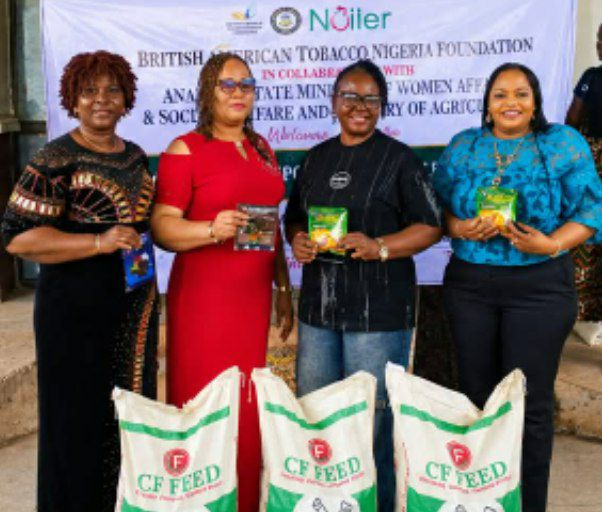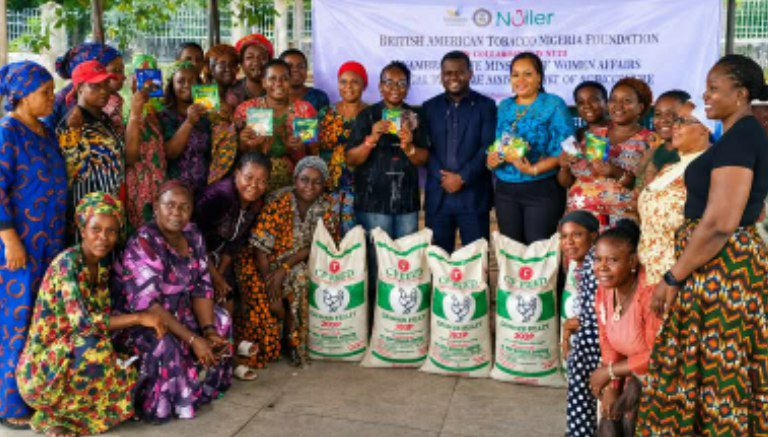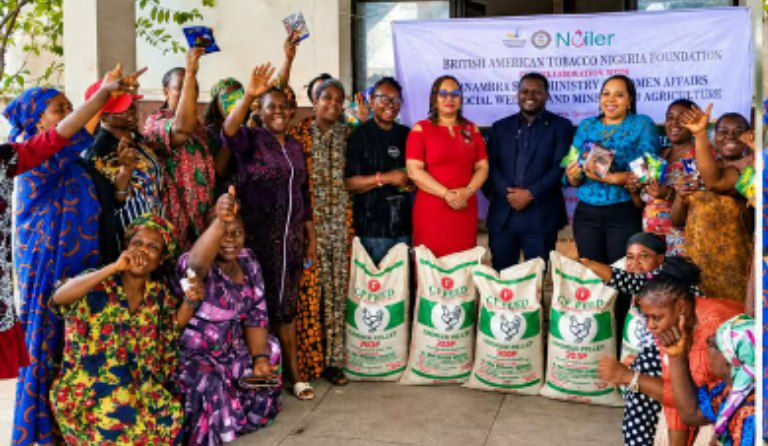





No fewer than 200 women in Anambra State received 4,000 Noiler birds as the British American Tobacco Nigeria Foundation (BATNF), in partnership with the state government, launched the Empower-Her Poultry Project in Awka.
The beneficiaries, drawn from across the state, received 20 Noiler birds each, a bag of poultry feed and veterinary drugs to enable them establish and sustain small-scale poultry enterprises.
The empowerment programme was formally flagged off at the Dr. Dora Akunyili Women Development Centre, Awka, in collaboration with the Anambra State Ministry of Women and Social Welfare and the Ministry of Agriculture.
The initiative, implemented by Ecofield, is targeted at strengthening the economic capacity of women, creating sustainable sources of income and improving the livelihoods of families across the state.
Speaking at the event, the Commissioner for Women and Social Welfare, Mrs. Chinyere Esther Onyekesi, hailed BATNF for supporting the state’s women through what she described as a practical and sustainable empowerment intervention.
Commissioner Onyekesi said the project aligned with the administration’s commitment to moving women from dependency to economic productivity through initiatives that provide them with tangible assets and opportunities to generate income.
She commended Governor Prof. Chukwuma Charles Soludo, CFR, for creating an enabling environment for programmes focused on women’s empowerment, noting that interventions such as the poultry project would contribute to stronger households and more resilient communities.
According to the Commissioner, the partnership demonstrates the importance of collaboration between government, development organisations and implementing partners in tackling economic challenges confronting women.
She assured that the Ministry of Women and Social Welfare would continue to support initiatives that directly improve the welfare, dignity and economic wellbeing of women, particularly those at the grassroots.
The Empower-Her Poultry Project is expected to provide the beneficiaries with a foundation for building viable poultry businesses, generating regular income and contributing to food production in their communities.
The distribution of the birds and other starter inputs marks the beginning of the beneficiaries’ participation in the scheme, with stakeholders expressing optimism that the intervention will translate into sustainable livelihoods and greater economic independence for participating women.