




Burkina Faso has inaugurated a $66 million technology academy to train local engineers in nuclear science, aerospace, mining and other strategic industries as the West African country seeks to reduce its dependence on foreign technology and expertise.
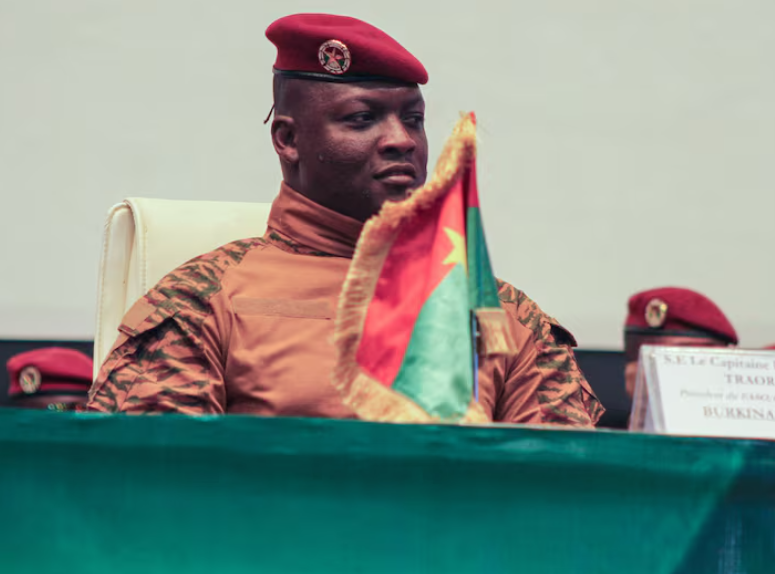
President Ibrahim Traoré officially opened the Académie Technologique du Faso (ATF) on November 23 in Pabré, on the outskirts of the capital, Ouagadougou.
The 60-hectare institution, funded entirely through the national budget, cost 37.37 billion CFA francs, equivalent to approximately $66 million.
Its first intake comprises 250 students selected from scientific and technical secondary schools across the country. They will undergo two years of preparatory training before specialising in various engineering disciplines.
The programmes will cover nuclear engineering, aeronautics, mining, metallurgy, telecommunications, computer science, chemistry, electrical engineering, civil engineering and cybersecurity.
Speaking at the inauguration, Traoré challenged the students to develop technologies capable of meeting Burkina Faso’s industrial, agricultural and security needs.
“The day you produce your first engines I will be proud. The day you present your first turboprop engines to me, I will be proud,” he said.
He also encouraged the future engineers to develop aircraft for territorial surveillance and national defence.
The academy features lecture halls, laboratories, industrial workshops, a forge, a library, student accommodation and medical facilities. However, Traoré acknowledged that some specialised laboratory equipment would be installed gradually because of its high cost.
He also disclosed that more than 1,000 Burkinabè and foreign educators had applied to teach at the institution.
Nuclear Ambitions and Russian Partnership
The academy’s nuclear engineering programme comes as Burkina Faso advances plans to develop civilian nuclear energy in partnership with Russia.
The two countries signed an agreement in June 2025 covering nuclear infrastructure, scientific research and technical training. Burkina Faso’s transitional parliament approved the agreement in November of the same year.
The proposed nuclear power project is expected to strengthen electricity generation and support industrial development, although a construction timetable and final financing arrangements have yet to be confirmed.
According to Burkina Faso’s foreign ministry, only 34.2 per cent of the population had access to electricity in 2024.
Gold Wealth and Industrial Development
The investment also reflects the importance of mining to Burkina Faso’s economy, where gold accounts for more than 80 per cent of exports, according to the International Monetary Fund.
The government has pursued reforms and investments in domestic mineral processing to retain more value from its natural resources and expand local participation in the mining industry.
Developing engineers and technical specialists is expected to support these ambitions by providing expertise in metallurgy, industrial machinery and manufacturing.
Speaking on behalf of the inaugural students, Yéri Cynthia Djamila Kambou expressed appreciation to the government, taxpayers and security forces for supporting the institution.
“We will take our training seriously, and we will take good care of this campus,” she pledged.
The academy forms part of Traoré’s broader drive to strengthen national economic sovereignty by developing local expertise and reducing dependence on imported technology.
