



In a book he wrote in 2019 titled, ‘Power of Possibility and Politics of Change in Nigeria’, Salihu Mohammed Lukman, Director-General (DG) of the Progressives Governors’ Forum, openly declared his support for direct primaries for selecting parties’ candidates for elections. It is interesting to note that Lukman works directly under Alhaji Atiku Bagudu of Kebbi State, the chairman of the All Progressives Congress Governors Forum, who is one of the governors vehemently opposing the direct primary mode today.
In the book, Lukman wrote “The announcement that the party (APC) would resort to direct primary in the selection of candidates elicited excitement among APC members. Perhaps because of its potential to trigger some fundamental changes in the political landscape, ostensibly towards shifting the locus of power from gatekeepers to party membership, the widespread interests the decision for direct primary generated both within the party and in the general public were as contentious as they were predictable”;.
“In simple terms, there were expectations of possible changes in the dynamics of leaders-members relationships within the political party’s governance framework. It is a governance framework that encourages the monetisation of candidates’ selection across all parties, which is much despised by party members and the public, but also painfully costly to aspirants and candidates. The rationale for direct primary based on expanding the democratic space for membership participation is hardly contestable all things considered.”
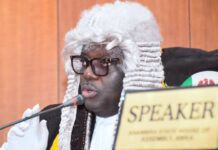
However, in 2021, just two years after his public endorsement (and apparently that of Bagudu too, because the DG of PGF always speaks on behalf of APC governors) of the direct primary mode, following the adoption of the new amendment by the National Assembly, Lukman appears to be singing a different tune. He said: “It is worrisome that the APC members in the National Assembly are the ones pushing for this amendment. Rather than leaders of the party negotiating among themselves on what needs to be done to produce internal agreement to resolve all challenges facing the party, increasingly, structures of the party are being abandoned and other structures outside the statutory organs of the party are being used to attempt to address perceived problems. The whole insertion of the provisions requiring political parties to adopt the direct method in the Electoral Act would appear to be an afterthought because the original bill that was subjected to the joint public hearing by both the Senate and House of Representatives did not contain it. It was during the clause-by-clause consideration of the bill after the public hearing in July 2021 that the Speaker of the House moved the motion for the amendment to allow direct primaries to be part of the amendment.”
Political analysts who are appalled by Lukman’s volte face are asking ‘What has changed between 2019 and 2021 that he and his co-travelers are suddenly changing their minds? Whose interests is he trying to protect: Nigerians’ or governors’? Why is he and his paymasters now afraid of the direct primary mode? Who is fooling who in the whole thing?”
Major political parties have been crying blue murder and mobilising forces to convince President Muhammadu Buhari on why he should not append his signature on the Bill. The APC through PGF has also vehemently opposed the bill. Chairman of the Forum and governor of Kebbi State, Alhaji Atiku Bagudu, reminded the President of an impending danger in authorising large gatherings of people as required by the direct primaries system. According to him “there is an Executive Order signed by Mr President against large gathering.”
The Forum proposed that Ward congresses conducted through direct primaries should be enough foundation to conduct further election through indirect process or delegate system.
However, the major opposition party in the country , the Peoples Democratic Party (PDP), simply attacked the proposal on the ground that it is wrong for the ruling APC to lord the direct primaries option over other parties.
The PDP asked that parties should be allowed to adopt any method that suits their purpose of election.
PDP spokesperson Kola Ologbondiyan said: “our party holds that it’s the inalienable rights of each political party, within the context of our constitutional democracy to decide its form of internal democratic practices including the processes of nominating its candidates for elections at any level. The PDP also believes that no political party should force its own processes on any other political party.”
The Social Democratic Party (SDP) also rejected passage of the direct primary mode of election by the National Assembly and therefore asked Buhari not to assent.
According to the party, direct primaries may have some laudable features but should not be forced on every political party to be used in every case and at all times.
Dr Olu Agunloye, National Chairman of SDP, in a statement,said: “We enjoin President Muhammadu Buhari not to assent to the Bill which is generally considered by the people as an outright misplaced priority by the National Assembly.”
Apart from political parties, the major antagonists to direct primaries are state governors irrespective of party platforms. They picked holes in the amendment and considered the lawmakers as deliberately passing the law to spite their hold on their party machinery in respective states.
Another Senator said: “This amendment, if signed by the President, will also stop the governors from removing federal lawmakers at will. They (governors) just sit in their offices and decide who will return and who will not return. They have been doing this for 20 years.”
These notwithstanding, a majority of Nigerians not only lauded the National Assembly for the initiative in reforming the nation’s electoral system but urged Buhari not to hesitate in assenting the bill.
A chieftain of the ruling APC and Director-General, Voice of Nigeria, (VON), Chief Osita Okechukwu, appealed to Buhari to assent to the Electronic Transmission and Direct Primary.
He said: “I’m sincerely afraid that the controversy, hyperbole and cacophony of voices over direct primary may wittingly or unwittingly scuttle the entire Electoral Bill, and thus throw away the baby – BIVAS and the bathe water, Direct Primary. Mr President, please avoid this booby trap against electronic transmission.”
The Northern Elders Forum (NEF) categorically said there should be no justification for the President to withhold assent.
NEF spokesperson, Dr. Hakeem Baba – Ahmed said: “the President should respect the democratic process as well as his recurring comments that he intends to leave a better electoral process in 2023.
“There is no reason why President Buhari should not assent to these amendments.”
Dr. Goke Lalude, an Associate Professor of Political Science, Olabisi Onabanjo Univery, Ago Iwoye said the President now has the golden opportunity to reinvent his name and image in the minds of Nigerians by signing the bill.
The don said: “it is now time for President Buhari to demonstrate his status of statemanship . He must demonstrate political will and not mind whose ox will be gored among his party cohorts.
“The President is no more coming to beg for votes from Nigerians. He can do and undo and it is high time to do that which millions of our people expect of him. He should sign the amendment to our electoral law and swell our democracy.”
Director-General, Ekiti State Culture and Tourism Board, Ambassador Wale Ojo – Lanre said he would advise the President to assent the Bill to enrich his credentials in governance.
Ojo – Lanre said: “the President has blazed many trails in governance in this country. Should he sign this bill, he will be adding another feather to his political cap. He has the opportunity to write his name in gold because of the importance of this particular bill to democracy and governance.”
A rights advocate, Ms. Justina Achegbo, said: “this amendment is a right in itself to voters fundamental human right of having their votes count; hence the President has to protect their rights by assenting the bill.
“President Buhari should show high sense of responsibility by signing the bill. Not only to sign the bill but the President should do so in good time.
“This is to forestall unnecessary apprehension because delay in doing so may raise tension and create agitation among Nigerians.”
A youth leader of the Labour Party said signing the bill would be the best thing that will happen to Nigerian democracy.
John Izuchukwu Nnamdi whose party participated in the recent Anambra State governorship election said adoption of direct primaries will curb impunity in the electoral process.
According to him, “the direct primaries model will force politicians to go back to the grassroots. They will no more distance themselves from the electorate.
“It is now that relevance in politics will count as against vote-buying and imposition of candidates by the powers-that-be during primaries using the indirect method.
The stage is set for the transmission of the bill to the President on his return to the country from his foreign trip.
The question is: would the President succumb to subtle pressure from state governors to decline assent and what would be the consequence?
Should Buhari decline assent, Nigerians will eagerly wait to see if the National Assembly would muster the courage to invoke its power to override the President.
