



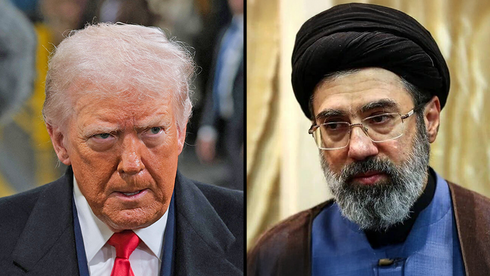
The killing of Iran’s supreme leader, Ali Khamenei, on February 28, 2026, in a joint strike attributed to the United States and Israel, has rapidly evolved from a controversial military operation into a widening Middle Eastern war with potentially far-reaching global consequences.
What initially appeared to be a targeted decapitation strike against Iran’s leadership has now triggered a cascade of retaliation, drawing multiple states into the confrontation and threatening one of the world’s most critical energy corridors.
In the days following the assassination, Iran launched waves of missile and drone attacks against Israel and several U.S. military facilities across Gulf states, including U.S. bases in Qatar, Bahrain, Kuwait and the United Arab Emirates.
Tehran also moved to block maritime traffic through the strategic Strait of Hormuz, a narrow shipping lane through which roughly a fifth of the world’s oil supply passes.
The escalation has transformed what began as a geopolitical shock into a full regional crisis with implications stretching far beyond the Middle East.
The assassination of Khamenei marked a dramatic escalation in modern statecraft. Rarely in contemporary international politics has a sitting leader been directly targeted by another state outside a declared war.
For Washington and Tel Aviv, the strike was framed as a decisive move to neutralise what they described as a central architect of regional militancy.
Critics, however, argue that the operation risks dismantling longstanding international norms.
Mary Ellen O’Connell noted that the killing of a head of state outside a battlefield “pushes the boundaries of international law and could set a dangerous precedent if normalised”.
Similarly, Middle East scholar Fawaz Gerges warned that leadership decapitation rarely produces the political transformation its architects hope for. Removing an individual, he pointed out, does not necessarily dismantle the system that produced them, noting that revolutionary regimes often become more resilient when confronted with external threats.
Iran’s retaliation has been swift and multi-layered.
Missile strikes against Israel and U.S. installations across the Persian Gulf signal Tehran’s determination to demonstrate that the assassination would not go unanswered. Iran’s decision to disrupt shipping in the Strait of Hormuz has injected the global economy directly into the conflict.
Energy analyst Daniel Yergin stated that even temporary instability in the Strait of Hormuz could send shockwaves through global oil markets. Oil prices surged almost immediately as markets reacted to fears of prolonged disruption.
The Gulf region houses some of the world’s most important energy infrastructure, and any sustained conflict could draw neighbouring states deeper into the confrontation. Countries such as Saudi Arabia and the United Arab Emirates now face the difficult task of balancing their strategic partnerships with Washington against the risk of becoming direct targets in a broader war.
Although the conflict is centred in the Middle East, its economic consequences are already reverberating across Africa. For oil-producing countries such as Nigeria, the surge in global crude prices presents a paradox
Higher oil prices could temporarily boost government revenues, yet Nigeria’s dependence on imported refined petroleum products means domestic consumers often feel the pain of price spikes more immediately than the state enjoys fiscal gains. In cities such as Abuja and Lagos, fuel prices began climbing within days of the escalation, intensifying pressure on households already grappling with inflation.
Economist Kingsley Moghalu explained that geopolitical crises in the Middle East tend to have complex effects on Nigeria. Higher crude prices may improve government earnings, he says, but the inflationary impact on transport, food and energy costs can quickly erode those gains for ordinary citizens.
Shipping disruptions, he said, could also increase insurance premiums and freight costs for African imports, potentially driving up the prices of essential goods across the continent.
For fragile economies already battling debt pressures and currency volatility, a prolonged conflict could deepen economic stress.
John Joseph Hayab, country director of Global Peace Foundation, stated, “We all need peace in the world, and every leader must strive for peace, not war, since the death of innocent citizens is a loss to the nation. We should not teach the young generation that we can only resolve our differences by war.”
Mr Hayab, who is the chairman of the Northern Christian Association, formerly known as Northern CAN, added, “This will not be profitable to them. And those who view the war through the lens of religion should ‘shine’ their eyes or have a rethink.
“Victims of this war are from every faith. Some may have been hiding under religion to commit atrocities against fellow citizens, but it is not enough to view the war from a religious perspective. Therefore, people of faith must all come together to denounce every bad governance and, in unity, call for respect for others and peace in the country.”
Supporters of the strike argue that removing Khamenei could weaken the ideological core of the Iranian system and create conditions for political transformation. However, many analysts caution that the assumption of regime collapse may be overly optimistic.
Iran’s political structure is deeply institutionalised, with the powerful Islamic Revolutionary Guard Corpsmaintaining extensive influence across the economy, military and intelligence services.
Foreign policy analyst Trita Parsi restated that history offers cautionary lessons. He drew attention to the fact that attempts to reshape governments through military intervention in Afghanistan, Iraq and Libya resulted in prolonged instability rather than swift democratic transformation.
External pressure, he stated, could actually consolidate hardline factions within a regime. If that pattern repeats in Iran, the assassination could strengthen rather than weaken the forces most hostile to the West.
The crisis has also exposed deep fractures in the international system.
Russia and China have condemned the assassination and warned that targeting foreign leaders could erode the norms governing international relations.
Russian President Vladimir Putin described the strike as a violation of sovereignty, while officials in China warned that such actions undermine the foundations of the post-1945 global order.
Yet the United Nations Security Council’s inability to produce a unified response illustrates the growing paralysis of global institutions in managing great-power disputes.
Foreign affairs analysts believe that if geopolitical blocs harden further, the conflict could accelerate the fragmentation of the international system into rival spheres of influence. According to them, the trajectory of the conflict now depends on whether escalation continues or diplomatic channels succeed in containing it.
They argue that a prolonged war could trigger cascading effects, including disruptions to global energy supplies, renewed arms races in the Middle East, and deeper geopolitical rivalries among major powers.
For countries far removed from the battlefield, including Nigeria and much of Africa, the consequences would still be profound. Higher energy costs, disrupted trade flows, and financial market volatility could strain economiesalready grappling with debt and inflation.
What began as a single strike has now evolved into a widening regional war with global consequences.
Whether it weakens Iran’s regime, reshapes the Middle East or accelerates the fragmentation of the international system remains uncertain. What is already clear is that the geopolitical shockwaves will extend far beyond Tehran, touching economies, alliances, and societies across the world.
(NAN/Emmanuel Yashim)
