





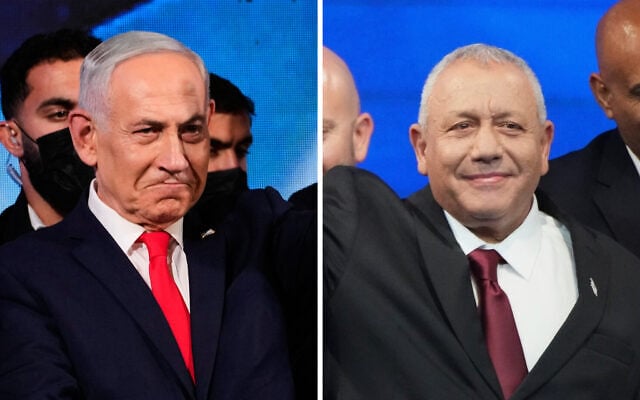
Allies of Israeli Prime Minister Benjamin Netanyahu are promoting a plan to form a national unity government with opposition figure Gadi Eisenkot, potentially including a rotation of the premiership and excluding ultra-Orthodox parties, sources close to Netanyahu said.
The proposal emerged as coalition negotiations began following the election, even as Netanyahu publicly called for a strong national right-wing government.
Final official results from the Central Elections Committee are not expected until next week. On election night, Netanyahu told supporters: “We must establish a strong national right-wing government.”
Sources in Netanyahu’s circle, however, began briefing reporters on an alternative arrangement that would bring Eisenkot into a coalition led by the Likud leader.
Likud officials argue that Eisenkot has limited options, claiming the change bloc has exhausted its electoral potential and that high Arab-sector turnout and diaspora voting would be hard to replicate in a possible repeat election.
“Eisenkot will not survive another round and may even lose his position as head of the bloc,” sources close to Netanyahu claimed.
One version of the plan would see Netanyahu remain prime minister until the end of US President Donald Trump’s term, “finish the job in Iran,” and advance regional peace initiatives before handing over the premiership to Eisenkot after about two years. Another version would offer Eisenkot a senior ministerial post without rotation.
The proposed framework would initially include Eisenkot alongside Netanyahu, Itamar Ben-Gvir and Bezalel Smotrich, while excluding the ultra-Orthodox parties. Officials say this would allow the government to pass a military conscription law affecting ultra-Orthodox men without the haredi parties bearing direct political responsibility. The ultra-Orthodox parties could then join the coalition once the law is approved.
Netanyahu’s associates believe the conscription achievement could persuade Eisenkot to join. However, they acknowledge Eisenkot has given no indication of willingness to discuss the idea.
Sources in the change bloc dismissed the proposal. “This would be complete suicide, both morally and politically,” they said.
Political figures on the right also expressed scepticism, noting that past rotation deals, such as Benny Gantz’s, occurred only after prolonged deadlock and under exceptional circumstances. They estimate that as long as Eisenkot’s voters oppose joining Netanyahu, he is unlikely to reverse course.
Both sides are awaiting clearer final election results later this week.
