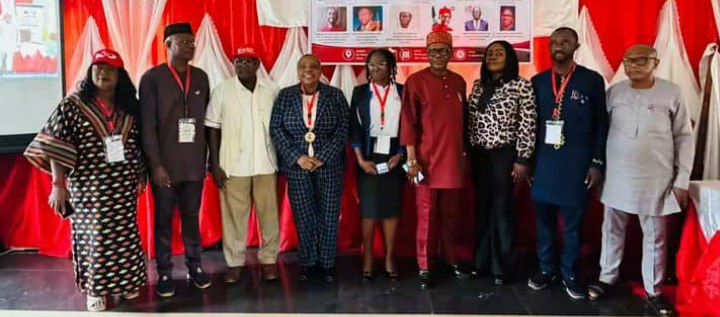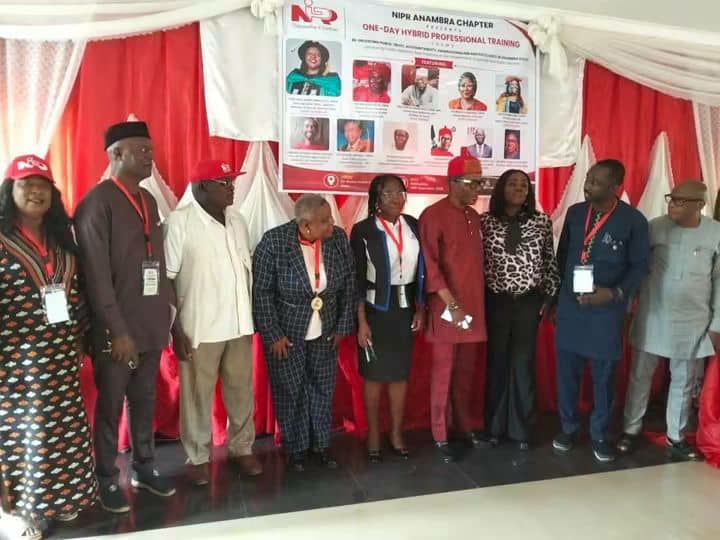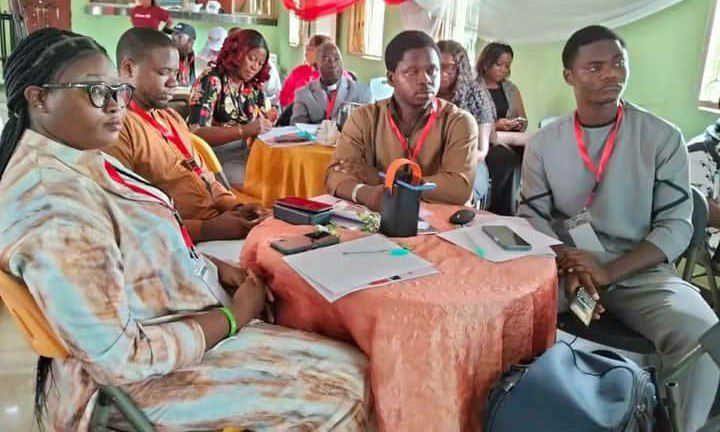





A one-day hybrid professional training organised by the Nigerian Institute of Public Relations (NIPR), Anambra State Chapter, has ended with a renewed call on public relations practitioners to become part of the management teams of their respective organisations to enable them contribute meaningfully to decision-making and policy implementation.
Declaring the training open at De-Nobles Hotels and Suites, Awka, Anambra Commissioner for Information and Value Reformation, Dr. Law Mefor, challenged public relations practitioners to look inward and find lasting solutions to negative narratives about the state.
He said the ministry was working assiduously to change the narrative and promote the reformation of a good “Onye Anambra.”
Dr. Mefor emphasised the importance of branding and reputation management in politics and governance, noting that public perception could be more influential than reality.
“The resource person talked about branding. In political communication, those of us in politics know that the individual politician is a brand — either a good one or a bad one. If you see yourself as a brand, you need to manage it,” he said.
“In social and learning psychology, reality and perception are miles apart, and perception happens to be more important than reality. Who you are, no matter how noble, if the perception out there is that you are a bad person, then you are a bad person. You need to manage your reputation,” he stated.
Dr. Mefor observed that some politicians with poor track records thrive because of effective reputation management, stressing that governance must go beyond information dissemination to strategic communication capable of driving attitude change and behaviour modification.
The Vice Chancellor of Chukwuemeka Odumegwu Ojukwu University, Professor Kate Omenugha, commended the organisers for their thoughtfulness, particularly their commitment to extending professional development opportunities to public relations practitioners and other non-members.
Professor Omenugha, who is a member of the NIPR Governing Council and a Fellow of the Institute, emphasised the importance of reputation management, saying governance could not thrive where the government in power lacked public trust and credibility.
She called on the NIPR executive to liaise with protocol officers to arrange a courtesy visit to Governor Chukwuma Soludo, to enable the institute contribute its quota to the state’s Value Reformation agenda.
In a lead paper titled, “Application of Public Relations Strategies Towards Maximization of Available Opportunities for Business Development,” former Vice President of NIPR, Dr. Denis Ekemezie, observed that public relations provides opportunities for better planning, adding that sustained PR efforts were critical to goodwill establishment, mutual understanding and credibility preservation.
While identifying the opportunity landscape for PR practitioners in Nigeria, Dr Ekemezie highlighted key sectors of the national economy that require strategic public relations positioning.
He identified agriculture and agribusiness as areas where practitioners could support the transition from primary cultivation to processing, storage, logistics, ag-tech and international export ecosystems.
He also identified the digital economy, particularly e-commerce, fintech, software development, online education and digital services; creative arts and entertainment, including Nollywood, Afrobeats, fashion and digital content creation; hospitality and tourism, including eco-tourism and cultural heritage; as well as small and medium-sized enterprises, where PR could help businesses overcome visibility deficits and establish corporate credibility.
Speaking on “Building Internal Partnership: Winning Public Trust and Responsible Communication in a Challenging Society,” retired Army spokesman, Brigadier General Sani Usman, stressed the need to build relationships based on truth, dialogue and understanding.
He emphasised the importance of leadership, information and professional skills in building and sustaining corporate reputation.
“The central lesson is simple: public trust is earned, not announced. It begins with what happens inside an organisation, with leadership, employees, coordination, integrity and performance, and extends outward through responsible communication and meaningful engagement.
“For the PR practitioner, this means moving from publicity to partnership, from messaging to dialogue, and from reputation management to trust stewardship.
“We must listen before we speak, tell the truth even when it is uncomfortable, and ensure that what we communicate is supported by what the organisation actually does. Ultimately, PR should not merely help an organisation tell a credible story; it should help the organisation become credible. That is how communication earns trust, strengthens relationships and delivers lasting professional value,” the Fellow of NIPR concluded.
Also speaking on “The Essentials of Employee Relations, Team Building and Mentoring: Their Strategic Connection to Public Relations and Organisational Reputation,” the Director of UNIZIK FM, Professor Ifeoma Dunu, stressed that organisational productivity and reputation depend not only on talented employees or attractive communication, but also on how workers are treated, empowered and developed.
She said sound employee relations should incorporate two-way communication, trust and credibility, fairness and procedural justice, employee voice and participation, recognition and wellbeing, grievance and conflict management, as well as clear and proportionate discipline.
According to her, strong employee relations and a positive organisational reputation are necessary for improved productivity, adding that organisations should not begin by asking employees to speak well of them but should first build a workplace about which employees can genuinely speak well.
Prof Dunu maintained that employee relations and team building form the foundation of organisational reputation, while a healthy internal environment directly influences how an organisation is perceived externally.
“Employee relations creates the workplace climate in which people decide whether to contribute, withdraw or resist. Team building converts individual competence into coordinated action.
Mentoring develops people, transfers knowledge and prepares leadership continuity. Public Relations connects these areas by enabling listening, shared meaning, dialogue and alignment between organisational behaviour and stakeholder expectations.
“Their combined effect reaches beyond employee satisfaction. They influence the quality and speed of service, the cost of conflict and turnover, the organisation’s ability to learn, employee advocacy and the credibility of its public reputation.
“For that reason, they should be managed as one strategic system with shared leadership responsibility and measurable outcomes. Healthy relationships make cooperation possible. Cooperation makes performance reliable. Mentoring makes competence sustainable. Public Relations makes the system listen, explain and remain accountable,” Prof Dunu averred.
Earlier, the Chairman of the occasion and State Chairman of the Nigeria Union of Journalists (NUJ), Dr Emeka Odogwu; the facilitator, Prof Venatius Agbanu; and Prof Rotimi Oladele, encouraged NIPR professionals to lead by example and remain conscious of time management.
In her vote of thanks, the Chapter Chairman of NIPR, Dr Ngozi Ulogu, appreciated the speakers and participants for their contributions towards the success of the training.
She said the workshop was designed to empower PR practitioners to establish and maintain public trust and accountability through responsible communication while promoting professionalism and excellence.
The event, which was held both virtually and physically, brought together members of the NIPR in Anambra State, veteran and seasoned professionals, lecturers, government functionaries, media practitioners and other stakeholders.
The training focused on reputation management, accountability, trust and responsible communication in public relations practice.
Other speakers included two members of the NIPR Governing Council, Dr Ahmad Sajor, Chairman, Chapter Support Development, NIPR, and Dr Nkechi Ali-Balogun, as well as Dr Ogonna Anunike, all Fellows of the Institute.