





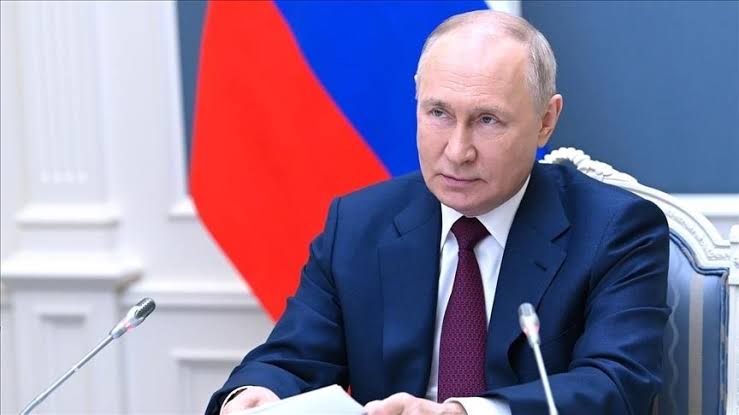
Senior Russian figures have alerted President Vladimir Putin to the risk of a severe financial downturn hitting the country by summer, fueled by plummeting oil revenues and mounting war expenditures in Ukraine, according to a report citing anonymous officials.
The alert, detailed in a Washington Post article, highlights a 50 percent plunge in oil income last month compared to the previous year, exacerbating a growing budget shortfall despite recent tax increases on consumers.
A Moscow business leader predicted the crunch could materialize in “three or four months,” amid rampant inflation prompting business shutdowns and widespread job cuts.
Economic woes trace to the four-year-old invasion of Ukraine, with Western sanctions, elevated interest rates to tame inflation and labor shortages, and diminished consumer spending leading to worker furloughs and payment delays.
Russian banks flagged potential debt defaults in June due to borrowing strains, while the Russian Union of Industrialists and Entrepreneurs noted many firms teetering on “a pre-default situation.”
A government-affiliated think tank, the Center for Macroeconomic Analysis and Short-Term Forecasting, cautioned in December of a possible banking crisis by October should loan defaults escalate and savers pull deposits.
Its director, Dmitry Belousov, described the economy as having “entered the brink of stagflation for the first time since early 2023.”
An unnamed Russian official told the Post: “A banking crisis is possible. A nonpayments crisis is possible. I don’t want to think about a continuation of the war or an escalation.”
Compounding pressures include prospective EU curbs on Russia’s clandestine tanker fleet, building on US restrictions against giants like Rosneft and Lukoil, which have deepened discounts on oil shipments as global prices dip.
Moscow continues lavish outlays on armaments and soldier enlistment bonuses, draining its national wealth fund.
On the military front, Russia has incurred 1.2 million casualties since the conflict’s onset, with over 30,000 fatalities in December alone — equating to roughly 1,000 daily — for scant territorial advances.
Geopolitically, NATO’s enlargement, Ukraine’s EU accession trajectory, and heightened European defense budgets pose further challenges.
Finnish President Alexander Stubb, speaking at the World Economic Forum last month, argued: “So people are saying that Russia wants to continue the war because they want more territory—that’s rubbish. Russia has to continue the war because this war is too big for Putin to fail.
When you add on to that the Russian economy is in shambles, which means they’re not going to be able to pay their soldiers, which means zero growth, end of reserves, interest rates and inflation in double digits. So Putin cannot afford to end this war. This is my big worry.”
Diplomatic efforts persist, with recent trilateral discussions in Abu Dhabi yielding scant headway. Ukrainian President Volodymyr Zelensky announced Saturday: “America proposed for the first time that the two negotiating teams—Ukraine and Russia—meet in the United States of America, probably in Miami, in a week. We confirmed our participation.” The US initiative aims to conclude hostilities by June.
