





Across Nigeria, citizens and governments mark Armed Forces and Remembrance Day on Thursday, January 15. Beyond being a day set aside to honour the men and women who paid the supreme price in the defence of the country, and to reflect on the true cost of peace, unity and sovereignty, the day is one of the most solemn and significant dates in the nation’s calendar but unfortunately, not many citizens know.
Remembrance Day is traditionally observed with prayers, wreath-laying and memorial ceremonies at cenotaphs and state arcades, where members of the armed forces, security agencies, public officials and ordinary citizens gather to pay tribute to fallen heroes of Nigeria’s wars and internal security struggles.
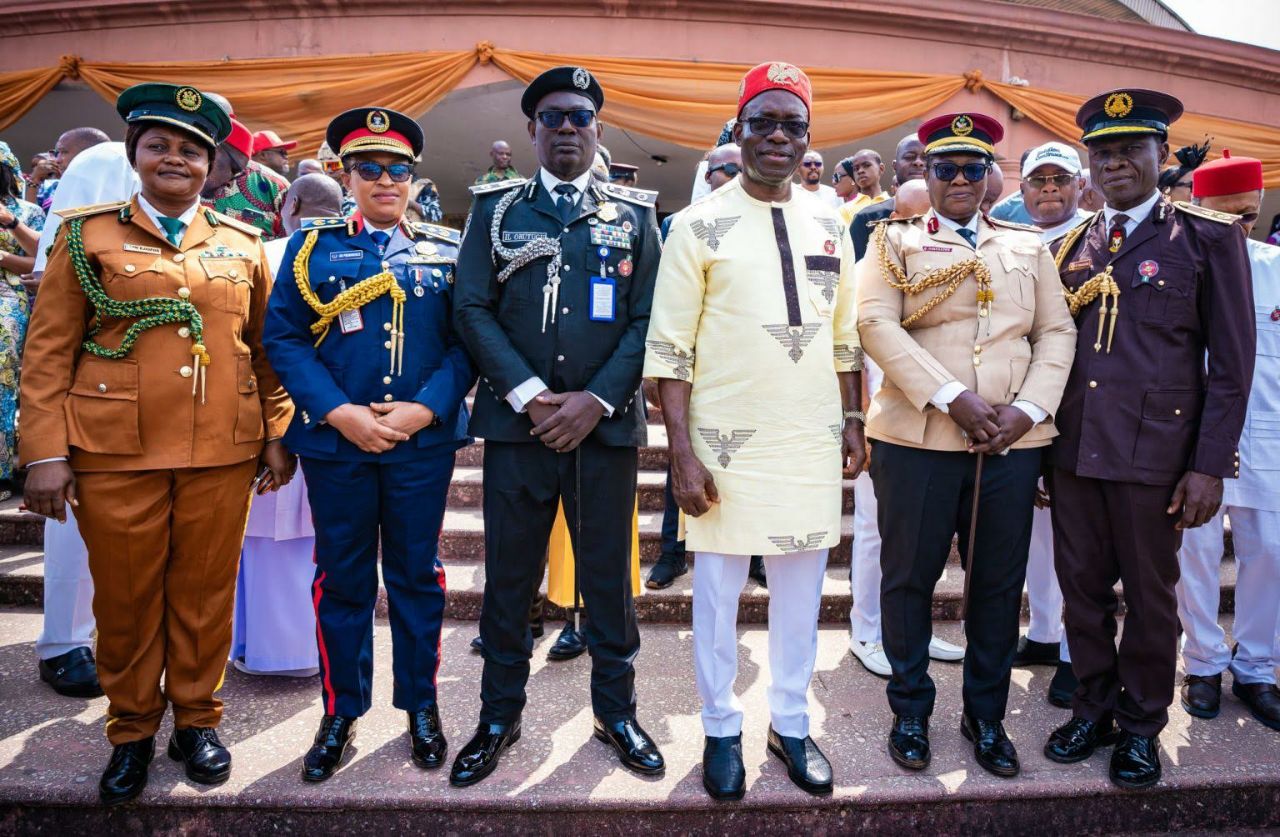
At the commencement of this year’s remembrance activities, Governor of Anambra State, Professor Chukwuma Charles Soludo, CFR, led a thanksgiving Mass at St Patrick’s Catholic Cathedral, Awka. He described the 2026 observance as a fitting occasion to celebrate and encourage the soldiers and security operatives who continue to risk their lives to keep the state safe in the face of persistent threats from armed criminal groups. Pledging the state government’s continued support, he noted:
“In Anambra, the security agencies have worked extraordinarily hard to keep us safe. While we sleep, these men and women are awake. We will continue to support you in whatever way we can.”
The Governor commended the security forces for safeguarding lives and property, linking the massive return of Ndi Anambra during the Yuletide season to their vigilance and sacrifice. He also mourned the operatives who lost their lives in the course of confronting criminal elements in forests and communities, describing their deaths as painful but heroic.
Though often mistakenly regarded as a ceremony meant only for the military, Armed Forces and Remembrance Day is, in truth, a civic occasion for all citizens. It is a day of collective memory and responsibility, reminding society that peace and stability are not accidents of history but achievements secured by courage, discipline and selfless service.
Marked globally since 1918, following the Armistice that ended the First World War, the observance evolved from Armistice Day into what is now known as Remembrance Day across the Commonwealth, and Veterans Day in the United States. Former British colonies, including Nigeria, adopted the tradition.
Nigeria later fixed its own Armed Forces Remembrance Day on 15 January, to coincide with the end of the Nigerian Civil War in 1970, symbolising the restoration of national unity and the honouring of those who died in that conflict and in earlier world wars.
Beyond ceremony, the day performs a vital civic and educational function. Through moments of silence, the laying of wreaths and solemn state rituals, memory is transformed into public instruction. Citizens are taught that peace is the fruit of sacrifice, and that national institutions were preserved at great human cost. Patriotism, in this sense, is not blind emotion but informed loyalty, rooted in an understanding of past struggles and shared destiny.
On a deeper ethical plane, the observance affirms that lives given for the common good must never be forgotten. It stands as a quiet protest against the trivialisation of death in war and a warning about the immense price of violent conflict. It is not a glorification of warfare, but a sober call to honour sacrifice, uphold unity and build a society worthy of those who laid down their lives.
Ideologically, Armed Forces and Remembrance Day reinforces the social contract between the state and its citizens: that those who bear arms do so on behalf of all, and when they fall, the nation owes them honour, gratitude and care for their families. It reminds the living that freedom, territorial integrity and peace are sustained not by rhetoric alone, but by the devotion and courage of men and women in uniform.
As Governor Soludo aptly observed, the sacrifice of the fallen heroes and heroines remains “the bedrock of our peace.” A society that truly values peace must not only remember its defenders, but must also support and encourage those who continue to stand guard today. Armed Forces and Remembrance Day is, therefore, both an act of remembrance and a renewed pledge to defend the ideals for which so many gave their all.
By: Chuka Nnabuife
