





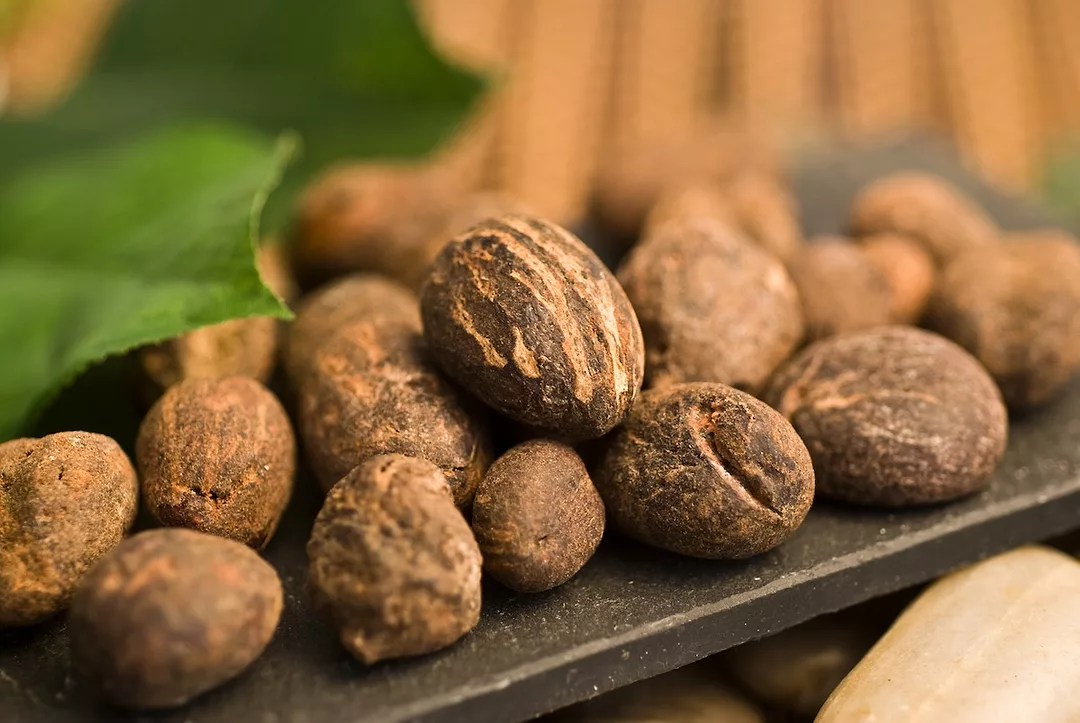
- A symbol of the dry African savannah, shea contains a nut that women collect and sell raw, or process into butter for skincare or the food industry
With nuts scarce as the shea season draws to a close, buyer Souleymane Sangare’s warehouses in Ivory Coast’s northern city of Korhogo are empty.
In a country where shea production is modest and largely based in the north, sellers made up for the shortfall by sourcing from Mali and Burkina Faso.
But last year, the neighboring countries — among the world’s top shea crop producers — halted shea nut exports to boost local production.
The shea tree is a symbol of the dry African savannah. Its fruit contains a nut that women collect and sell raw, or process into butter for skincare or the food industry.
“Since they suspended exports, it has been hard to get nuts. And on top of that, this year Ivorian production has not been profitable enough,” said Sangare, a buyer at Korhogo market and vice president of the Ivorian Shea Network.
Gone are the mountains of nuts in his two warehouses — only a few sacks remain this year.
“I normally have between 3,500 and 4,000 tons of nuts per season. This year, I haven’t even managed 500 tons, two months after the start of the season” from mid-August to October, he said.
– Strong global demand –
In January, Ivory Coast also suspended exports of its nuts to secure supply for its own industry.
“We can’t criticize other countries for doing the same,” Mamadou Berte, head of the Cotton, Cashew and Shea Council, said.
Korhogo is home to the country’s first modern shea butter processing plant.
“I signed a contract to supply nuts to this plant, but I’m struggling to meet it because I can’t find enough,” Sangare told AFP.
Togo and Nigeria have also frozen raw nut exports. Ghana, for its part, plans a gradual ban starting in 2026.
Those decisions, combined with strong global demand — driven by shea butter’s use as a cheaper alternative to cocoa butter — have left the west African market under strain, according to consultancy N’Kalo.
As a result, prices have soared, while trade has faltered.
In Ivory Coast, the minimum farmgate price of 250 CFA francs ($0.44) per kilo has climbed to 350 CFA. Factory prices set at 305 CFA per kilo now range between 386 and 400 CFA, N’Kalo noted at the end of November.
– Slow market –
At least 152,000 women make a living from shea in natural production zones, according to the Ivorian agriculture ministry.
At the Chigata cooperative in Natio-Kobadara, near Korhogo, dozens of women toiled under a blazing sun to make butter.
Sacks of nuts were stacked in the yard, while mills whirred nonstop, churning out dense, chocolate-colored shea paste.
“Last year, we sold a kilo of shea butter for between 4,000 and 4,500 CFA francs — that’s something we have never seen in our lifetimes,” said Noulourou Assiata Soro, secretary general of the cooperative, which brings together more than 120 women.
She lamented, though, the lack of market outlets for their products.
However, “when it’s expensive, the market is slow,” said Tenin Silue, 49, who has been selling shea butter at Korhogo market for 10 years.
The 150-kilo sack of nuts that the cooperative used to buy for 60,000 CFA francs now costs 70,000, according to Soro.
The upward trend in prices is expected to continue in the coming months, marking the end of the harvest season in the west African shea market, where the supply of nuts remains very limited, according to N’Kalo.
AFP
