





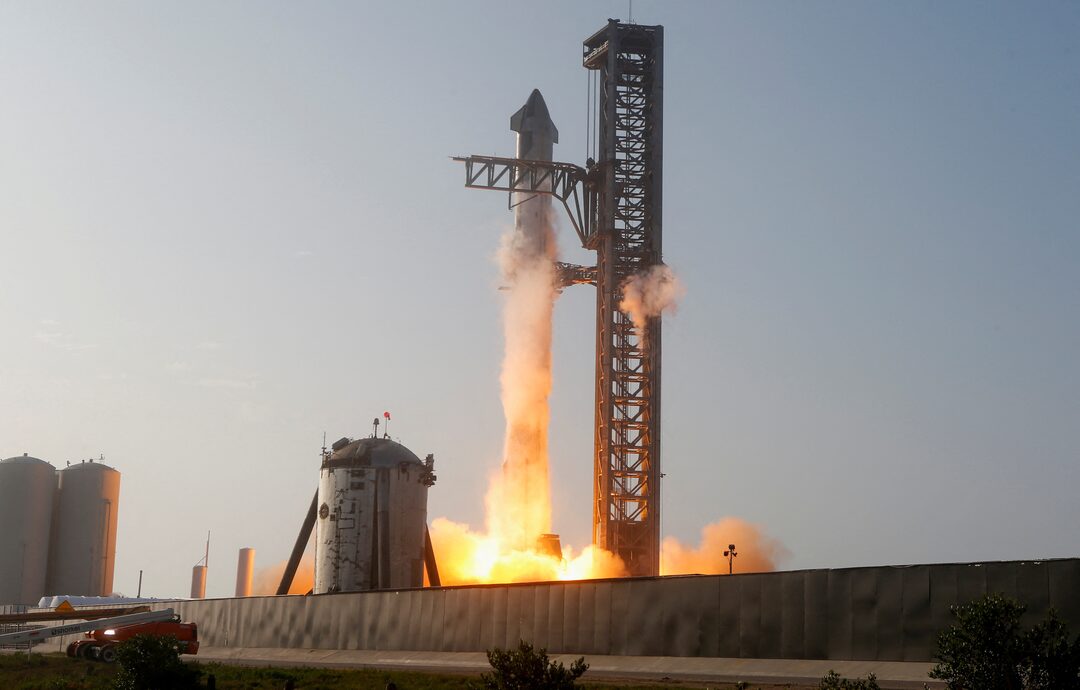
SpaceX’s Starship reached Earth orbit for the first time on Monday, despite an engine failure that briefly appeared to derail the mission.
Engine trouble, then a change of course
The rocket lifted off at 7:49 a.m. local time from South Texas. It was the 14th launch of the combined vehicle and the first to reach orbit. SpaceX spokesperson Dan Huot first told viewers that Starship would not reach orbit after an engine shut down early. Minutes later, engineers decided it could continue.
With the rest of the flight going well and the faulty engine no longer needed, controllers proceeded after several tense minutes. “Starship is orbital,” Mission Control announced to cheers.
26 satellites deployed
Starship then deployed all 26 production Starlink V3 satellites, completing the main commercial objective of the flight. All 13 earlier Starship flights had followed suborbital trajectories.
SpaceX had planned for the upper stage to orbit the Earth for about nine hours. Roughly 1.5 hours into the flight, it chose to bring the stage back early. The company said on X that teams would deorbit the vehicle over a cleared area of the Pacific after three hours in orbit.
Why it matters
Reaching orbit could let SpaceX begin regular commercial missions and move closer to making the rocket fully reusable. Starship is also central to the company’s plans for NASA moon missions. SpaceX shares fell about 2% in premarket trading when the company first said orbit was out of reach, then recovered after it changed course.
