


President Bola Tinubu has asked Nigerians to be grateful for their economic conditions relative to Kenya and other African nations, even as he acknowledged that soaring fuel prices are inflicting real hardship on citizens.
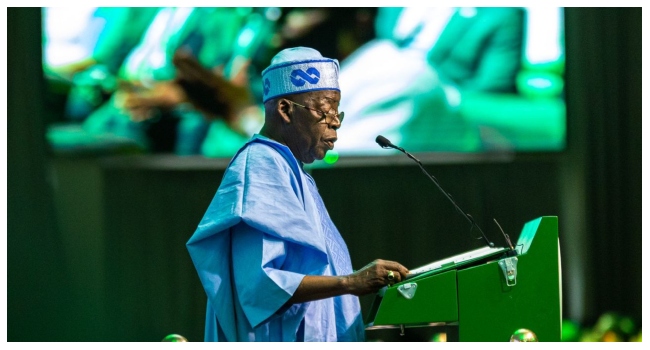
Speaking on Friday while inaugurating projects executed by Bayelsa State Governor Douye Diri in Yenagoa, Tinubu said: “Let’s just thank God together that you are better off listening to them in Kenya and other African countries. What they are going through.”
An Acknowledgement — and a Deflection
The president did not shy away from the scale of the economic pain confronting ordinary Nigerians, but quickly pivoted to comparative comfort.
“It is very important that we are honest with our people. Yes, I hear you from various angles of the economy. The fuel price is biting hard, but look around, let us thank God together that you are better off. Listen to them in Kenya and other African countries and what they are going through. We will not look back. We will continue to find ways to ameliorate the sufferings of the vulnerable. This is a government that cares,” he said.
Since assuming office in May 2023, the Tinubu administration has implemented a series of sweeping economic reforms, including the removal of the petrol subsidy and the floating of the naira, both of which have driven up the cost of living sharply, even as the government insists they are necessary for long-term stability.
Iran War Compounds the Fuel Crisis
The comparison comes weeks after pump prices climbed to N1,300 per litre, largely driven by the US-Israeli military action against Iran which blocked the Strait of Hormuz and rattled global oil markets.
Checks showed that fuel prices in Nigeria as of April 2026 stood at between N1,290 and N1,350 per litre, while crude oil prices hovered around $95 to $100 per barrel. By comparison, fuel in Kenya as of the same period stood at approximately $1.37 per litre — roughly N1,862 at current exchange rates.
The Middle East conflict had triggered a global spike in pump prices following Iran’s blockade of the Strait of Hormuz, a critical waterway through which fuel is shipped across the world. However, Iran agreed to lift the restriction temporarily during a two-week ceasefire agreed with the US.
Projects, a Quip, and a Promise on Security
The presidential visit to Bayelsa was primarily for the inauguration of infrastructure projects, including a bridge linking communities, dual carriageways, and the Yenogwa City Road.
In a lighter moment, Tinubu pushed back on Governor Diri’s bid to have a state-built road reclassified as a federal road and attract reimbursement from the Federal Government. “When we met in my office, you were asking for this exception and that waiver and everything. Now you want reimbursement. It’s now Federal Road. I will take it with me,” he quipped.
The President also reaffirmed his administration’s commitment to defeating terrorism and banditry, saying his government would “continue to train our men and women of the armed forces.”
Reaction: “Downward Comparison Is Not Governance”
The Kenya remark has sparked widespread public debate, with many Nigerians — a number of them oil-producing nation citizens — questioning why Africa’s largest economy should measure its wellbeing against a country without its resource endowments.
Critics noted the irony of a major crude oil producer asking its citizens to take comfort in paying less than a non-oil-producing neighbour, while domestic refineries have historically underperformed.
The presidency has not issued any follow-up statement clarifying the comparison as of the time of this report.
