





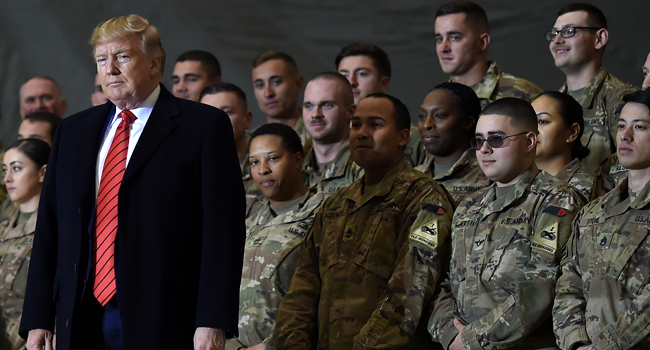
The United States Senate on Wednesday passed a mammoth $901 billion defense spending bill, providing a historic pay raise for service members while hardening Washington’s military stance against China and Russia.
The National Defense Authorization Act (NDAA), a perennial cornerstone of US policy, cleared the upper chamber with a decisive 82-13 bipartisan majority. The legislation now heads to President Joe Biden’s desk for his expected signature.
The bill authorizes $901.4 billion for the 2026 fiscal year—a significant increase that lawmakers say is necessary to maintain American technological superiority and readiness in an increasingly volatile global landscape.
”At a time of huge challenges for our country and the world, passing the NDAA is more important than ever,” Senate Majority Leader Chuck Schumer said following the vote. “This bill ensures our military remains the most capable force in the world.”
A central feature of the 2,500-page document is a 4.5 percent pay increase for military personnel, the largest such boost in over two decades. Supporters of the raise argued it was essential to combat recruitment shortfalls and the rising cost of living for military families.
On the geopolitical front, the bill allocates billions to the Pacific Deterrence Initiative, a program specifically designed to counter Chinese influence in the Indo-Pacific. It also extends military assistance to Ukraine through 2027 and reaffirms security commitments to Israel and Taiwan.
However, the path to passage was marked by intense debate over social provisions inserted by conservative lawmakers. The final version includes restrictions on the Pentagon’s ability to fund travel for service members seeking abortions and limits on gender-affirming healthcare for transgender troops.
Senator Jack Reed, chairman of the Senate Armed Services Committee, hailed the bipartisan cooperation despite the “culture war” friction.
”This is about the men and women who wear the uniform,” Reed said. “It provides them with the tools they need to defend this nation and the quality of life they and their families deserve.”
Critics of the bill pointed to its sheer size, with some progressive senators arguing that the nearly $1 trillion price tag diverts essential funding from domestic priorities like education and climate change. Conversely, some hardline conservatives voted against the measure, claiming it did not go far enough in stripping “woke” policies from the Department of Defense.
The NDAA has been passed by Congress for over 60 consecutive years, maintaining its status as one of the few pieces of “must-pass” legislation in a frequently deadlocked Capitol Hill.
