
HOW IT ALL BEGAN
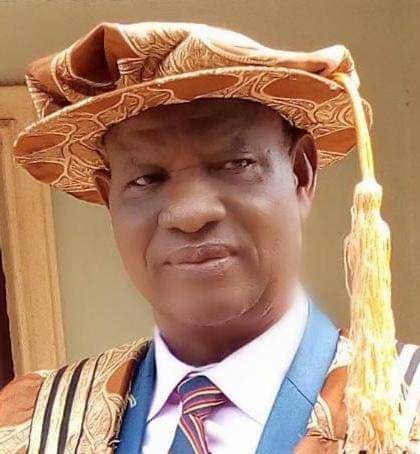
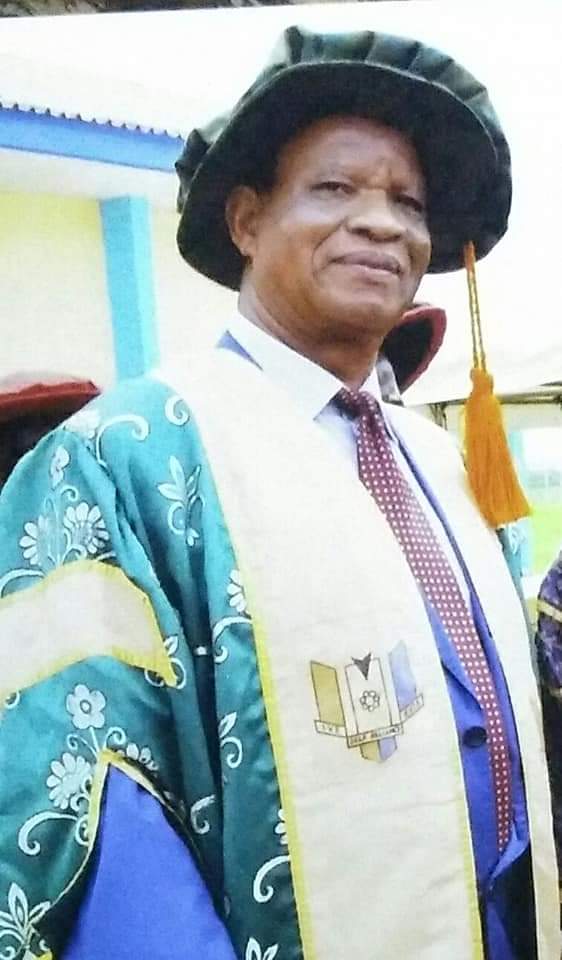
I was born and brought up at the Teachers’ quarters at the Catholic mission community in Ugwuntijiegbe, Akpu, Orumba South Local Government Area of Anambra State, Nigeria, where I also had my primary education. Those formative years were greatly influenced by the last batch of the white missionaries around my community, notably one young Irish priest called Fr. Pascal. He was so interested in me that I was actually living with them in the Fathers’ house.
The Ugwuntijiegbe community of the 1950s and 1960s was a small city on a hillock containing the Primary School buildings, an imposing Church, the Reverend Fathers’ Compound, a Convent for the training of young girls for marriage and for the vocations and the Teachers’ quarters, all beautifully laid out with inter-locking network of well paved roads and foot paths all lined up with trees and flowers with adjoining green lawns, palm trees or melina plantations. Pupils travelled from all over Orumba North and South and beyond to Ugwuntijiegbe and the morning assembly was a spectacle to behold.
I will never forget the dedication of teachers, the discipline and order and the maximum respect that teachers enjoyed in those good old days. Every holiday period, we normally visited the family homestead at the inland town, Akpu to do some farm work and to enjoy playing with other children in the village. I enjoyed watching secondary school students strolling around town during that period, organizing Students’ Union meetings and other social activities.
The senior students were outstanding. I remember, in particular, Ambrose Okeke and Ambrose Nwankwo, who resembled identical twins, tall and handsome in their impeccable, neatly ironed trousers and shirts and always moving together. What surprised me most was that they all speak good English and that the boys were able to talk to the girls among them. Robert Nwankwo was my God-father and already an undergraduate at the University of Nigeria, Nsukka.
I passed the entrance examinations to CKC Onitsha and CIC Enugu but my parents and my uncle insisted that I should proceed instead to St Peter’s Secondary School, Achina for economic reasons. St Peter’s Secondary School (SPSS) was another well groomed Catholic Mission school with a conducive environment for learning. The usual triangular movement was from the dormitory to the refectory, to the classroom/library/ laboratory and back to the dormitory. We had a long list off highly qualified teachers: Nigerians and Indians most of whom trained in Europe and America.
From there, I proceeded to the University of Nigeria
Nsukka, and finally to the University of Grenoble in France, in 1984. The sojourn in France proved to be the most inspiring and most exciting episode in my life. The society was orderly, systematic and progressive, and everything works with clock-like precision.
As a foreign student on French government scholarship, they will wait for you at the airport, take you to an already prepared residence and work round the clock to ensure that you are comfortable. It was then that I discovered that the gap in technology and living standards between Nigeria and the developed world is immeasurable.
My co-students from other parts of Europe, Asia and America have their personal computers, but I have not seen one before in Nigeria. Every student who is qualified and interested is admitted into one of the many Ivy League Universities in the country. One of such Universities was the University of Paris with nine campuses and one of the campuses that I attended for some programmes, the University of Paris, Sorbonne is more than Nnamdi Azikiwe University and the University of Nigeria put together with over 53,000 students.
Before long, our bloated ego as the giant of Africa vanished into thin air. Like most other African students in continental Europe, I was soon caught up in the web of the dream for a better African society which was in vogue in Europe at the time. This, in part informed my decision to return home immediately after my doctoral programme to contribute my quota to the development
of my country.
We can see that the story we recount today is both
personal and collective: it is the story of a scholar’s pursuit of knowledge and the transformation of society through the view of money, finance, human and institutional development.
The great thinkers in finance and economics, from Adam Smith, to John Meynard Keynes, to J.K. Galbraith, among others, remind us that economic development is not just about numbers, but about ideas, trust, belief, and the willingness to shape the future. So too, is the legacy of scholarship.
THE LECTURE
What I want people to
learn today is that our problem is not money as everybody thinks,
and that we can change our economy and make our country prosperous if we all decide to change the way we think and behave.
John Milton’s Paradise Lost (1667) is an epic poem about the fall of humanity and the loss of the garden of Eden. It is a work full of symbolism – about freedom, authority, ambition, fall and hope of redemption.
“The Lost Paradise” is a metaphor for Nigeria’s unfulfilled dreams. The phrase captures the paradox of a nation richly endowed with human and natural resources, yet struggling with poverty, inequality, and under- development.
Nigeria, often described as the “Giant of Africa,” once embodied great promise — a paradise of potentials and opportunity. Nigeria’s economic history reflects cycles of hope and disillusionment – from the oil boom of the 1970s to the debt crises, structural adjustments, and current fiscal instability. The “lost paradise” metaphor situates the nation within this historical continuum.
The “paradise” was not destroyed by nature, but by human choices, particularly, how money, finance, and power have been understood and used, hence the reflection on how to recover the lost moral and economic balance necessary for rebuilding a sustainable and equitable society.
Money, finance, and banking represent the nerve centers of modern economic life. They determine how resources are mobilized; how investments are directed; and how opportunities are distributed. In an age defined by globalization and digital transformation, nations that have harnessed these instruments effectively achieve prosperity; those that neglect or abuse them languish in stagnation.
The “power” of money, finance and banking underscores the need to understand these institutions not merely as technical systems, but as moral and political instruments that can either sustain development or subvert it.
“Politics of Investment, Wealth Creation and Sustainable Society” brings the discussion home to the interplay between economics and governance. In Nigeria, wealth creation is deeply political. Investment decisions, public expenditure, and even access to credit are often mediated by political interests rather than developmental priorities.
This “politics of investment” explains why productive sectors such as manufacturing, agriculture, and education are underfunded, while consumption and rent-seeking dominate public finance.
The lecture calls attention to the need for a reorientation of political economy — one that prioritizes long-term wealth creation, innovation, and human development over the short-term pursuit of power and profit.
By linking wealth creation to sustainability, the author also advances a moral argument: that true prosperity cannot exist without equity, environmental consciousness, and intergenerational responsibility. It echoes Amartya Sen’s view (1999) that development must mean freedom — the capacity of people to lead lives they value.
The themes of money, finance, and banking are central to Nigeria’s ongoing struggles with inflation, financial inclusion, unemployment, and fiscal rascality. By addressing these, the lecture speaks directly to the heart of the national economy.
The “politics of investment” draws attention to corruption, misallocation, and the tension between private interest and public good — all of which define Nigeria’s governance challenges.
The discussion bridges the moral and material dimensions of national development. It invites citizens and scholars alike to see finance not just as an economic tool, but as a reflection of collective values and vision.
For a scholar in Banking and Finance, this theme allows a synthesis of theory, policy, and ethics — showing how financial systems can be restructured to serve the common good and to restore faith in the Nigerian project.
The title “The Lost Paradise: Power of Money, Finance and Banking, and Politics of Investment, Wealth Creation and Sustainable Society” is both a diagnosis and a prophecy.
It diagnoses Nigeria’s economic and moral decline as a failure to govern money and finance with wisdom, integrity, and foresight. Yet it also prophesies hope — that through ethical reawakening, institutional reform, and visionary leadership, the nation can recover its “lost paradise” and build a truly sustainable society.
(To be Cotd in Part 2)
