

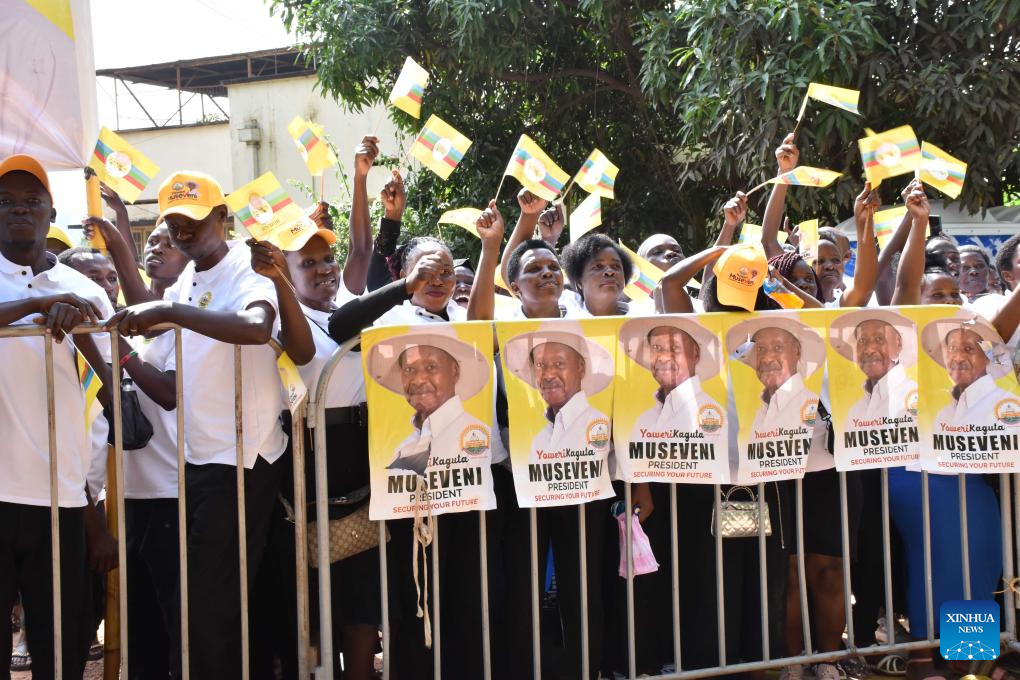
Ugandan leader Yoweri Museveni has been sworn in for a seventh consecutive term, extending his decades-long rule over the East African nation.
The inauguration ceremony, held in Kampala, drew regional leaders, government officials and supporters of the ruling National Resistance Movement (NRM), according to reports.
Museveni, who has governed Uganda since 1986, pledged to continue pursuing economic growth, stability and regional security during his new term in office.
Uganda’s electoral authorities declared Museveni winner of the poll with more than 70 per cent of the total votes cast, securing him another five-year mandate expected to run until 2031.
His closest challenger, Bobi Wine, born Robert Kyagulanyi Ssentamu, rejected the outcome and accused the government of manipulating the process.
The opposition leader described the election figures as fabricated, alleging widespread irregularities and voter suppression during the exercise.
Following the election, the 44-year-old politician reportedly fled Uganda, claiming he feared assassination and accusing the government of targeting him.
“The regime wanted to eliminate me,” he said after leaving the country.
Despite the accusations, election officials defended the process, insisting the presidential poll was conducted in a free, fair and transparent manner.
Several African heads of state attended the inauguration ceremony, including Samia Suluhu Hassan, Félix Tshisekedi, Salva Kiir Mayardit and Hassan Sheikh Mohamud.
With Uganda having one of the youngest populations in the world, a large number of citizens have never experienced leadership under any other president apart from Museveni.
Although the Ugandan leader has not openly stated whether this latest term will be his last, attention has increasingly shifted to his son, Muhoozi Kainerugaba, who is widely seen as a possible successor.
Muhoozi, however, has attracted criticism over controversial remarks on social media directed at opposition figures, especially Bobi Wine.
Human rights organisations have also continued to raise concerns over the country’s post-election environment.
Amnesty International recently alleged that at least 16 people were killed by security forces between January 15 and 18 during unrest that followed the elections, claiming the victims were unarmed civilians.
Another opposition figure, Kizza Besigye, remains in detention after being arrested in late 2024 over allegations involving illegal arms possession and attempts to source weapons abroad—charges he has strongly denied.
The government has also faced backlash over its controversial Sovereignty Bill, which criminalises activities considered to favour foreign interests over Uganda’s and labels recipients of foreign funding as agents of foreigners.
