


The Presidency has clarified that the recent killing of Abu-Bilal Al-Manuki, a senior Islamic State commander, is valid and intelligence-backed, while acknowledging that earlier reports linking him to a 2024 operation were based on mistaken identity.
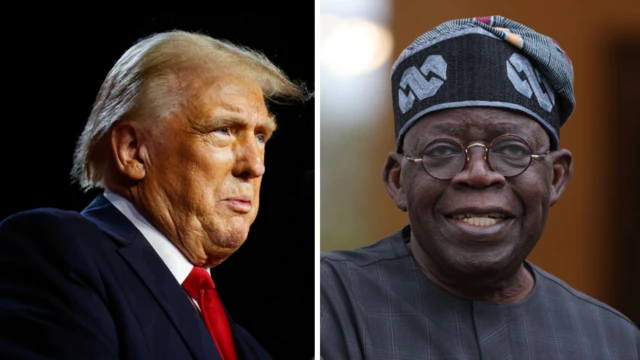
The clarification came from Special Adviser to President Bola Tinubu on Information and Strategy, Bayo Onanuga, amid growing public scepticism over the authenticity of the operation, which was announced by US President Donald Trump on Friday night.
Onanuga, on Saturday, in a post shared on X, acknowledged that Al-Manuki’s name had appeared on lists of suspected ISWAP commanders reportedly killed in 2024 during operations around the Birnin Gwari forest axis in Kaduna State, but said security officials had since established that the earlier listing was a misattribution.
“Security officials now clarify that the earlier listing was a case of mistaken identity or misattribution in the fog of sustained counterinsurgency operations.
“Importantly, intelligence now confirms that the Birnin Gwari theatre was never within Al-Manuki’s established operational sphere, which negates the accuracy of the earlier assessment,” Onanuga said.
He said the latest operation was the product of months of Intelligence, Surveillance and Reconnaissance efforts, backed by communications monitoring and phone intercepts that reportedly began as far back as December 2025.
According to Onanuga, security officials had initially sought to capture Al-Manuki alive, which explained why he was placed under surveillance across multiple locations, including Abuja and Maiduguri, in the days leading up to the final strike.
“Officials maintain that multiple layers of verification were applied before authorisation of the final kinetic action, making this operation distinct from earlier incidents in which battlefield assessments later required revision.
“In their assessment, ‘this time, there is no ambiguity’,” he added.
He added that authorities were “100 per cent certain” of the target’s identity this time.
Critics have pointed to past cases in global counterterrorism where high-value targets like Abubakar Shekau were wrongly declared killed, only to resurface later.
Trump had announced the operation late Friday on his Truth Social platform, describing Al-Manuki as “the most active terrorist in the world” and “second in command of ISIS globally.”
“Tonight, at my direction, brave American forces and the Armed Forces of Nigeria flawlessly executed a meticulously planned and very complex mission to eliminate the most active terrorist in the world from the battlefield,” Trump wrote.
US Secretary of Defence Pete Hegseth confirmed on Saturday that Al-Manuki served as the senior ISIS General Directorate of Provinces Emir, responsible for overseeing attack planning, directing hostage-taking and managing the terror group’s financial operations across the Sahel region.
The US Africa Command also released video footage showing targeted strikes on multiple high-value ISIS militants in northeastern Nigeria, further corroborating the claims.
Tinubu, in a separate statement on Saturday, described the joint mission as one that “dealt a heavy blow to the ranks of the Islamic State,” hailing the Nigeria-U.S. collaboration as a model for counterterrorism partnership.
Al-Manuki, also known as Abu Bakr ibn Muhammad ibn Ali al-Mainuki, Abor Mainok and Abubakar Mainok, was born in 1982 in Mainok, Benisheikh, Borno State. The U.S. Department of State designated him a Specially Designated Global Terrorist in June 2023.
He rose to prominence within ISWAP following the killing of the group’s leader, Mamman Nur, in 2018, and was linked to the ISIS al-Furqan office network, which coordinates operations across Nigeria, the Sahel and the Islamic State in the Greater Sahara.
Public scepticism over the claim reflects a broader distrust rooted in Nigeria’s counterterrorism history, particularly the repeated — and ultimately false — declarations of the death of Boko Haram leader Abubakar Shekau over several years before his actual death was confirmed in 2021.
Onanuga, however, cautioned against applying that historical precedent to the current operation, noting that modern counterterrorism history equally shows that eventual confirmations do come, citing the case of ISIS founder Abu Bakr al-Baghdadi, whose death was initially reported incorrectly before being confirmed years later.
“Undermining credible joint operations, particularly those involving Nigerian forces and international partners, risks weakening public confidence in ongoing counterterrorism efforts,” he said.
