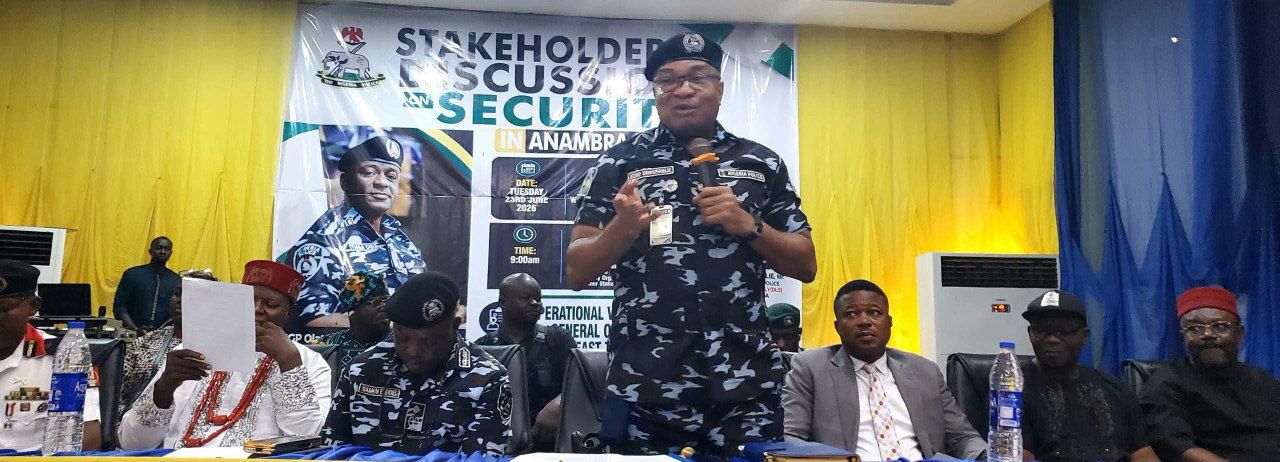





The Deputy Inspector General of Police overseeing the South-East and in charge of Logistics and Supply at the Nigeria Police Force Headquarters, DIG Kenechukwu Onwuemelie, has held an interactive meeting with key stakeholders in Awka to discuss security challenges and explore strategies for enhancing safety across Anambra State.
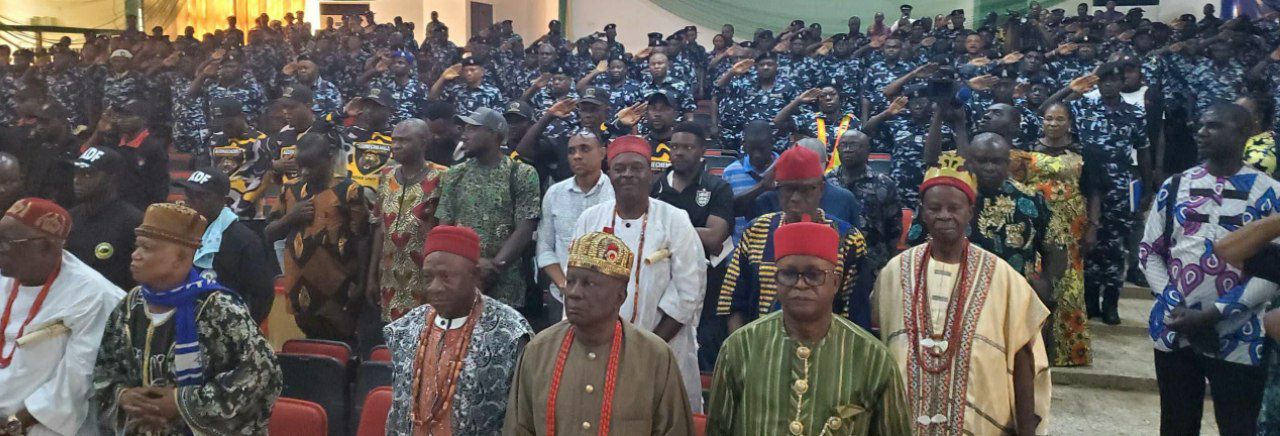
The engagement, which took place at the Dora Akunyili Women Development Centre, Awka, on Tuesday, brought together traditional rulers, community leaders, security agencies, journalists, and senior officers of the Anambra State Police Command.
Addressing participants, DIG Onwuemelie stated that the Nigeria Police Force remains committed to maintaining security despite operational challenges and resource constraints. He noted that efforts are ongoing to streamline police procedures and curb abuses, particularly the arbitrary transfer of cases from state commands to zonal offices without following due process.
The DIG also encouraged citizens to utilize the Police Complaint Response Unit (CRU) to report procedural misconduct and other grievances, stressing that effective security requires the support and cooperation of all stakeholders.
Speaking at the forum, the traditional ruler of Uke, Igwe Charles Agbala, observed that security of lives and property has improved significantly in Anambra through the combined efforts of the police and the state government. He particularly commended the establishment of the Agunechemba Security Outfit and the enactment of laws aimed at strengthening the state’s security framework.
Igwe Agbala emphasized the importance of sustained collaboration among security agencies, government institutions, and local communities in combating crime across Anambra and the wider South-East region.
Also speaking, the traditional ruler of Umuawulu, Joel Egwuonwu, described the engagement as productive and beneficial, expressing confidence that it would further consolidate the gains already recorded in the state’s security architecture.
He commended DIG Onwuemelie for his professionalism and reiterated his support for the establishment of state police, arguing that such a structure would enhance community-based policing and improve security nationwide.