




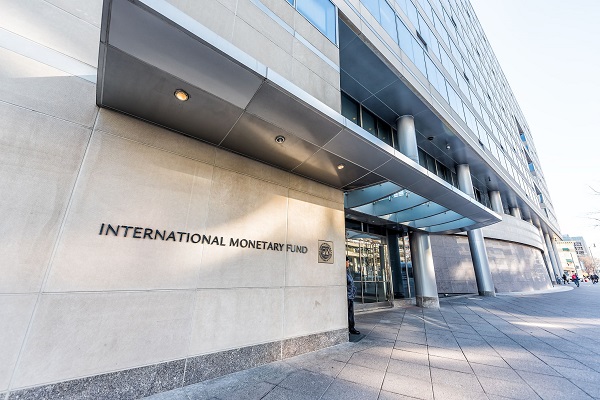
The International Monetary Fund has cautioned that Nigeria and other developing countries face intensifying pressure from high debt-service costs, expensive borrowing and shrinking external financing, limiting their capacity to fund development and respond to economic shocks.
IMF Managing Director Kristalina Georgieva delivered the warning at the close of the G20 Finance Ministers and Central Bank Governors Meeting in Asheville, North Carolina.
She noted that while the debt situation in emerging and low-income countries had improved gradually in recent years, progress remained uneven and some nations continued to face serious challenges.
High interest rates in advanced economies have raised the cost of borrowing and refinancing for developing countries, while available external financing has declined, Georgieva said. The resulting increase in debt-service payments risks leaving governments with fewer resources for infrastructure, healthcare and education.
She also highlighted a drop in official development assistance and reduced financing from non-Paris Club creditors as factors tightening the funding squeeze on low-income economies.
Countries with unsustainable debt burdens require faster and more decisive action to restore sustainability, the IMF chief said, calling for improvements in sovereign debt restructuring so that nations are not left trapped in prolonged difficulties.
Georgieva urged countries with sustainable debt positions to advance the IMF-World Bank Three-Pillar Approach more quickly while strengthening domestic policies to boost growth and government revenue.
Developing countries must improve domestic revenue mobilisation and debt management and create conditions to attract more private investment, she added. For those with limited public resources, private-sector capital will become increasingly important in closing financing gaps.
The warning comes as global public debt approaches 100 percent of world economic output and is projected to rise further.
“Public debt—at almost 100 percent of GDP worldwide—now exceeds its post-World War II highs and is set to climb further,” Georgieva said.
She identified additional risks to the global economy, including a possible energy shock, stalled progress against inflation and uncertainty over artificial intelligence’s impact on productivity and financial stability.
Despite these challenges, the global economy has shown greater resilience than expected, with the IMF forecasting growth of about three percent in 2026. However, Georgieva stressed that the improved outlook does not eliminate risks for individual economies, particularly vulnerable developing countries.
She called for credible medium-term plans to strengthen public finances, central bank focus on price stability, structural reforms to remove barriers to investment, and international cooperation to address unsustainable debt and shrinking external funding.
