


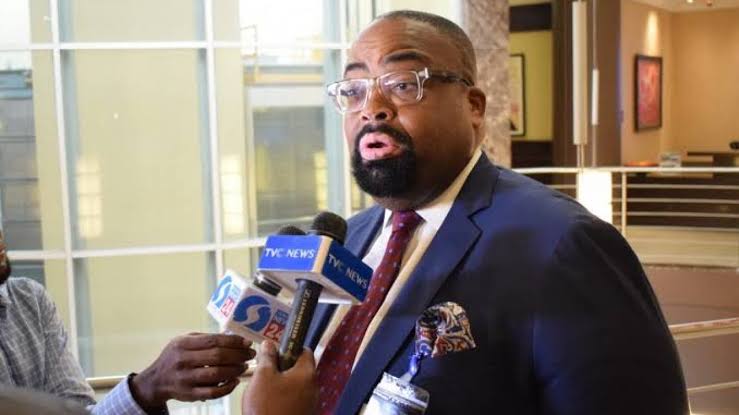
Former Nigerian Bar Association president Olumide Akpata on Wednesday defended the decision by the King’s College Old Boys’ Association to back a ₦100 billion concession deal for the historic Lagos school, insisting it aims to restore the 117-year-old institution rather than privatise it.
Speaking in an interview on Arise News amid opposition from some parents, students and unions, Akpata said the association had no interest in owning the school.
“King’s College has not been sold. We have not bought the school, the school has not been offered to us, and we are not interested in buying our school,” he said.
The Federal Government has clarified that legal ownership remains with the state, while the association will finance, rehabilitate, modernise, operate and maintain the college under the agreement.
Akpata said the planned ₦100 billion investment, channelled through a Collegium Endowment Fund launched in July, would upgrade infrastructure, improve maintenance and enhance the learning environment.
He noted that the association had already spent billions of naira over the years renovating buildings, upgrading sports facilities, installing generators, establishing an ICT laboratory and providing a Braille-equipped library for visually impaired students.
“We have renovated every building standing in that school at one point in time or another. We have redone the sports pitch, put tartan tracks, put drainage under the football pitch,” Akpata said.
“What have we not done? We have put generators in that school, an ICT lab, and a library for the blind students where Braille and other equipment have been provided.”
He explained that facilities often deteriorated after such interventions due to poor maintenance, prompting the association to seek a formal framework.
“So when we went to government, we said, ‘We know you have a lot on your plate. We are ready to help. We have been helping, and we have demonstrated capacity. Going forward, can we formalize this engagement?’” he said.
Akpata stressed that the arrangement was not driven by profit.
“There is no profit motive here; it is all altruistic. We want to look after our mother,” he said, adding that the goal was to produce leaders as envisioned by the school’s founders.
He expressed willingness to engage further with stakeholders and predicted visible improvements within three years.
