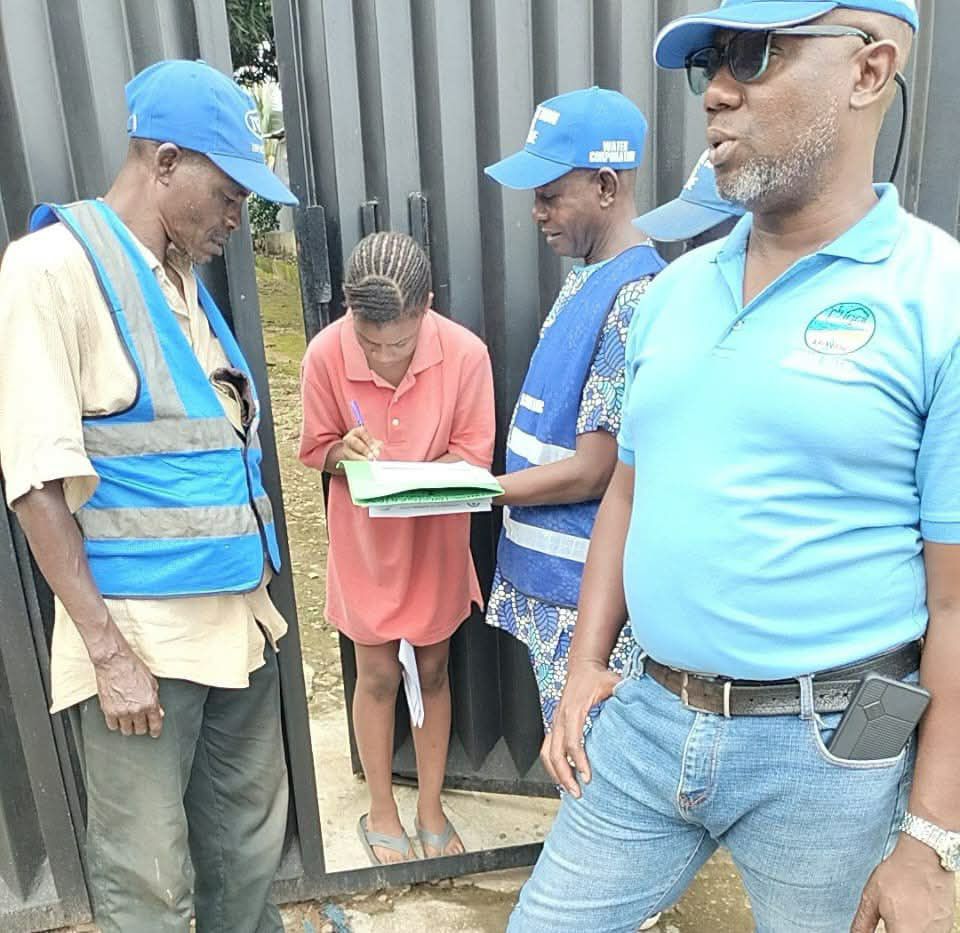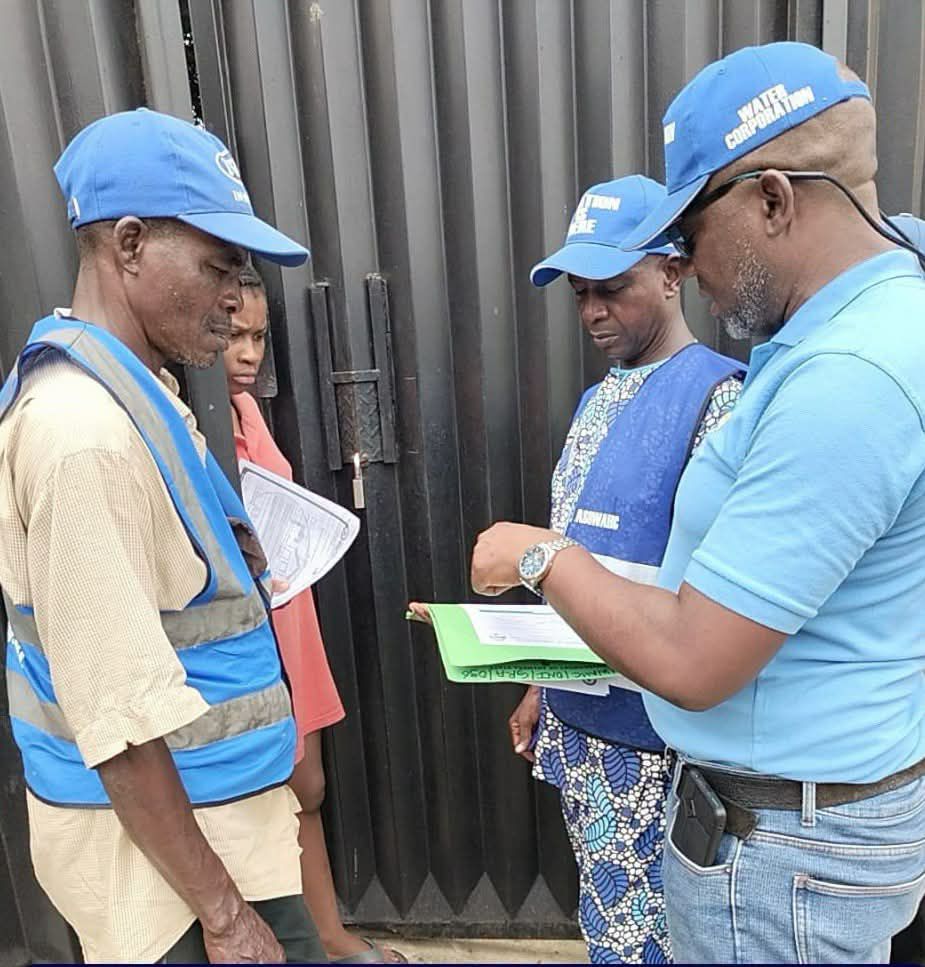


The Anambra State Urban Water Assets Holdings Corporation (ASUWAHC), Onitsha Zone, has commenced an enforcement exercise to improve compliance with water bill payments among consumers across the Onitsha metropolis.
The exercise involved visits to various areas and streets, where officials distributed current water bills to consumers and served disconnection notices on customers with accumulated arrears.
The initiative is part of ASUWAHC’s broader efforts to strengthen revenue mobilisation, promote customer compliance and ensure the sustainable management and delivery of water services within the Onitsha Zone.
The exercise was carried out under the leadership of the Officer-in-Charge of ASUWAHC, Onitsha Zone, Mrs. Emmanuella Okafor, while the field operation was led by the Onitsha Zonal Head, Engineer Francis Udoh.
Speaking during the exercise, Udoh said the enforcement was aimed at encouraging consumers to fulfil their responsibility of paying for water services regularly.
He said the initiative was in line with the reform agenda of the Solution Government, particularly its emphasis on sustainability, accountability and improved service delivery in the water sector.
According to him, regular payment of water bills is essential to sustaining water production and distribution, as well as maintaining and upgrading the infrastructure required for effective service delivery.
Udoh explained that revenue generated from water services would enable the corporation to maintain its facilities and strengthen its capacity to provide reliable water supply to consumers.
He therefore appealed to customers with outstanding bills to settle their indebtedness promptly to avoid disconnection and support efforts to improve water services across the metropolis.
The Zonal Head urged consumers to regard regular payment of water bills as a shared responsibility, stressing that customer compliance was critical to maintaining a sustainable public water supply system.