


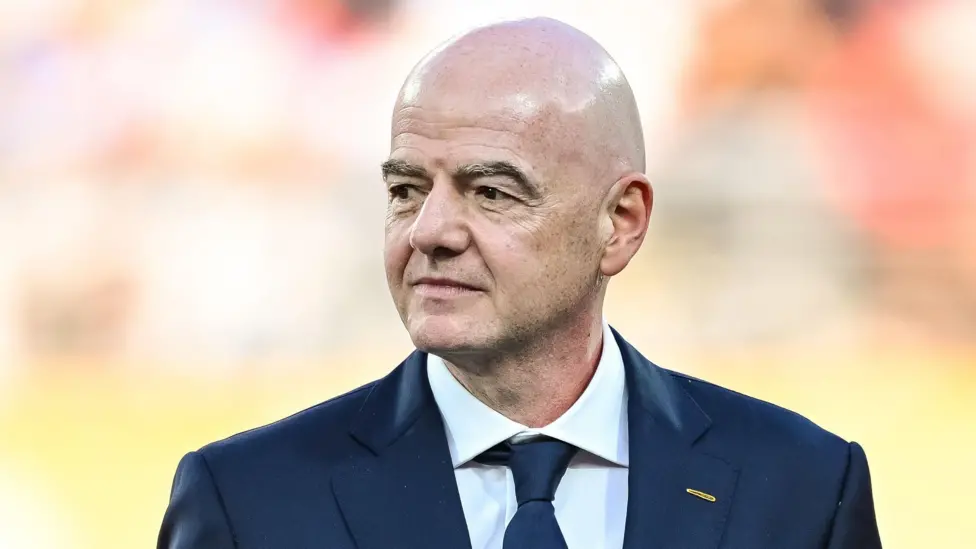
Newly disclosed documents have revealed that FIFA President Gianni Infantino’s abandoned plan to sell stakes in the organisation’s commercial operations to private investors could have committed World Cup-related commercial rights for up to 96 years.
The documents, obtained by British newspaper The Guardian, shed fresh light on the proposed FIFA Forward Enterprise (FFE), a multibillion-dollar commercial venture involving US investment firm Thrive Capital as its lead investor.
An internal FIFA risk assessment dated July 17 outlined plans to establish a profit-making subsidiary that would receive the commercial rights to FIFA events for exploitation over nearly a century.
“This deal provides for FIFA to create a for-profit subsidiary which would have all the commercial rights for FIFA events transferred to it for commercial exploitation for the next 96 years,” the assessment stated.
A separate document outlining the proposed agreement with Thrive Capital specified rolling 12-year licensing periods, with a maximum duration of 96 years. FIFA would retain a 51 per cent ownership stake in the venture in perpetuity.
The documents also disclosed a proposed management incentive plan that could have allocated up to five per cent of the subsidiary’s fully diluted equity to its management team.
Based on the venture’s initial $20 billion valuation, the arrangement could theoretically have generated bonuses of up to $50 million for every additional $1 billion in value created above that threshold.
Another provision reportedly entitled Thrive Capital to a $250 million termination fee if FIFA breached its agreement or concluded a deal with another investor.
The proposed arrangement also restricted FIFA from negotiating with alternative lead investors for a year or until the transaction was completed.
Questions have also emerged over the approval process, as FIFA’s internal documents confirmed that no competitive tender was conducted, citing the investment’s “specific and unique nature”.
The organisation’s finance department was also reportedly not directly involved in the transaction’s terms.
FIFA, however, has rejected suggestions that Infantino stood to benefit personally from the arrangement.
A FIFA spokesperson told The Guardian that any potential management incentive plan was exclusively intended for members of the subsidiary’s management team, excluding FIFA officials.
“For the avoidance of doubt, any potential management incentive plan was exclusively for members of FFE management, of which FIFA officials could not have been part,” the spokesperson said.
The organisation added that its leadership would only have held board positions without receiving additional remuneration.
FIFA also maintained that the proposal would have required approval from its member associations and the FIFA Council.
The plan, which sparked widespread criticism from football stakeholders and senior executives, was subsequently withdrawn following a backlash.
The controversy has intensified scrutiny of Infantino’s leadership as he prepares for a fourth presidential term, with questions surrounding transparency, financial accountability and the commercial direction of world football.
Infantino has led FIFA since 2016.
