



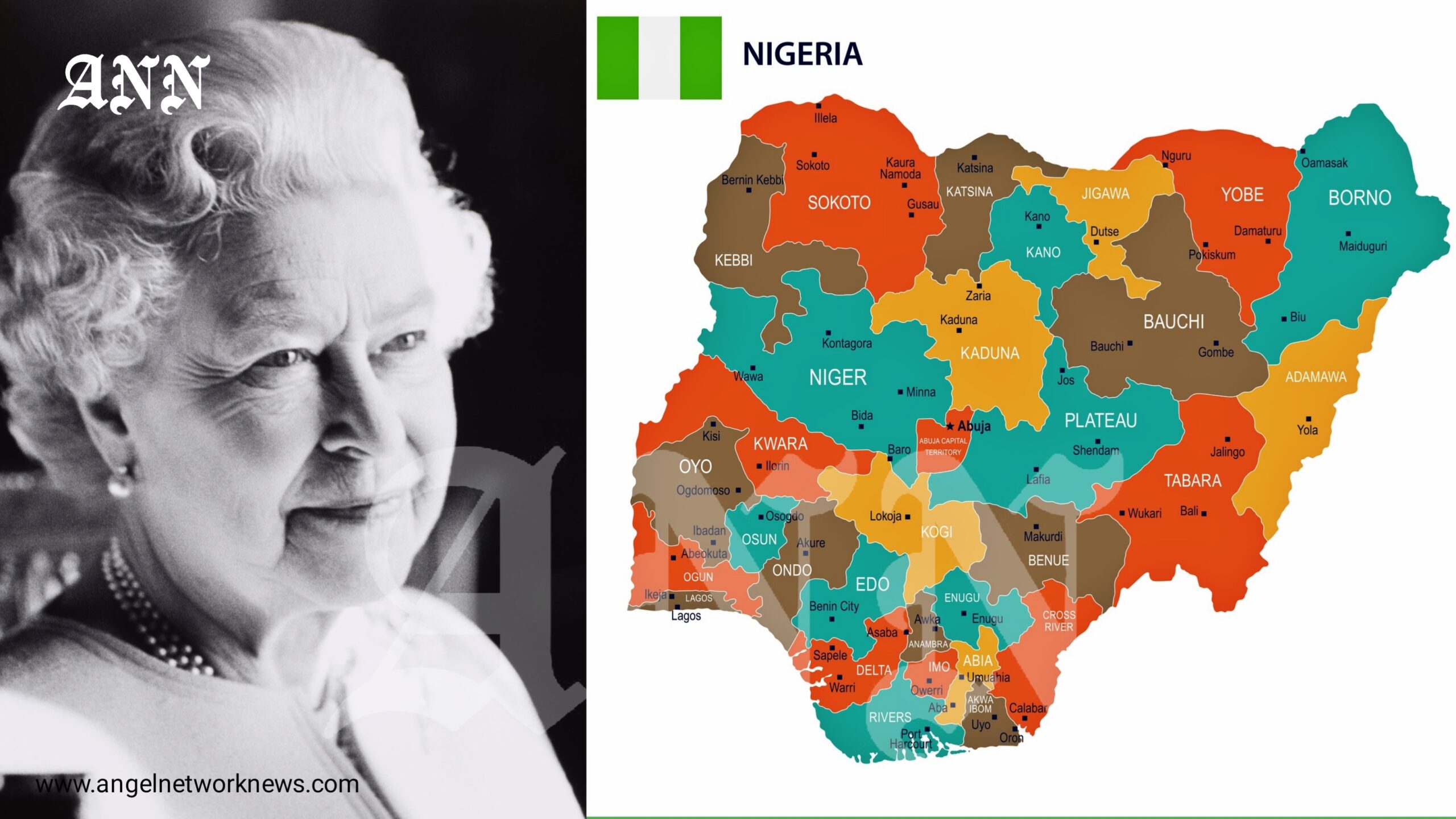
Queen Elizabeth II, the longest reigning British Monarch passed on two day ago and her death has been generating mixed feelings and reactions across the globe. On the one hand, there are people who pay glowing tributes to the Queen for her dedication to service, her humility; exemplary leadership and most importantly for liberating Africans from unwholesome customs like human sacrifice and killing of Twins. In fact, these are of the opinion that Nigeria was by far better when the Queen was here.
Others saw the Queen as an embodiment of the British Empire and the atrocities committed against colonized people. This later view was particularly represented by a Nigeria born US scholar, Uju Anya. After hearing that the 96-year-old monarch was placed under medical supervision in Scotland, Anya reacted by highlighting the Queen’s role in colonial oppression:
“I heard the chief monarch of a thieving raping genocidal empire is finally dying,” she tweeted. “May her pain be excruciating.”
The post garnered a wide range of reactions, with some praising and co-signing Anya’s take, while others, including my humble-self slammed it as insensitive. Amazon’s billionaire Jeff Bezos fell into the latter category.
“This is someone supposedly working to make the world better?” he responded. “I don’t think so. Wow.”
Anya fired back at Bezos with, “Otoro gba gbue gi,” an Igbo phrase that roughly translates to, “Diarrhea, kill you.” “May everyone you and your merciless greed have harmed in this world remember you as fondly as I remember my colonizers,” she wrote in the tweet.
About an hour later, Buckingham Palace announced the Queen had died peacefully at Balmoral Castle in the Scottish Highlands.
Twitter removed the professor’s original post Thursday, saying it violated the platform’s rules; however, Anya doubled down on her criticism of the Queen, suggesting she would not apologize to anyone who might have been offended:
“If anyone expects me to express anything but disdain for the monarch who supervised a government that sponsored the genocide that massacred and displaced half my family and the consequences of which those alive today are still trying to overcome, you can keep wishing upon a star.”
So much for Anya’s altercation with Bezos. This write up was not meant to address that debate. The article was my modest reply to a friend who wanted to know my opinion on the implication of the Queen’s death to Africa.
I told my friend that I would rather talk about Nigeria instead of Africa and that my best expectation was that the Queen’s departure would bring independence to Nigeria. I saw him wondering how someone in his right senses would be talking about independence for a country that has been politically free in the past 60 years. Well, here is where many people get it wrong. That Nigeria celebrated its independence 62 years ago does not make it independent. Far beyond the imposition of political structures, colonization involves a whole lot of other power relations: including exploitative economic structures, imposition of values, religions, languages, etc., that do remain long after political structures are dismantled.
Ndlovu-Gatsheni, a renowned colonial scholar made this point in an interview where he distinguished colonization from colonialism. According to him, colonization is an event—that is in terms of people (colonists) coming, conquering, and dominating other people at a particular moment, and administering colonially, until the colonized fight and push them back. Hence, colonization can be dated, in terms of when it started and when it came to an end. However, colonization institutes colonialism. “A very complex power structure that transforms a people’s way of life”, colonialism is the invention of asymmetrical and colonial inter-subjective relations between colonizer and colonized and it economically institutes dispossession and transfers of economic resources from those who are indigenous to those who are conquering and foreign. It claims to be a civilizing project, as it hides its sinister motives.
Colonization also creates institutions and structures of power that sustain colonizer-colonized relations of exploitation, domination, and repression. Even when you push back colonization as a physical process, colonialism as a power structure continues as a metaphysical process and as an epistemic project, because it invades the mental universe of a people, destabilizing them from what they used to know, into knowing what is brought in by colonialism, and it then commits ‘crimes’ such as epistemicide (where you kill and displace pre-existing knowledges), linguicide (killing and displacing the languages of a people and imposing your own), culturecide (where you kill or replace the cultures of a people).
In 1965 Kwame Nkrumah introduced the concept of “neo-colonialism” to name the continuation of exploitative economic relations long after attainment of political independence. Later, Walter Rodney articulated how Europe underdeveloped Africa and this intervention also underscored the continuation of exploitative relations, which made it possible for development to materialize in the Global North and mal-development to ensue in the Global South. To reverse such a process, carrying a gun is not sufficient. It requires dealing with the consciousness, the psyche, because colonialism is internalized and routinized. An Indian psychologist Ashis Nandy, who posits that colonialism operates like an intimate enemy, aptly captures this situation; “it sits within you, like a parasite.” He suggests that perhaps something that starts in people’s minds must end in their minds in the first instance. In other words, if you remove colonialism physically without removing it mentally, it will not disappear.
Here lies Africa and Nigeria’s lack of independence. The British convinced us that everything about us is inferior and we have lived the past 62 years of independence trying to imitate the Brits. Therefore, for me, the most arresting impact of Nigeria’s negative history of colonization is not the destructions and exploitations that the country sustained but its influence on the Nigerian psyche. The fact that we were forced to perceive ourselves in the light of that negative history and, above all, came to accept that image as exquisitely ours.
This is precisely what Ayittey considers the most detrimental effect of Africa’s history. He writes, “It was probably this, rather … that wrenched the heart from the inner psyche of blacks and assailed the very cultural soul of their existence.” The humanity of the African was, thus, heavily contested. All through life, the African had it as his self-imposed task, to prove this humanity of his. This outlook has marked the African through and through.
Hence, there is the competition to outdo one another in imitating the European. The inferior African aspires to be like the European. In terms of language, the African prefers the colonial masters’ language. To speak any African language is a sign of inferiority. But one is a ‘been-to’ once one speaks one of the languages of the erstwhile colonizers. In admiration of the European, the African suffers identity crisis. The European is a “Bekee,” “Oyibo,” “Agbala.” Whatever is not from the West is deemed inferior; and this includes what is roundly African; what the West does not produce! The values of the West become assumed as African values, while the core African values become rejected in preference to West.
The dehumanization so affects the African that he/she is led, even, to deny himself or herself. This is the horrible aspect of the African condition. Of this aspect, Owomoyela writes: “Africans have not been the only people overrun by rampaging Europeans but Africans are unique in their belief that their future lies in becoming, in thought, speech, and habit, like their erstwhile colonizers.”
I give you good and recent examples: Not too long ago, the presidential flag bearer of the Labour Party, Mr. Peter Obi, after joining the party and before kicking off consultation had first travelled to London to meet with the outgone British Prime Minister, Mr. Boris Johnson and other members of the British Parliament. Why did Obi have to do this? Because there exists an unwritten protocol, that one cannot lead Nigeria without approval from London and perhaps Washington. The former President, Goodluck Jonathan seemed to share this view when he blamed London and Washington for openly supporting the current President on the eve of 2015 presidential election. In addition, few weeks ago, the three major contenders in the 2023 presidential race, Atiku, Obi and Tinubu had met in London with Chief Olusegun Obasanjo on matters relating to the election. And I ask, why in London? Was there no place in Nigeria where such meetings could hold? Have the Brits ever meet in Nigeria to determine who become their prime minister? This goes again to reinforce the belief that Nigerians and their leaders are still enwrapped in the cord of colonial mentality.
What about the meetings between the presidential flag bearers and Catriona Laing, the British Ambassador to Nigeria? Over the past two months, the Ambassador has had at least two rounds of meetings with the major contenders. What are these meetings all about? Is Mrs. Laing the only ambassador of a foreign mission in Nigeria? Why is this woman interfering in Nigerian election? Does the British government still consider Nigeria a colony? The questions are endless but the bottom-line is that Nigeria is still under the stranglehold of British colonialism.
While I am not in the league of any advocacy for a total, break with London-Colonization is now in the past and Abuja and London can forge a new and better beginning – I believe that any relationship between Abuja and London should be a relationship of equals and mutual enrichment, not slave-master relationship which it has been this 62 years. It is my honest wish that the Queen’s eternal departure will bring about this long overdue transition to real independence for my dear and beloved country Nigeria.
