




As Nigeria goes into 2023 with focus on the general elections, stakeholders have advised the Federal Government to mitigate the impact of floods and climate change on food security.
They include financial experts, farmers, local and international organisations, and humanitarian groups.
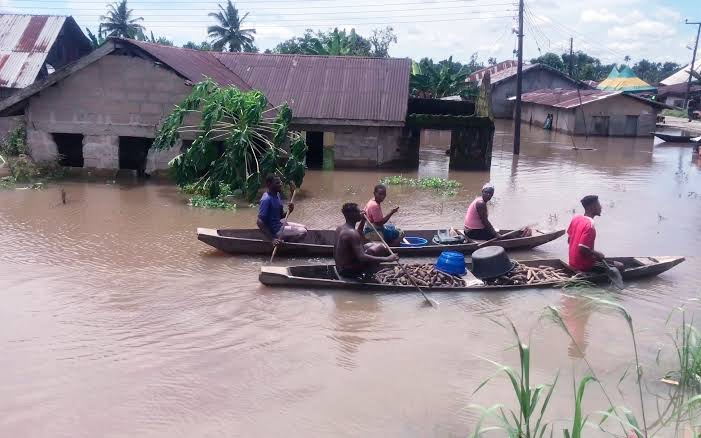
There are food crisis fears due to the flooding in 2022 which caused havoc in many States and communities in all regions.
More than 600 people have died, and properties worth billions of naira destroyed in rural and urban areas.
Equally worrisome is the destruction of thousands of hectares of farmlands in Nigeria and within its neighbours.
In October, the International Monetary Fund (IMF) told West Africa’s powerhouse to prepare for the consequences of climate change.
“The supply of agricultural production is going to drop which will put further pressure on prices”, African Department official, Mai Farid said.
On Sunday, former Central Bank of Nigeria (CBN) Deputy Governor, Kingsley Moghalu called attention to the threat of climate change.
Moghalu noted that the “massive floods and herder/farmers conflict…partly fueled by climate change pressures” were clues of the implications.
A stakeholder, Mrs. Funmilayo Oluwole told Newsmen that those in the agriculture sector were worried about the coming year.
The Lagos-based farmer listed garri, plantain, cassava, rice and beans as some of the most affected farm produce.
“We don’t know what to expect from now into 2023 but we are hoping that the federal and State governments will help us.
“Even if you have insurance, how much of the damages and losses will the companies cover?”, she quipped.
Oluwole urged the authorities to encourage entrepreneurship and ensure more investment in infrastructure and storages.
“The government should finance crop production, food processing and empower youths in agriculture, to reduce poverty and unemployment”, she added.
United Nations Humanitarian Coordinator, Matthias Schmale expressed concern that the floods and climate change are affecting millions.
The official said vulnerable people in Nigeria, as elsewhere in the Sahel, are on the frontline of the crisis.
“The flooding has affected more than 3 million people. Over 600 people have lost their lives and another 1.5 million forced to flee their homes.
“The floods have damaged houses, farms, and basic infrastructure and decimated people’s livelihoods…34 States are affected”, Schmale noted.
The senior official stressed that the torrents are increasing humanitarian needs in the north-east zone.
The UN estimates that over 3.2 million people are displaced around the Lake Chad; more than 2.5 million are Nigerians.
Citizens are grappling with hunger and malnutrition driven by conflict, displacement, and high food prices, according to Schmale.
The coordinator announced that the International Federation of the Red Cross has issued a Floods Emergency Appeal of $13million to provide clean water and shelter.
The intervention, which includes cash assistance to half a million people, will be extended to Adamawa, Anambra, Bayelsa, Kebbi, Kaduna, Yobe, and Zamfara States.
Schmale, however, urged donors and the international community to contribute to the flood response quickly and generously.
Recently, the Central Emergency Response Fund (CERF) released $10million to save lives and get urgent aid to IDPs in the north-east.
The UN Office for the Coordination of Humanitarian Affairs (OCHA) said at least 1.7 million children under the age of five are at risk of malnutrition.
Last week, Minister of Agriculture Mohammad Abubakar promised food security, assuring that the government was working with development partners.
Earlier, his Water Resources counterpart, Suleiman Adamu said 80 percent of the floods in Nigeria were “God’s blessings.”
“80 percent of the floods in this country is water that we are blessed with from God from the sky”, Adamu asserted.
