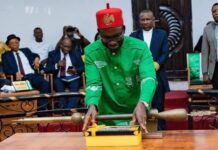


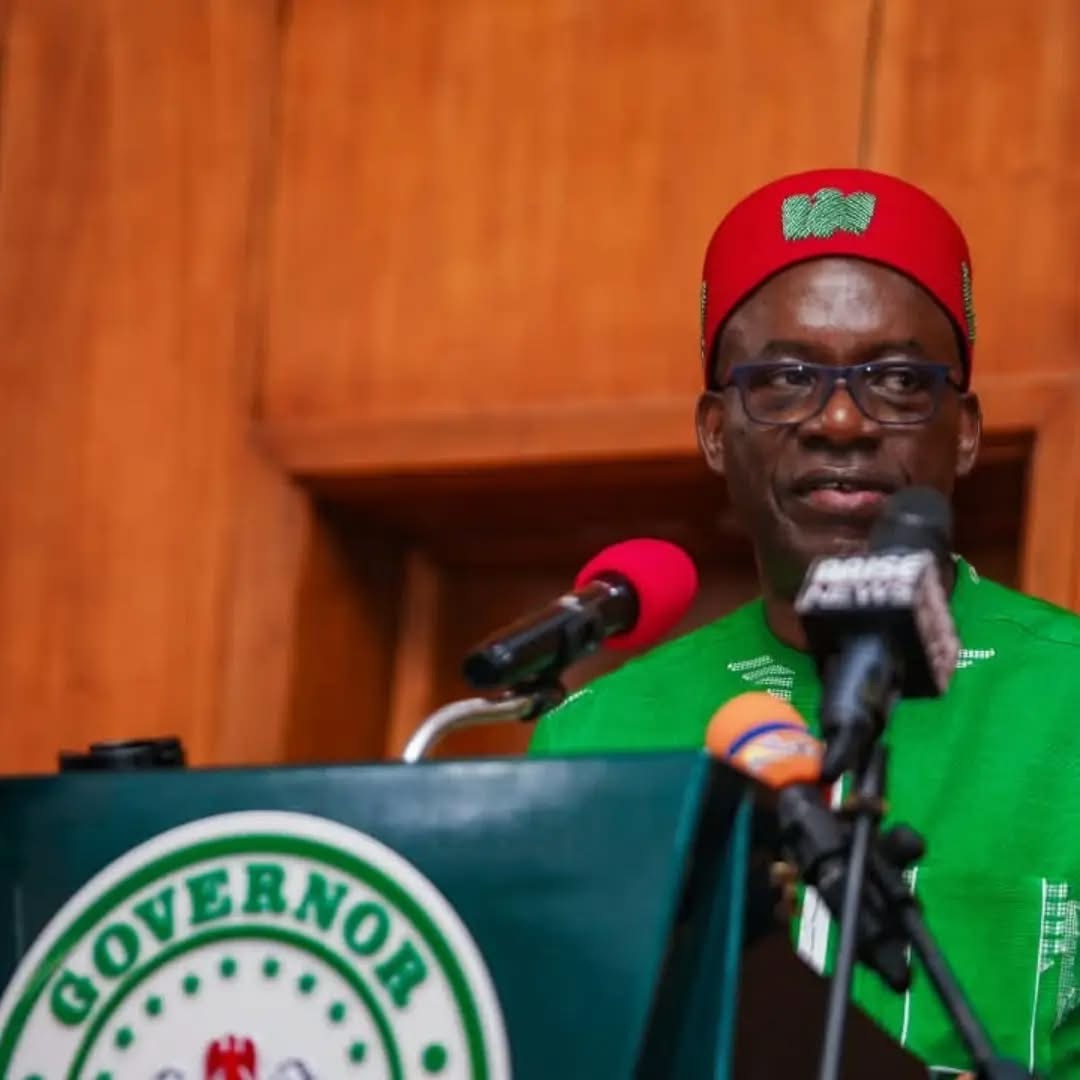
When Governor Prof. Chukwuma Charles Soludo, CFR, stood before the Anambra State House of Assembly on Tuesday, 24th November, 2026, he was not just presenting figures. He was presenting a vision.
The 2027 Appropriation Bill, christened Solution 2.0: Unlocking New Axis for Sustainable Prosperity, is worth N893,435,059,830. It is a 16.58 percent increase over the 2026 budget. But the size is not the story. The structure is the story.
*A budget that builds:* Of the N893.4 billion, N692,656,257,655, representing 77.53 percent, is devoted to capital expenditure. Only N200,778,802,175, representing 22.47 percent, goes to recurrent expenditure.
In plain language, Anambra is spending more than three naira out of every four naira on building, not on running government. Roads, schools, hospitals, water, housing, and the infrastructure of a modern state. That is rare in Nigerian public finance, and it is deliberate. I do not think any state in Nigeria has attained it.
Soludo has insisted from day one that Anambra must be built, not merely administered.
*What does this budget hold for Ndi Anambra?*
For the farmer, it means better roads to move her goods and a safer environment to trade, and access, storage, and a market that works.
For the students, it means a classroom with a teacher who is present, trained, and motivated. The budget provides for the recruitment of 5,000 additional teachers, building on the 8,115 already hired by this administration. That is not a promise. That is a pipeline.
For the sick child, it means a health system that is being funded to respond. Health takes N44 billion in this budget.
For the young graduate in Ekwulobia, it means a new economy. Housing takes N18 billion. Justice takes N24.9 billion. Security remains a priority, because without security there is no prosperity.
The new axis is thinking beyond today. Perhaps the most audacious part of the budget is its forward look.
Soludo spoke of an aerotropolis, a new city built around an airport economy, as a response to a hard truth: Anambra’s population is growing fast, its land is shrinking, and yesterday’s planning cannot carry tomorrow’s people.
This is what unlocking a new axis means. It is not just fixing potholes. It is planning for the Anambra of 2040, 2050, and beyond, while delivering for the Anambra of today.
This budget also shows discipline in the midst of ambition. The budget carries an estimated deficit of N185,560,133,387, about 20.7 percent. Yet Soludo reminded lawmakers of a fact that has become his signature: his administration has not borrowed a kobo to date.
If borrowing becomes necessary, he said, it will be strictly economically justified and disciplined. Anambra will not mortgage its future to pay for its present.
It is a consolidation budget with a human face. The Speaker of the House of Assembly, Rt. Hon. Dr. Somtochukwu Udeze, commended the Governor for his developmental strides across all sectors, and for the upgrade of the Assembly complex itself. But beyond the commendation lies the real test: will this budget change lives?
If its structure holds, it will. A budget that puts 77 percent into capital, that hires teachers, funds health, builds housing, secures communities, and plans new cities, is not a budget for politicians. It is a budget for people. That is the promise of Anambra 2.0.
It is not just about spending more. It is about building better, planning longer, and unlocking new axis for sustainable prosperity for Ndi Anambra, today and for generations to come.
*Dr. Law Mefor,*
Commissioner for Information
& Value Reformation,
Anambra State
