




The Lagos State Government has moved to contain public anger over a viral video showing officials demanding a permit fee from a resident for installing solar panels, insisting the policy applies strictly to government-owned housing estates and not to private homeowners.
A Video That Stopped the Scroll
The controversy erupted after a video shared on April 21 showed officials from the Lagos State Ministry of Housing’s Monitoring and Compliance Unit confronting a resident over solar panels installed in a state-owned estate, allegedly demanding a permit and payment before he could proceed.
In the video, the man expressed shock, saying: “Please, Lagos people — does anyone know these people? They just showed up at the front of our house saying because we installed solar that we must get permit and approval from them before we can use it. I’ve never heard of this in my life, and I don’t even know where they came from.” (GistReel)
The clip spread rapidly across social media platforms, drawing a torrent of criticism at a time when millions of Nigerians rely on solar power as an alternative to the country’s chronically unreliable national electricity grid.
Government Pushes Back
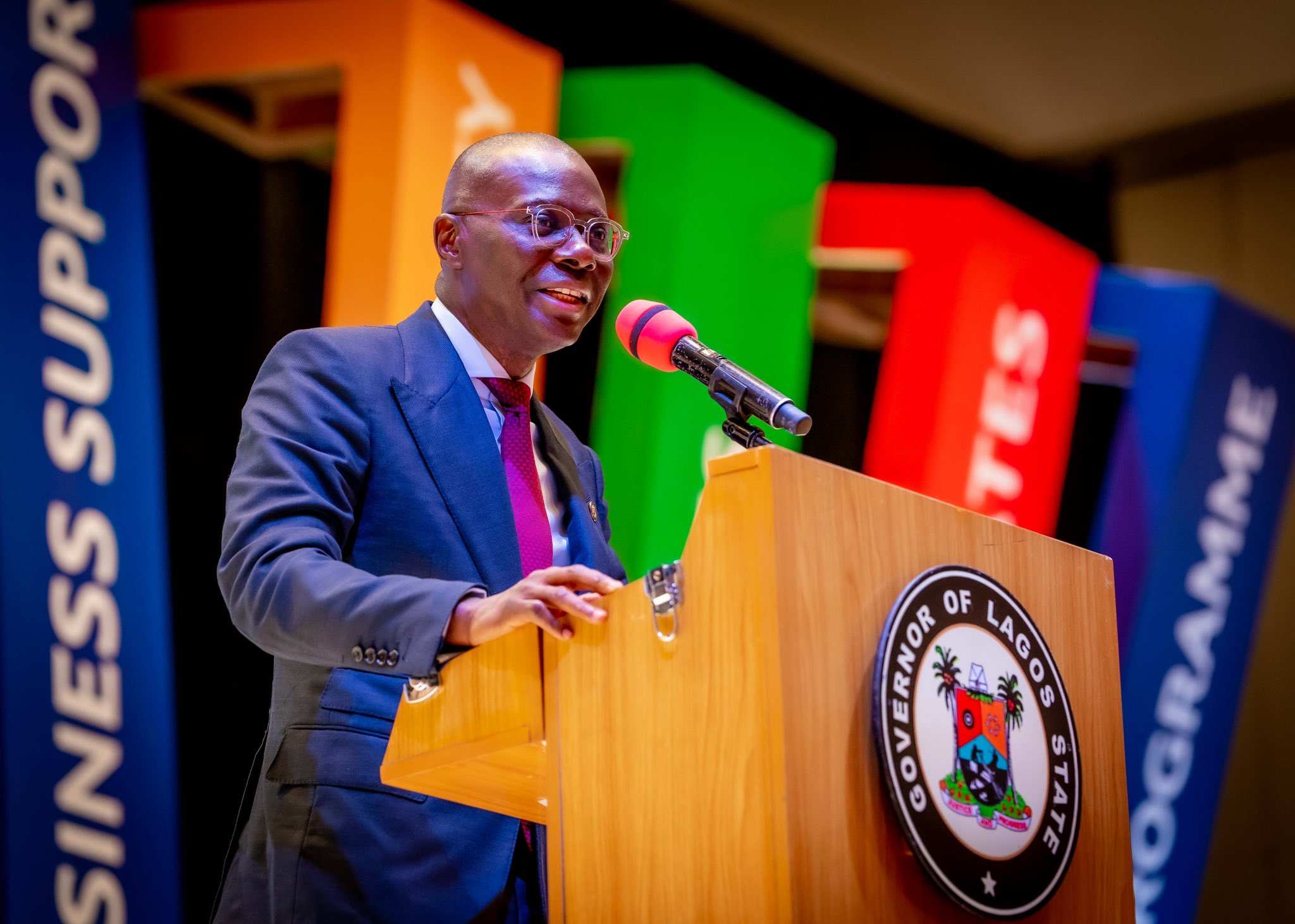
Responding on Wednesday, Wale Ajetunmobi, Senior Special Assistant on Media to Governor Babajide Sanwo-Olu, sought to limit the fallout, saying the resident in the video appeared to have misread the rules that govern his estate.
“The Lagos State Government does not charge all residents living in the State for a permit to install solar power systems for domestic use in their homes, as the video suggested. Only residents living in the government-owned social housing estates are charged administrative fees for alterations, such as the installation of a solar power system, before any additional development can be permitted,” Ajetunmobi stated.
He explained that solar installations in those estates are classified as structural alterations because the properties already come with a centralised electricity supply system.
“Those solar power systems are usually installed by occupants in shared areas; so this alteration must be approved by the facility manager (Government) before any occupant can proceed,” he said, adding that the government had previously dealt with liabilities from unapproved changes, including roof damage and fire incidents.
Ajetunmobi also noted that estate residents had signed indemnity documents acknowledging such conditions before taking possession of their apartments. “The simple rule for any estate occupant is to contact the State Government (facility manager) for approval for any external alteration,” he warned.
Public Anger Persists
Despite the clarification, many Nigerians remain unconvinced, with critics accusing the government of penalising residents for filling a gap the state has failed to fill.
One social media user, Afolabi Olaide, wrote: “Approval for solar when the government failed to provide adequate electricity? I’m not surprised anyway, they tried to charge Lagos residents for a borehole when they failed to provide water.”
Another user, Agbo Obinnaya, described the permit demand as “illegal and not supported by any existing federal or Lagos State laws,” citing the Lagos State Electricity Law 2024, which he said promotes renewable energy, including solar, and established the Lagos Electricity Regulatory Commission and Electrification Agency.
Analysts also noted that the controversy, while rooted in a narrower regulation, exposed a wider communication gap — pointing out that policies around energy and housing are easily misunderstood when not broken down in simple, accessible language, and that in a country where energy costs remain a raw nerve, even routine administrative processes can quickly be perceived as new taxes.
