



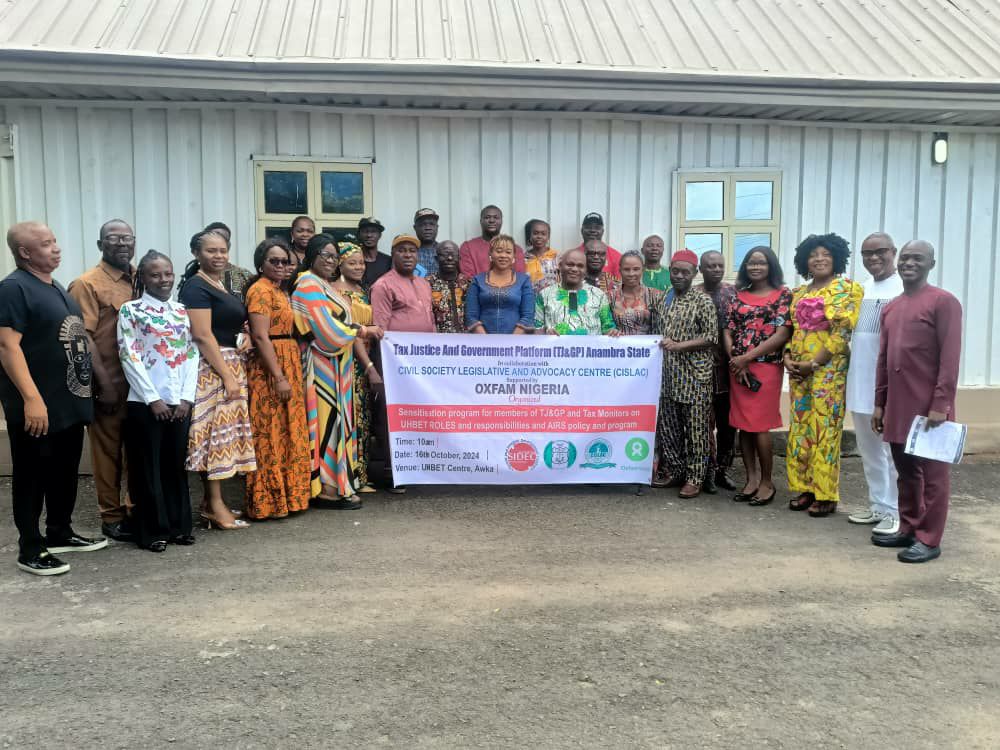
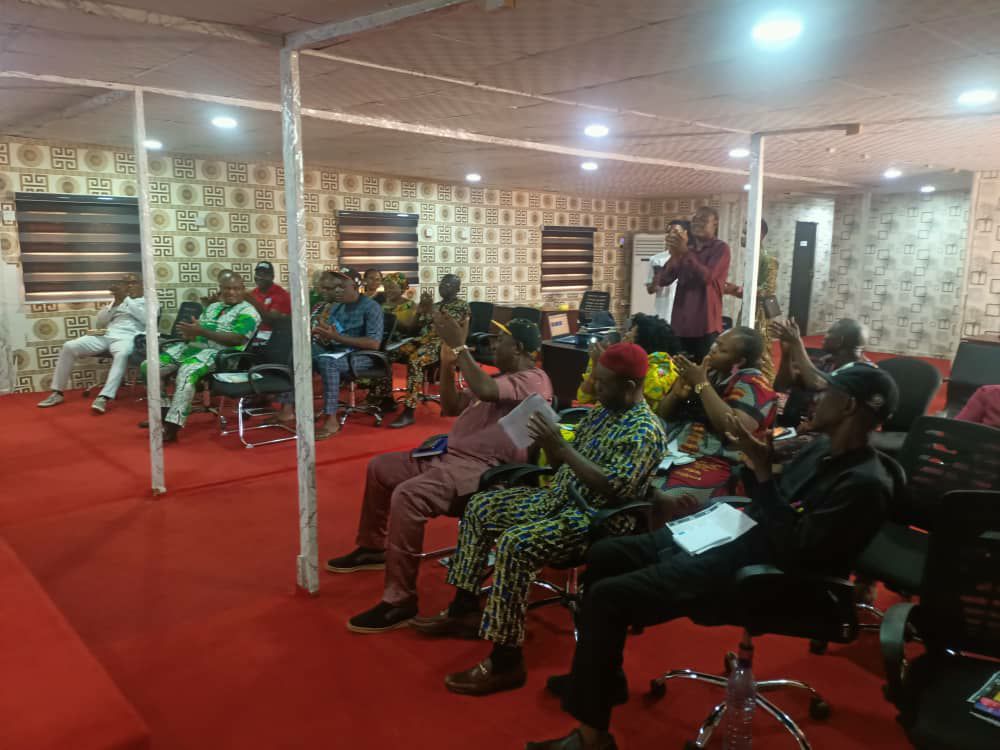
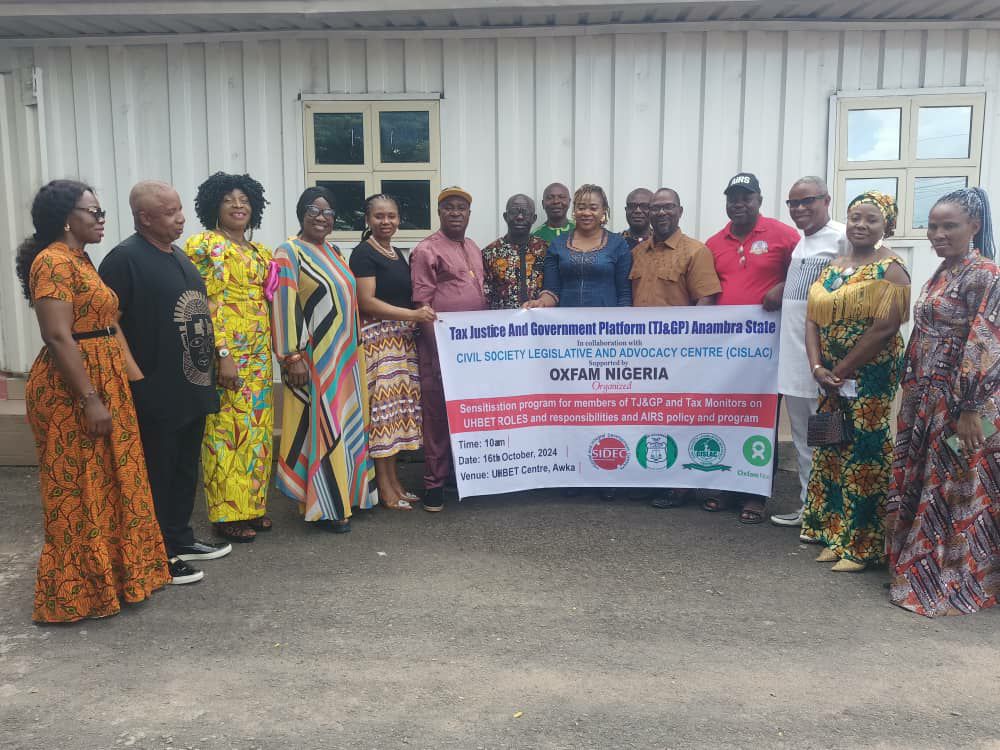
In a bid to promote transparency, accountability, and civic engagement in the tax system of Anambra State, a Non-Governmental Organization, Social and Integral Development Centre, (SIDEC), in collaboration with the Civil Society Legislative and Advocacy Center (CISLAC), has held a one-day sensitization programme to foster better understanding of taxation among stakeholders.
The event, supported by Oxfam Nigeria, was aimed at educating them on the benefits of tax payment as a civic responsibility and offered a platform for those in the informal sector to table their concerns around taxation, for government attention.
Angel Network News (ANN) reports that
the event attracted members of the Tax Justice and Governance Platform, traders, civil society advocates, media professionals and relevant government officials.
The Executive Director of SIDEC, Ugochi Ehiahuruike while speaking, described taxation as a critical source of revenue for funding public goods and services which benefit the communities.
Ehiahuruike however acknowledged that several challenges and inefficiencies often plague tax systems, undermining trust and hindering economic growth.
In her words “Through this platform, we aim to foster a collaborative environment where CSOs, tax monitors, members of TJ&GP, market leaders, government agencies, and other stakeholders can work together to advocate for tax justice, transparency, and good governance across the state.
“Today’s program is designed to equip you with the knowledge and skills necessary to effectively engage with tax policies and practices, promote civic awareness, and advocate for a more equitable tax system, mostly in the informal sector.
In her presentation, entitled “Tax Education: Clarities on Tax and Levies.” the Senior Special Assistant to the Governor on Internally Generated Revenue, Mrs. Amara Kate Oyeka, said despite the challenges surrounding revenue collection in the state, Anambra can have a semblance of the Lagos situation with proper sensitization, and heightened awareness among citizens.
“It takes willing and patriotic citizens to make Anambra a better, bigger and more business-friendly state. No doubt, market is the largest contributor to the state’s IGR. This does not mean that our people have a good tax culture. We will continue to sensitize and educate them on this all-important issue.
Oyeka took time to explain the difference between tax and levy. “Market levy is a fixed amount levied on marketers by the government. It is the one used to take care of market needs and not personal income tax.
“Many people are ignorant of where to pay their taxes, whom to pay to and why it is paid. Tax is a statutory obligation everywhere around the globe not only here in Anambra State”.
In another presentation on Understanding the roles and responsibilities of Unified Hybrid Enforcement Team (UHBET), one of its commanders, Sylvester Uzoh, said that the arm was birthed under its current Chairman, Dr. Greg Ezeilo, to drive revenue payment compliance enforcement and to block leaking IGR windows in the state.
“UHBET was established to rescue Ndi Anambra from bondage and grip of revenue brigands, hooligans, touts and criminals who have been diverting the State’s IGR to their personal pockets”.
In a remarks, Pastor Peter, the leader of Nnewi Motor Spare parts market, lamented the neglect by the state government despite the huge sums of money being generated from the market. “All the traders contributed to install the solar lights in the market and fixed the toilet facility.
“The projects took fortunes from us but we have to execute them since we are not sure of government attention. While we appreciate the construction of some roads, we appeal for attention to others to ease movement around the market. Security is also a concern to us.
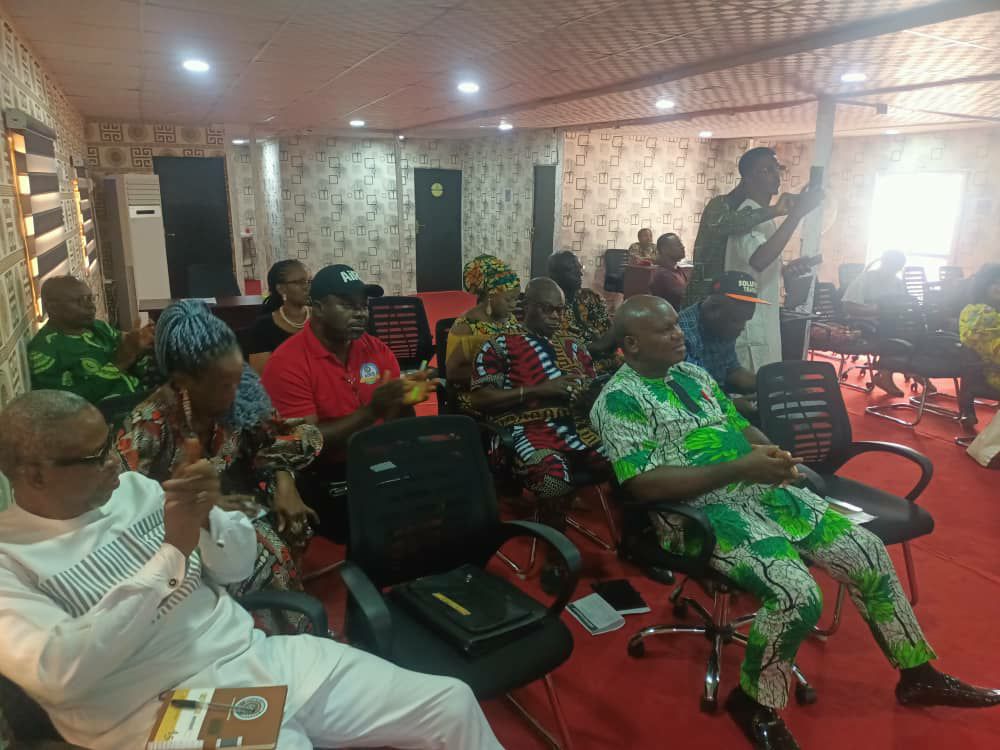
The leader of Onitsha Main market, Chief Innocent Ezeoha Ezenanya, listed their needs to include: solar lights all over the market, good and accessible road network to Ochanja market, Bida road and other parts of the commercial city as well as renovation of toilet facilities which have not been in good shape for a long time.
Some other directors from relevant MDAs including the Director Commerce, Mrs Henrietta Basil, and the director Planning in the Ministry of Economic Planning, Budget and Development Partners Mr. Arthur Iweanya, offered explanations to concerned raised by the traders.
The Tax Justice and Governance Platform is a multi-stakeholder initiative with the objectives to enhance civic awareness and education on tax policies and practices, promote transparency and accountability in tax revenue collection and utilization, foster collaborative advocacy for tax justice and good governance as well as support for capacity building for CSOs and government agencies.
