





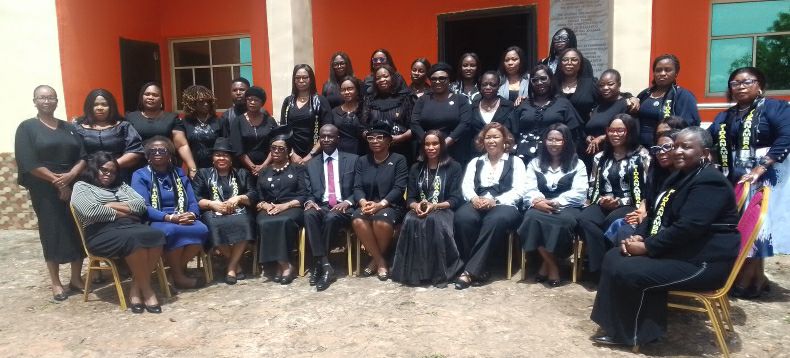
The International Federation of Women Lawyers (FIDA) Nigeria is worried over the persistent under-representation of women in leadership positions within Nigeria’s judiciary despite progress recorded globally and regionally in women’s empowerment.
FIDA Country Vice President and National President, Mrs. Eliana Martins, raised the concern in Awka during a consultative dialogue with women judicial officers organised with support from Co-Impact, a global philanthropic organisation.
The engagement, themed “Probing Women’s Career Progression and Leadership Pathways in the Judiciary,” seeks to strengthen women’s inclusion and advancement in Nigeria’s judiciary through institutional reforms.
Represented by the National Publicity Secretary, Mrs. Chineze Obianyo, Martins lamented the continued structural gender imbalance within the judiciary despite increased participation of women in legal education and professional practice since Nigeria’s independence.
According to her, the dialogue would provide an opportunity to examine the barriers confronting women in their career progression, including entry, retention, promotion, leadership opportunities and workplace experiences within the judiciary.
She noted that although Nigeria had recorded major milestones with the emergence of Justice Aloma Mariam Mukhtar as the first female Chief Justice of Nigeria and Justice Zainab Bulkachuwa as the first female President of the Court of Appeal, women remained largely under-represented in judicial leadership positions.
“Currently, only four out of the 13 justices of the Supreme Court are women, representing about 31 per cent. While the appointment of the current female Chief Justice in 2024 marked an important milestone, it did little to offset the broader systemic imbalance,” she said.
Martins attributed the disparity to longstanding socio-cultural biases, discriminatory workplace practices and the absence of institutional safeguards that would support women’s advancement.
According to her, women in the judiciary often face restricted access to leadership pipelines, opaque promotion systems, deeply rooted patriarchal norms, limited mentoring opportunities and gender stereotypes questioning their competence, especially in cases involving customary or Islamic law.
“This dialogue provides a platform to understand women’s experiences in their career trajectory within the judiciary and examine the factors responsible for their low representation in leadership positions.
“It will also help generate state-by-state analysis of the barriers and challenges faced by women judicial officers while laying the foundation for an inclusive judiciary,” she added.
Martins said the engagement would promote evidence-based reforms that are inclusive, equitable and responsive to the needs of women judicial officers while advancing fairness, diversity and gender justice in the judiciary.
Angel Network News (ANN) reports that
Anambra State FIDA Chairperson, Mrs. Amara Muojeke, disclosed that 10 states with records of low female representation in the judiciary were selected for the project, which is being implemented simultaneously across the states.
She said Anambra and Ebonyi were the selected states from the South-East zone noting that the project aims to identify the factors limiting women’s advancement in the judiciary despite the large number of female magistrates and legal practitioners across the country.
“As at 2023, Nigeria had 13 Supreme Court justices and only four were women. In Anambra State, out of 29 High Court judges, only five are women.
“Meanwhile, there are many women in the magistrate courts and among legal practitioners. So, what really is the challenge? Is it culture, policy, qualification or lack of opportunity?” she queried.
Muojeke explained that the five-year project would engage critical stakeholders, including the Chief Judge, Attorney General, Nigerian Bar Association (NBA), Judicial Service Commission (JSC), female judges, magistrates and customary court officials.
Describing Anambra as relatively gender-friendly, she expressed optimism that the initiative would produce meaningful reforms and positive outcomes.
She noted that similar projects implemented by Co-Impact in countries such as Kenya had yielded productive results.
Addressing possible criticisms against advocacy for women’s inclusion, Muojeke maintained that the Nigerian Constitution guarantees equal opportunities for all citizens.
“If men can occupy such positions and there are qualified women available, they should equally be encouraged to grow and lead,” she said.
She added that Anambra had continued to appoint women into strategic positions in government, stressing that the state was not particularly unfriendly to women in leadership.
The event featured breakout and brainstorming session during participants including female judges unravelled issues against female judicial leadership and proffered possible solutions.
