
The Greeks have an ancient tradition that forbids public officeholders and soldiers from doing or saying anything for three days when they are angry. Behind this noble tradition is the belief that people become very emotional when they are angry and are likely to say and do things destructive to themselves and the society.
Like many Nigerians, I felt so bad when Soludo trashed Peter Obi’s presidential ambition and like many Nigerians, my initial impulse was to become sentimental and unleash vituperations on the erudite governor. However, I remembered this Greek wisdom and decided to restrain myself. Now that things have calmed down and people have become more rational and less emotional, I think it is time to revisit Soludo’s claim in his piece against Obi’s presidential ambition.
In sum, the central point in Soludo’s submission is that Mr. Peter Linus Gregory Obi will not win the presidential election. Therefore, voting him amounts to wasting the votes of Ndi Igbo. He feels this would be a political miscalculation and catastrophic because whosoever eventually wins the election will see Igbos as political opponents and treat them the way the current administration treats them.
My main concern is Soludo’s analysis and conclusion on the Igbos’ place in Nigerian politics, and his views on how the Igbos could be “in the reckoning” in Nigeria’s political governance. Professor Soludo suggests the Igbos must work smarter and harder to be relevant politically. However, he ignores the structural barriers, particularly the cut-throat, inter-ethnic struggle for power and, indeed, for domination, which disadvantage the Igbos. He argues, wrongly, that the Igbos’ best route to the presidency is through becoming a “bargaining force”, using Bola Tinubu’s template, rather than through power rotation or popular vote.
We will come back to all that. First, let’s touch on Soludo’s attacks on Obi. To be honest, Soludo’s criticism of Obi’s investments and savings as Anambra State governor from 2006 to 2014 hardly merits any response. For unless he accuses Obi of corruption, it’s a cheap shot, unmoored from reason, to blame a predecessor for making investments and savings even if they lost value eight years later – just as the $45bn foreign reserves that Soludo left behind as CBN governor in 2009 are just about $37bn today! So, let’s leave that aside!
Far more interesting is Soludo’s prediction on Obi’s electoral chances next year. “Let’s be clear,” he said: “Peter Obi knows that he can’t win and won’t win.” But why? He put it down mainly to Labour Party’s “lack of structure” and Nigeria’s two-party system. Soludo cited the US, saying that if Joe Biden and Donald Trump emerged as their parties’ presidential candidates, “definitely one of them will be president in 2024”. Not a third force!
But what about France? In 2016, a relatively unknown Emmanuel Macron formed a new party called En Marche. A year later, he defeated the two dominant parties – the Republican and the Socialist – that, between them, ruled France for decades. Where were their structures? They collapsed. Where was Macron’s structure? The French people were simply fed up with the establishment parties and wanted change.
Here in Nigeria, in 2007, Dr Olusegun Mimiko ran under a newly formed Labour Party, with absolutely no structure in Ondo State. Yet, he defeated the incumbent governor, Olusegun Agagu. What happened to Agagu’s structure? Well, Mimiko’s grassroots support crushed it!
The lesson is simple: Power belongs to the people, and, in a democracy, they are the real structure. Truth is: if Nigerians decide to give Obi and the Labour Party a chance next year, and the election is free and fair, no amount of structure would save the APC and PDP!
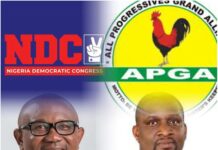
Strikingly, Soludo’s article oozed out disdain for Obi’s politics and presidential ambition. Soludo said he invited Obi to join his party, All Progressives Grand Alliance, APGA, and run as its presidential candidate. He said he knew Obi won’t win under APGA but wanted him to lead the effort “to get our people organised as a bargaining force”. Soludo cited approvingly the example of Tinubu who led the South-West in bargaining political power with the North.
This is utterly shallow and naïve. Clearly, Soludo sees nothing wrong with the self-serving, turn-by-turn, Faustian pact between Tinubu and Muhammadu Buhari. That aside, in 2015, Tinubu’s party, Action Congress of Nigeria, ACN, controlled the six South-West states, which gave it bargaining power in merger negotiations with Buhari’s Congress for Progressive Change, CPC. By contrast, APGA is a fringe party in the South-East, controlling only one state – Anambra – since 1999. Even if Obi ran for president under APGA, he wouldn’t get the Igbos behind the party, let alone organise them as a “bargaining force”. What’s more, for historical reasons, Igbos won’t get national leadership through regional or ethnic politics.
Truth is, the Igbos’ route to the presidency is through power rotation or popular support, whereby, without power rotation, Nigerians nonetheless decide to elect a presidential candidate of Igbo extraction. But Soludo says Obi can’t win and wants Ndigbo to bargain with Tinubu and Atiku Abubakar. But if Obi doesn’t win, Igbos may not get another chance for decades. Assuming Tinubu wins, as Soludo speculates, and does eight years, power will go to the North in 2031. When it returns to the South in 2039, the South-East may have to fight with the South-South for it.
The Igbos have produced Senate presidents and vice-president but can they produce president? Yes, they can. But only through power rotation or seismic political change! Soludo is wrong: Igbos can’t produce president through APGA or so-called regional “bargaining force”. Nigeria’s structural imbalance disadvantages the Igbos. Ultimately, radical restructuring is the solution! But if Obi loses, it’s a long walk to Igbo-led presidency and this will likely increase the agitation in the Southeast.
