





The International Olympic Committee has announced mandatory sex testing for all athletes competing in women’s events at the Olympic Games to guarantee fairness, safety and the integrity of female competition.
The policy requires a once-in-a-lifetime SRY gene test — conducted via saliva, cheek swab or blood sample — to detect the presence of the SRY gene on the Y chromosome. Transgender athletes will be barred from women’s categories, while those with Differences of Sex Development (DSD) must demonstrate they do not gain an unfair advantage from the performance-enhancing effects of testosterone.
IOC president Kirsty Coventry said the decision was grounded in science and medical expertise.
“As a former athlete, I passionately believe in the rights of all Olympians to take part in fair competition,” she stated. “It is absolutely clear that it would not be fair for biological males to compete in the female category. In addition, in some sports it would simply not be safe.”
She added that athletes would be screened only once in their lifetime, with education, counselling and expert medical advice provided throughout the process.
The measure follows similar rules already introduced by World Athletics and other federations. A World Athletics spokesperson welcomed the IOC’s move, saying: “We have led the way in protecting women’s sport over the last decade… A consistent approach across all sport has to be a good thing.”
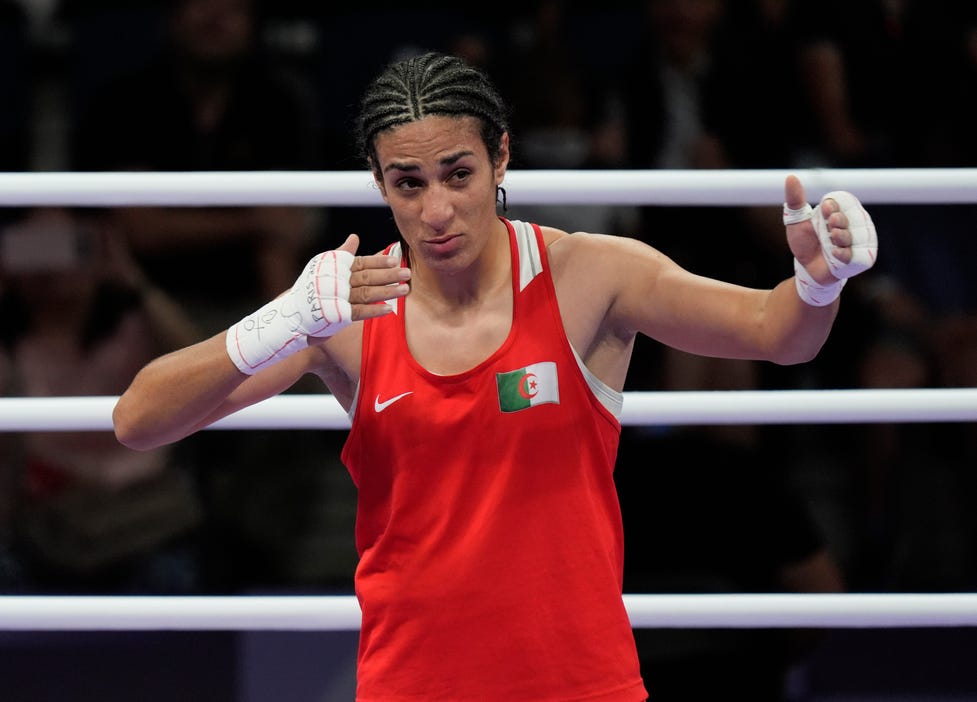
The policy is expected to affect athletes such as Algerian boxer Imane Khelif and Taiwanese boxer Lin Yu-ting, who faced gender eligibility controversies at the Paris 2024 Games, as well as transgender competitors like retired weightlifter Laurel Hubbard.
Khelif, who won gold in the women’s welterweight division in Paris, said she would comply with any required testing. “Of course, I would accept doing anything I’m required to do to participate in competitions,” she said. “They should protect women, but they need to pay attention that while protecting women, they shouldn’t hurt other women.”
The IOC stressed that the rules do not extend to grassroots or recreational sport. More than 80 human rights and sports advocacy groups had urged the committee to abandon mandatory sex testing, but their calls were not heeded.
