




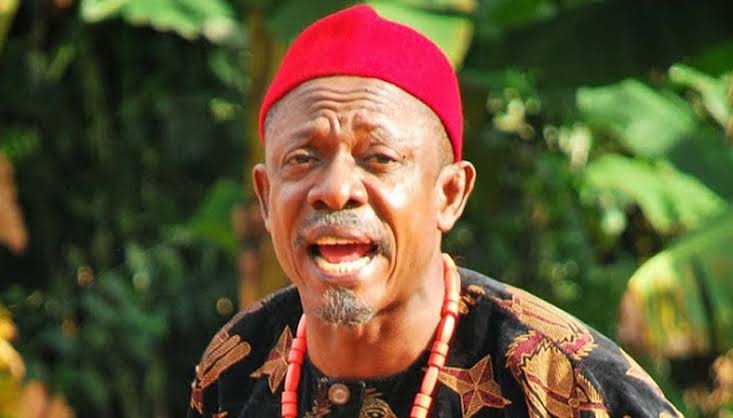
Veteran actor Nkem Owoh, popularly known as Osuofia, has clarified his position on the roots of the country’s film industry, saying Yoruba filmmakers pioneered and popularised home-video productions but did not found Nollywood.
Owoh made the remarks during an appearance on the YouTube programme Curiosity Made Me Ask, hosted by comedian Adebayo Abidemi, also known as Bae U. He was responding to questions about earlier comments on the contributions of Yoruba and Igbo filmmakers.
Rejecting reports that he had claimed Yoruba people started Nollywood, Owoh said the name did not exist when filmmakers first began producing movies.
“First of all, you have given me this wrong accusation that I said, Yoruba started Nollywood. No. Yoruba started this film on… when did Nollywood come out? When we started the thing, there was no Nollywood as a name,” he said.
He added that practitioners from different backgrounds later came together, exchanged ideas and eventually adopted the name Nollywood.
Owoh maintained that Yoruba filmmakers played a major role in making home-video entertainment popular across Nigeria, specifically recognising the late theatre pioneer Hubert Ogunde and veteran actor Adebayo Salami, known as Oga Bello.
“So, Yoruba started the thing. They made the thing very popular home video and all that. Yes, they did,” he said.
He drew a clear distinction, stating: “The Yoruba did not start Nollywood. They started Home video.”
The comments come amid renewed debate over the industry’s origins. In August 2026, the late actor Francis Duru had argued that Igbo entrepreneurs played a major role in building modern Nollywood through the commercial home-video boom of the 1990s and early 2000s.
The 1992 film Living in Bondage, produced by Kenneth Nnebue, is widely credited with helping popularise the direct-to-video format that fuelled Nollywood’s expansion. The term “Nollywood” entered wider use after a 2002 New York Times article by journalist Norimitsu Onishi.
