





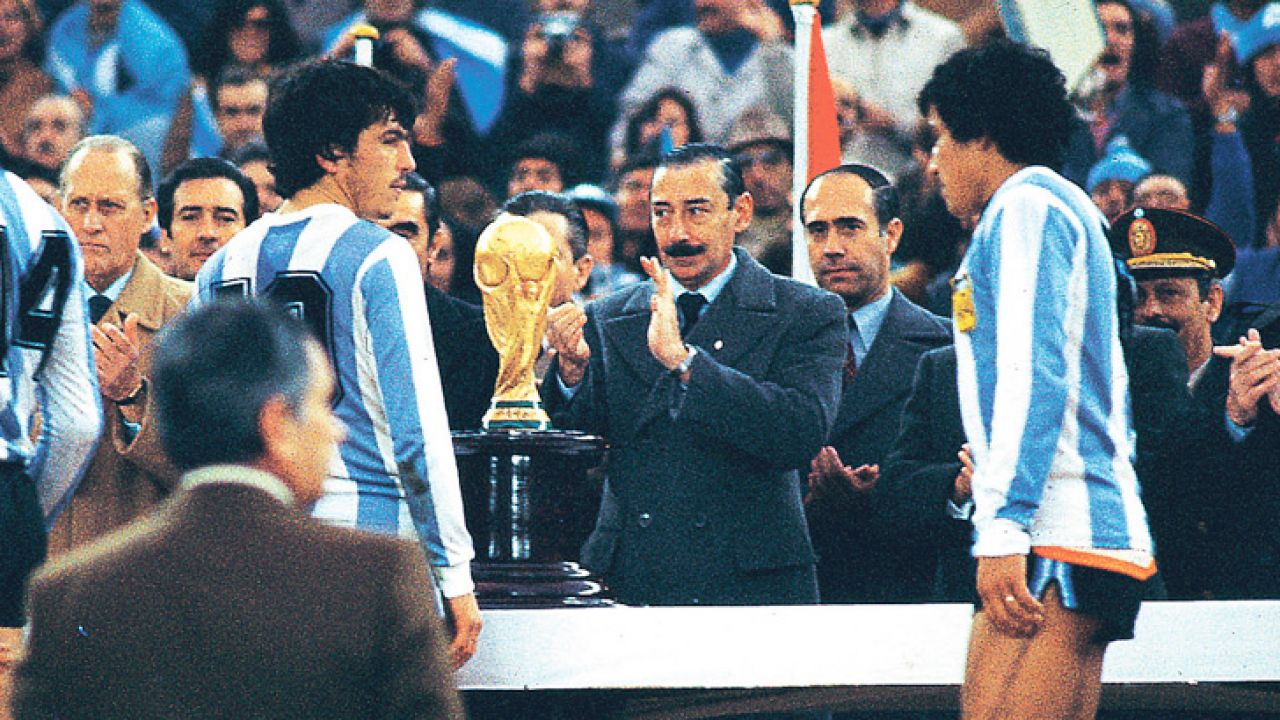
Argentina is a nation stitched together by the threads of footballing glory. Its blue-and-white shirt boasts three hard-earned World Cup stars. Yet, if you listen to the songs sung in the barrios of Buenos Aires or strike up a conversation in a local café, you will notice a fascinating cultural asymmetry. The world titles of 1986 and 2022 are celebrated with unbridled, ecstatic devotion. The triumph of 1978, however, is often met with a heavy, complicated silence.
To an outside observer, this might seem puzzling. A World Cup victory on home soil should logically represent the absolute zenith of national sporting pride. But in Argentina, the memory of 1978 is permanently tangled with a dark history—a legacy so painful that it naturally yields its spotlight to the pure, unvitiated magic of Diego Maradona’s 1986 masterclass.
The Shadow Over the Home Soil
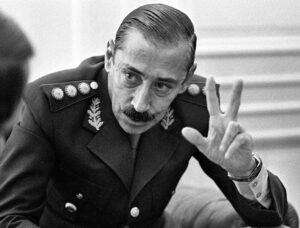
To understand why the 1978 tournament is treated with such ambivalence, one must look past the ticker tape that rained down on the pitch of the Estadio Monumental and into the grim reality of Argentina at the time. In 1976, a brutal military junta led by General Jorge Rafael Videla seized power, launching what would become known as the “Dirty War.” It was an era characterized by systemic state terrorism, severe censorship, and the forced disappearance of an estimated 30,000 citizens.
When Argentina hosted the World Cup two years later, the dictatorship recognized it as a goldmine for international public relations. The tournament was aggressively weaponized as a propaganda tool designed to project an image of peace, order, and national unity to a skeptical global audience, effectively masking the atrocities happening behind closed doors.
The chilling reality of 1978 is captured in a harrowing geographical irony: the ESMA (Escuela de Mecánica de la Armada), which served as one of the regime’s most notorious clandestine detention and torture centers, stood less than a mile from the River Plate stadium where fans cheered Argentina’s goals.
For many Argentines, this proximity created an inescapable moral and emotional dissonance. Can a sporting triumph ever truly be decoupled from the state-sponsored terror that soundtracked it? While the players on the pitch played for the shirt and the people, the victory was instantly co-opted by tyrants. Decades later, that association leaves a bittersweet, almost ghostly aftertaste.
The Conspiracy of Silence vs. National Trauma
When observing this reluctance to center the 1978 victory, some outsiders wonder if it is a calculated effort to hide the past—a collective amnesia meant to prevent the world from digging into Argentina’s dark history. But the truth is far more profound and introspective.
Argentina has not hidden from its history. On the contrary, the country has undergone decades of rigorous, painful reckoning, highlighted by the historic 1985 Trial of the Juntas, the transformation of former detention sites into memorials, and deep-seated public education initiatives. The history isn’t avoided because it is a secret; it is avoided because it is a trauma.
When Argentines talk less of 1978, it is not an act of external censorship, but an act of internal emotional processing. It is difficult to comfortably celebrate a milestone that is fused to a national tragedy. Human nature naturally seeks out memories of pure joy over those burdened by painful contradictions.
1986: Pure Football, Poetic Justice
![Argentina defeated West Germany 3-2 to lift the World Cup trophy [Carlo Fumagalli/AP Photo]](https://angelnetworknews.com/wp-content/uploads/2026/06/AP761775293235-300x200.webp)
The tournament in Mexico arrived at a pivotal moment. The dictatorship had collapsed, democracy was restored, and the nation was looking for a new, untainted identity. Maradona delivered exactly that. His performance was not just athletic excellence; it was art, rebellion, and folklore rolled into one.
Moreover, the quarter-final clash against England carried an immense, unspoken emotional weight. Occurring just four years after the devastating Falklands War (Guerra de las Malvinas), the match became a stage for symbolic redemption. When Maradona scored his infamous “Hand of God” goal, followed moments later by the breathtaking “Goal of the Century,” it felt to a bruised nation like a poetic rebalancing of the universe. It was a victory won without weapons, achieved purely through cunning, brilliance, and grit.
The Verdict of History
Ultimately, the disparity in how these two World Cups are remembered tells a beautiful story about the soul of football. It proves that the significance of a sporting triumph is never determined solely by the trophy itself, but by the context in which it is lifted.
The 1978 star will always remain on the Argentine crest, a testament to a phenomenal generation of footballers who played their hearts out under an oppressive sky. But the 1986 star represents something else entirely—a moment of unburdened catharsis, a triumph born of genuine national joy, and a legacy that Argentines can look back on with absolute, uncomplicated pride.
