

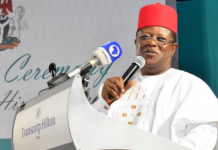



Igwe Nnaemeka Achebe, the Agbogidi and Obi of Onitsha, is one of Nigeria’s most revered traditional rulers. An accomplished corporate professional who had a distinguished career with Shell before ascending the throne of his ancestors, he has over the years earned considerable respect within and outside Anambra State.
For many years, Agbogidi served as Chairman of the Anambra State Traditional Rulers Council and brought to that position his wealth of experience, exposure and stature.
Igwe Achebe is currently the Chairman of the South East Council of Traditional Rulers. It must have been in that capacity that he attended and participated in the conferment of a chieftaincy title on the visiting First Lady of Nigeria, Senator Oluremi Tinubu, in Owerri, Imo State, on Wednesday, September 9, 2026.
The First Lady subsequently visited Anambra State on Thursday, September 10, 2026. Agbogidi was, however, conspicuously absent at the event.
His absence has understandably raised some eyebrows. Some people have suggested that it may not be unconnected with the lingering strain in the relationship between the Obi of Onitsha and the Anambra State Government following disagreements arising from Agbogidi’s public comments on certain developments in the state and the government’s response to them.
Whatever the issues may be, I believe that enough time has passed for all sides to move on.
The Obi of Onitsha occupies an important place in the traditional, cultural and historical landscape of Anambra State and indeed Igboland. His throne commands enormous respect, just as the government of the day has a responsibility to maintain cordial relationships with traditional institutions across the state.
There will inevitably be disagreements between governments and traditional rulers. Traditional rulers, particularly those of Agbogidi’s stature and experience, may sometimes express views that governments find uncomfortable. Governments, on their part, may feel compelled to respond when they believe certain boundaries have been crossed.
But such disagreements should not be allowed to become permanent fractures.
Traditional institutions and elected governments serve different purposes, but both ultimately exist within the same society and should work towards the peace, stability and development of their people. Neither side gains much from a prolonged cold relationship, especially when dialogue, mutual respect and statesmanship can provide a way forward.
There is also a larger symbolism involved. Onitsha is not just another town in Anambra State. It is one of the most important commercial and cultural centres in Nigeria, and the Obi of Onitsha is one of the most prominent traditional rulers in the country. A healthy relationship between the palace and the state government is therefore in the wider interest of Ndi Anambra.
This is why I believe that the Anambra State Government should consciously initiate steps towards repairing whatever damage may have been done to its relationship with Agbogidi. This should not be seen as surrender or an admission of wrongdoing by either side. Rather, it should be regarded as an act of maturity and leadership.
Agbogidi, too, as an elder statesman and father to all, should be willing to embrace such overtures in the larger interest of Anambra State.
There comes a time when disagreements must give way to reconciliation. Our elders say that the tongue and the teeth sometimes quarrel, yet they continue to live together in the same mouth.
Anambra has enough challenges requiring the collective wisdom, influence and goodwill of all its leaders. We should not allow avoidable differences to deny the state the benefit of such cooperation.
The government and the palace may have had their differences. That is understandable. What is more important now is finding a dignified pathway towards reconciliation.
It is time to mend fences.


